

Stop treating ChatGPT like a magic wand that writes perfect articles. It doesn't work that way. If you paste a generic prompt and publish the output, you’re just adding noise to the internet. But if you treat it as a tireless junior researcher and structural editor, it becomes the most powerful lever in your toolkit.
In 2026, Google’s algorithms are sharper than ever at detecting low-effort AI sludge. The game has shifted from "can I generate text?" to "can I use intelligence to uncover unique insights?" This is where Search Engine Optimization meets Generative Artificial Intelligence. You aren't using ChatGPT to replace your brain; you're using it to amplify your expertise.
Key Takeaways
- Don't write blindly: Use ChatGPT to analyze competitor gaps and user intent before writing a single word.
- Structure wins: AI excels at outlining logical hierarchies that satisfy both readers and search crawlers.
- Semantic depth: Leverage LLMs to map entity relationships, ensuring your content covers topics comprehensively.
- Edit, don't accept: Always inject personal experience, data, and local context to pass E-E-A-T standards.
- Technical aid: Use Python scripts generated by AI to automate meta-tag audits and schema markup checks.
The New Reality of SEO in 2026
Remember when stuffing keywords was enough? Those days died years ago. Today, Google prioritizes Helpful Content-material that demonstrates Experience, Expertise, Authoritativeness, and Trustworthiness (E-E-A-T). Pure AI content often lacks the "Experience" part because the model hasn't lived through the event it's describing.
However, Large Language Models (LLMs) like GPT-4o or newer variants have evolved. They can now browse the web, analyze complex datasets, and understand nuanced context. The secret isn't hiding the AI usage; it's leveraging its speed to do the heavy lifting of research so you can focus on the human insight.
Think of it this way: A traditional SEO specialist spends three hours researching a topic. An AI-augmented specialist spends thirty minutes. That’s a tenfold efficiency gain. But only if you know how to ask the right questions.
Step 1: Deep-Dive Keyword & Intent Analysis
Most people use ChatGPT to find keywords. That’s amateur hour. Tools like Ahrefs or SEMrush still hold the crown for raw volume data. But ChatGPT shines in understanding intent. Volume tells you how many people search; intent tells you why they search.
Here’s how to extract real value:
- Paste Competitor URLs: Feed ChatGPT the top three ranking pages for your target keyword.
- Ask for Gap Analysis: Prompt: "Analyze these three articles. What specific subtopics, questions, or angles are missing from all of them? List 5 opportunities to create a more comprehensive guide."
- Cluster by User Journey: Ask it to categorize long-tail variations into Awareness, Consideration, and Decision stages.
For example, if you’re targeting "best running shoes," don’t just list models. Ask ChatGPT to identify common pain points mentioned in forum discussions (like Reddit or Quora threads you provide as context). Maybe users are complaining about heel slip in marathon training but not casual jogging. That’s a content angle competitors might miss.
Step 2: Building Semantic Topic Clusters
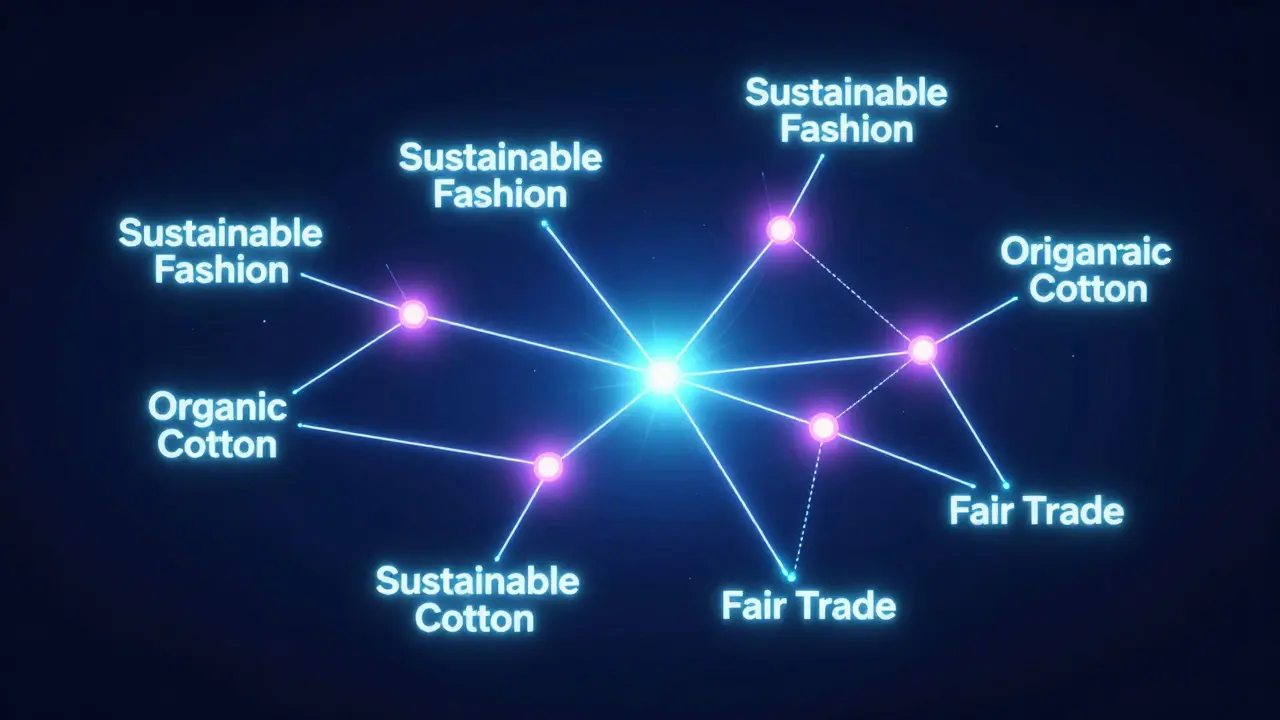
Google understands entities, not just keywords. To rank, your content needs to demonstrate topical authority. This means covering a subject deeply and connecting related concepts logically.
Use ChatGPT to build a Knowledge Graph for your niche.
Prompt Example: "Act as an SEO strategist. Create a semantic cluster for the central entity 'Sustainable Fashion.' Identify 5 parent categories, 10 child entities (specific fabrics, certifications), and 5 associated brands. Show the relationship between each child entity and the main topic using a Subject-Predicate-Object format."
This helps you plan a series of interlinked posts rather than isolated articles. When you link internally from a post about "Organic Cotton" to one about "Fair Trade Certifications," you signal to search engines that you are an authority on the broader topic of sustainability.
| Entity Type | Example Entity | Relationship |
|---|---|---|
| Central | Sustainable Fashion | - |
| Child | Hemp Fabric | Is a material used in |
| Associated | GOTS Certification | Validates quality of |
| Contextual | Water Usage Stats | Provides evidence for |
Step 3: Outlining for Readability and Retention
Before you write, structure. A messy article loses readers-and readers leave signals to Google that hurt your rankings. ChatGPT is excellent at creating hierarchical outlines that follow best practices for readability.
Ask for an outline that includes:
- H2 and H3 headers that match natural language queries.
- FAQ sections based on "People Also Ask" boxes.
- Internal linking opportunities pointing to your existing pillar content.
- Visual cues suggesting where charts, images, or code blocks should go.
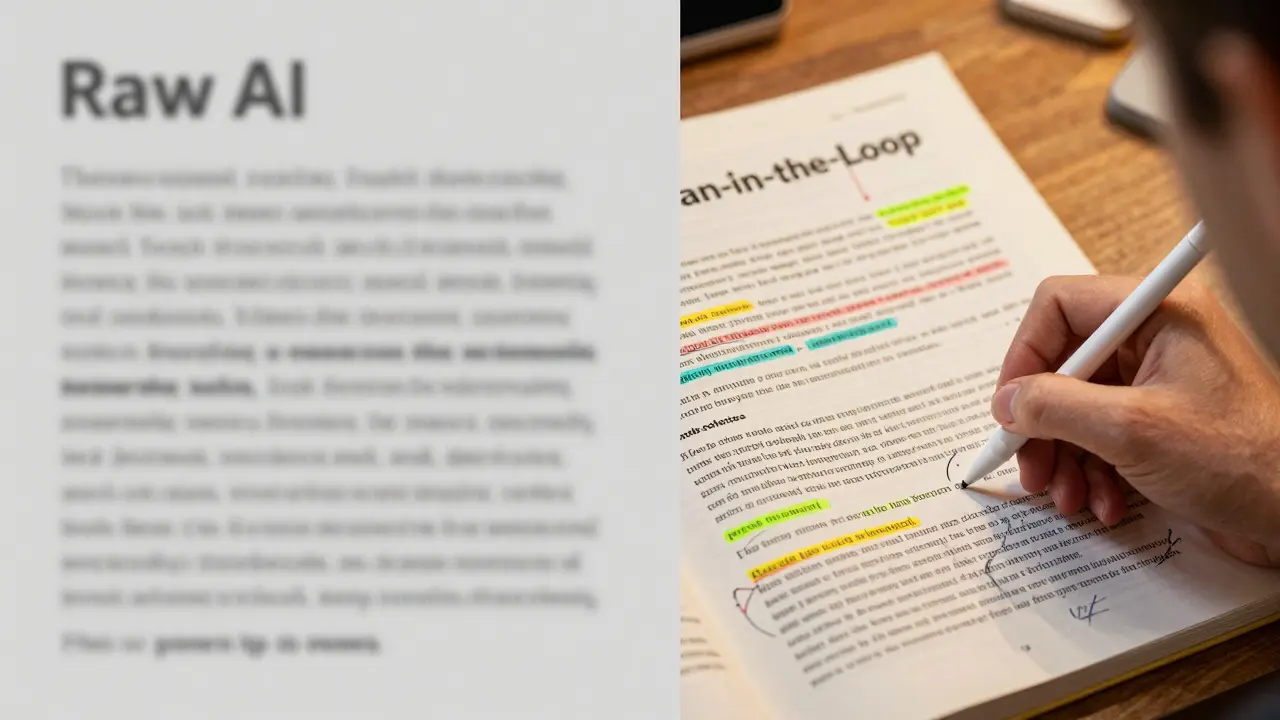
Once you have the skeleton, fill it with your own voice. Add anecdotes. Include recent data from 2025 or 2026 that the AI’s training cutoff might miss. This hybrid approach ensures accuracy and personality.
Step 4: Writing with Human Nuance
If you let ChatGPT write the whole draft, it will sound robotic. It loves passive voice and vague generalizations like "Many experts believe..." Avoid this at all costs.
Instead, use it for specific sections:
- Meta Descriptions: Generate 5 variations under 155 characters with strong CTAs.
- Introduction Hooks: Ask for 3 different opening lines-one controversial, one statistical, one storytelling-based.
- Simplifying Jargon: Paste complex technical paragraphs and ask: "Rewrite this for a beginner audience without losing key details."
Crucially, always fact-check. LLMs hallucinate. If ChatGPT cites a study, verify the source. In 2026, publishing false information damages your site’s trust score significantly. Your job is the editor-in-chief; AI is the intern.
Step 5: Technical SEO Automation
You don’t need to be a coder to benefit from AI. ChatGPT can write Python scripts or JavaScript snippets to handle tedious technical tasks.
Need to check if all your H1 tags are unique across 500 pages? Ask ChatGPT to write a Python script using BeautifulSoup to scrape your sitemap and flag duplicates. Want to generate JSON-LD schema markup for a recipe or event? Describe the data, and it will output valid code instantly.
This saves hours of manual work and reduces human error. Just remember to test any code in a staging environment before pushing to production.
Avoiding Common Pitfalls
Even with great prompts, mistakes happen. Here’s what to watch out for:
- Generic Advice: If the output sounds like it could apply to any industry, rewrite it. Add specific examples, local references (like Melbourne weather impacts on outdoor gear sales), or proprietary data.
- Keyword Stuffing: Don’t force keywords unnaturally. Modern NLP (Natural Language Processing) understands synonyms and context. Write for humans first.
- Lack of Freshness: AI training data has a cutoff. Always supplement with current news, 2026 trends, and real-time statistics.
Conclusion: The Human-in-the-Loop Model
ChatGPT isn’t replacing SEO specialists. It’s replacing those who refuse to adapt. The winners in 2026 are the ones who combine AI’s processing power with human creativity and critical thinking. Use it to research faster, structure better, and scale smarter-but never let it remove your unique perspective. That’s the only thing search engines truly crave.
Can I use ChatGPT-generated content directly for SEO?
Not recommended. Raw AI content often lacks unique insights and personal experience, which Google penalizes under E-E-A-T guidelines. Use it as a draft or research assistant, then heavily edit, add original data, and inject your voice.
Does Google detect AI-written content?
Google doesn't explicitly punish AI content, but it does punish low-quality, unhelpful content. Since pure AI outputs often lack depth and originality, they tend to perform poorly. Focus on helpfulness, not hiding the tool used.
How do I ensure my AI-assisted content ranks well?
Combine AI efficiency with human expertise. Use AI for keyword clustering and outlining, but write introductions, conclusions, and case studies yourself. Include recent data, internal links, and high-quality visuals to boost engagement and authority.
What is the best prompt for SEO keyword research?
A strong prompt analyzes competitors: "Analyze the top 3 ranking pages for [keyword]. Identify content gaps, unanswered user questions, and semantic entities missing from their coverage. Suggest 5 subheadings to address these gaps."
Can ChatGPT help with technical SEO?
Yes. It can generate code for schema markup, write Python scripts to audit meta tags, explain server logs, and suggest fixes for Core Web Vitals issues. However, always validate code changes before implementation.