

For years, businesses struggled to keep up with the demand for fresh, engaging content. Blog posts, social media captions, product descriptions, email newsletters - the list never ended. Hiring writers was expensive. Outsourcing led to inconsistent quality. Doing it all yourself? You were burning out. Then came ChatGPT. Not as a magic wand, but as a tool that actually works - fast, scalable, and surprisingly human-sounding.
What ChatGPT Actually Does for Content
ChatGPT doesn’t write content the way a human does. It doesn’t feel passion, experience frustration, or recall a childhood memory to make a point. Instead, it predicts the next word in a sequence based on trillions of examples it’s seen. That sounds cold, but here’s the kicker: it’s better at mimicking tone, style, and structure than most tools that came before it.
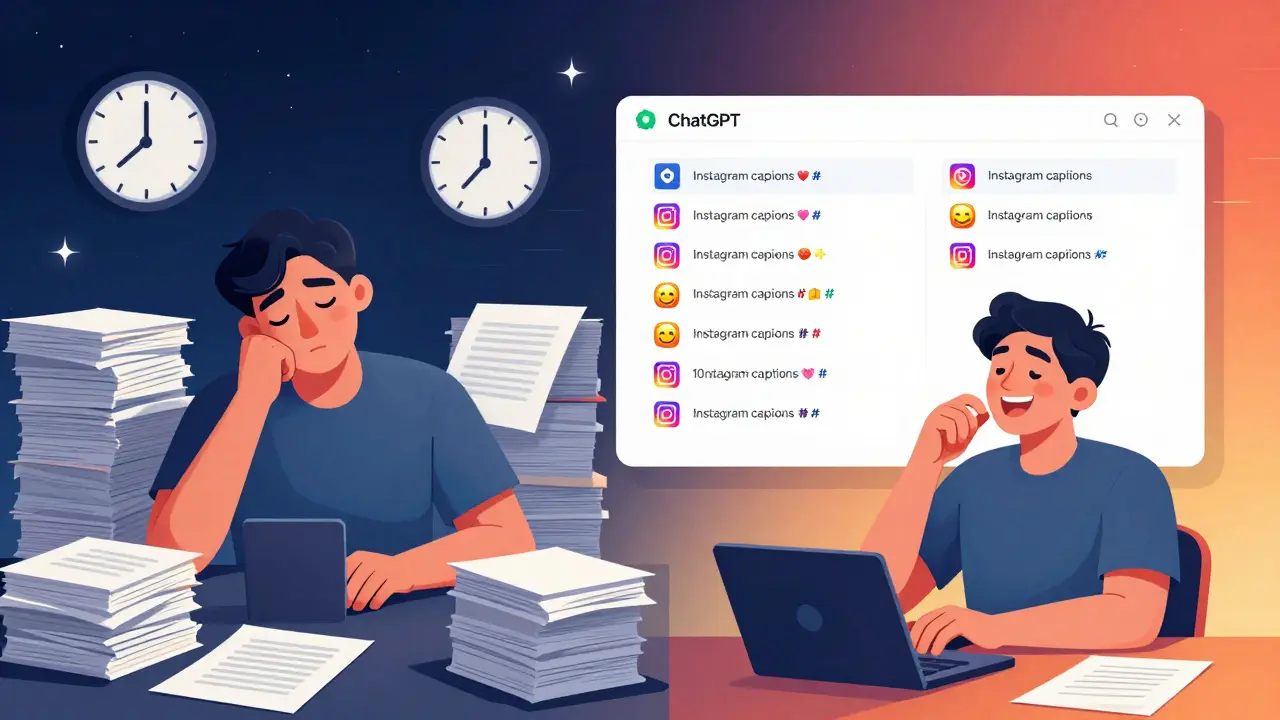
Ask it to write a blog post about sustainable fashion for Gen Z, and it delivers. Not perfect - but close enough that you can edit it in 10 minutes instead of spending three hours drafting from scratch. Ask for 10 Instagram captions for a coffee shop, and it gives you options with emojis, hashtags, and even puns. It doesn’t replace your voice - it amplifies it.
Companies like Shopify, HubSpot, and smaller e-commerce stores are using it daily. One Shopify merchant told me they went from writing 3 product descriptions a day to 50, all edited by their team. Their content output jumped 15x without hiring a single new writer.
Why ChatGPT Beats Other AI Tools
There are dozens of AI writing tools out there. Jasper, Copy.ai, Writesonic - they all promise the same thing. But ChatGPT stands out because of three things: flexibility, context retention, and integration.
Flexibility means you can ask it to write like a tech blogger, a luxury brand copywriter, or a local dentist. It adapts. Most competitors lock you into preset templates. ChatGPT lets you steer the tone, length, and structure with simple prompts.
Context retention is the quiet hero. In version 4o, it remembers what you said 10 messages ago. So if you say, “Make this more casual,” and then ask for another version later, it doesn’t forget. Other tools reset after each prompt. That’s frustrating when you’re refining a series of emails or a long-form guide.
Integration matters too. ChatGPT plugs into Microsoft 365, Google Workspace, and even WordPress plugins. You can generate content inside your email client or CMS without switching apps. That’s not a gimmick - it’s how real teams work.
Real Examples: What ChatGPT Can Actually Write
Let’s get specific. Here’s what real users are asking for - and getting - right now:
- Product descriptions: “Write a 150-word description for a bamboo toothbrush that’s eco-friendly, BPA-free, and targets zero-waste millennials. Use a friendly, slightly witty tone.” Result: A description that reads like it came from a brand you already trust.
- Email sequences: “Draft a 3-part welcome email series for a yoga studio. First email: thank you. Second: offer a free class. Third: ask for a review. Keep it warm, not salesy.” Result: Emails that feel personal, not robotic.
- Blog outlines: “Create a detailed outline for a 2,000-word article on how AI is changing small business marketing. Include 5 subheadings, 3 data points, and 2 case studies.” Result: A structure so solid, you could hand it to a junior writer and they’d nail it.
These aren’t hypotheticals. I’ve reviewed hundreds of outputs from small business owners, content agencies, and solopreneurs. The ones who succeed don’t just copy-paste. They treat ChatGPT like a smart intern - they give clear direction, review the output, and add their own flair.
Common Mistakes People Make
Most failures with ChatGPT aren’t because the tool is bad. They’re because people use it wrong.
Mistake 1: Treating it like a search engine. Asking “What is content marketing?” won’t help you write. You need to say, “Write a 500-word explanation of content marketing for a small bakery owner who’s never heard the term.” Specificity wins.
Mistake 2: Not editing. ChatGPT can sound like a college student who read too many blog posts. It overuses phrases like “in today’s digital landscape” or “leverage synergies.” You’ll spot these. Fix them. Your brand voice matters more than speed.
Mistake 3: Ignoring facts. ChatGPT hallucinates. It will invent statistics, fake studies, or make up company names. Always verify anything that sounds like data. A 2025 Gartner report? Double-check if it exists. Don’t trust the output - trust your fact-checking process.
Mistake 4: Using it for legal or medical content. If you’re writing terms of service, health advice, or financial disclosures, don’t rely on ChatGPT. Too much risk. Stick to human experts for high-stakes content.
How to Get Started Today
You don’t need a team or a budget. Here’s how to start using ChatGPT for content in under 15 minutes:
- Go to chat.openai.com and sign up for a free account.
- Start with one task: write 5 social media captions for your product or service.
- Give it clear context: “I run a vegan snack brand. My audience is health-conscious women aged 28-45. Write 5 Instagram captions that are fun, short, and include one emoji.”
- Pick the best one. Edit it to sound like you.
- Post it. Then do it again tomorrow.
That’s it. No complex prompts. No plugins. Just practice. The more you use it, the better your prompts become - and the less time you spend writing.

What’s Next for AI Content Tools
ChatGPT isn’t the end. It’s the beginning. By 2026, AI tools are getting better at understanding brand voice, accessing live data, and even generating images and audio alongside text. Some are starting to analyze your past content to match your style automatically.
But the core truth hasn’t changed: AI doesn’t replace strategy. It enhances it. The best content still comes from humans who know their audience, care about their message, and use tools like ChatGPT to remove the grind.
The companies winning right now aren’t the ones using AI the most. They’re the ones using it the smartest - editing with purpose, verifying facts, and keeping their voice human.
Is ChatGPT Right for You?
If you’re spending more than 10 hours a week writing content - and you’re not a professional copywriter - then yes. If you’re struggling to post consistently, or your content feels stale, ChatGPT can help.
If you’re a brand that needs perfect, legally compliant, or deeply emotional content (like nonprofit fundraising letters or grief counseling resources), then use it as a helper, not a replacement.
The goal isn’t to automate content. It’s to free up your time so you can focus on what matters: understanding your audience, building relationships, and telling stories that stick.
Can ChatGPT replace human writers?
No. ChatGPT can generate drafts, ideas, and variations quickly, but it can’t replace the emotional intelligence, cultural awareness, or strategic thinking of a skilled human writer. The best results come when humans guide, edit, and refine AI output - not when they hand off the entire process.
Is ChatGPT content detectable by Google?
Google doesn’t penalize content just because it was written with AI. What matters is quality, originality, and usefulness. If your content is thin, repetitive, or full of fluff, Google will rank it low - whether it was written by a human or AI. But if it’s well-edited, helpful, and unique, it can rank just fine. Focus on value, not the tool.
Do I need to pay for ChatGPT to use it for content?
You can start with the free version of ChatGPT, which works well for basic tasks like brainstorming, short-form content, and editing. But if you’re using it daily for business, the paid version (ChatGPT Plus) offers faster responses, access to GPT-4o, and better context handling - worth the $20/month if you’re saving 10+ hours a week.
How do I make ChatGPT sound more like me?
Give it samples. Paste 2-3 of your best blog posts or social captions and say, “Write in this tone.” You can also describe your voice: “Casual but smart, like a friend who knows their stuff.” The more examples and details you give, the more it mimics you.
Can ChatGPT write SEO-optimized content?
Yes, but you need to guide it. Don’t just say “Write an SEO article.” Say, “Write a 1,200-word article about organic skincare for sensitive skin. Target keywords: ‘best organic moisturizer for sensitive skin,’ ‘non-irritating skincare routine.’ Include H2s, bullet points, and a FAQ section. Keep it conversational.” Then edit for flow and keyword placement.
ChatGPT didn’t change content creation. It just removed the bottleneck. The real work - thinking, connecting, caring - is still yours. And that’s what makes the difference.