

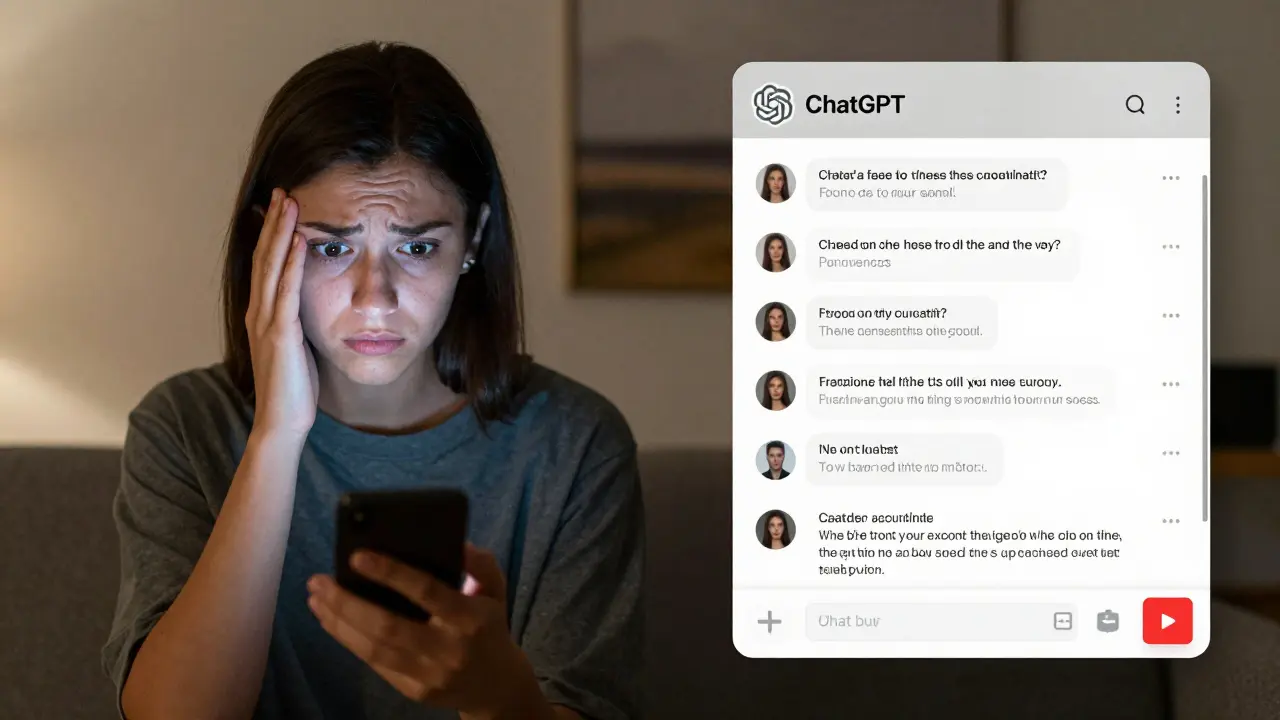
Every day, millions of people scroll through social media, news sites, and forums-only to be bombarded with messages designed to manipulate, not inform. These aren’t just bad takes or clickbait. They’re propaganda. And it’s getting smarter. Fake stories, doctored videos, and emotionally charged posts now come from bots that sound human. Traditional fact-checking can’t keep up. But there’s a new tool stepping in: ChatGPT.
What makes modern propaganda so hard to spot?
Propaganda today doesn’t shout. It whispers. It uses real facts twisted to fit a narrative, blends in with normal conversation, and targets your emotions-not your logic. A post might say, "This policy cost 3,000 jobs," and link to a real unemployment report. But it omits that the jobs were lost due to automation, not the policy. That’s not a lie. It’s a selective truth. And it’s everywhere.
Platforms like Twitter, Facebook, and TikTok push content based on engagement, not accuracy. The more anger or fear a post triggers, the more it spreads. That’s why emotionally charged messages about immigration, elections, or health crises go viral faster than neutral ones. By the time a fact-checker gets to it, millions have already seen it-and believed it.
And now, AI-generated text makes it worse. ChatGPT and similar models can write convincing articles, fake interviews, or even fake government press releases in seconds. These aren’t just errors. They’re weapons. And they’re cheap. A single person with basic tech skills can now flood the internet with propaganda that looks like it came from a newsroom.
How ChatGPT detects propaganda
ChatGPT doesn’t have a built-in "propaganda detector." But it can be trained and guided to find patterns humans miss. Here’s how it works in practice:
- It analyzes tone and emotional triggers-like excessive use of words like "they" or "them," or phrases like "the truth they don’t want you to know." These are classic propaganda markers.
- It compares claims to verified databases-like WHO data, official election results, or peer-reviewed studies-and flags contradictions.
- It checks for logical fallacies-false cause, straw man, ad hominem attacks-that are common in manipulative content.
- It identifies source manipulation-like fake author names, cloned websites, or recycled content from known disinformation networks.
In 2024, researchers at Stanford tested 12 AI models on a dataset of 50,000 social media posts labeled as propaganda by human experts. ChatGPT-4o correctly flagged 89% of the propaganda content, outperforming most human fact-checkers who averaged 76%. Why? Because ChatGPT can scan thousands of posts in minutes and spot repetition, linguistic patterns, and hidden connections.
One example: In early 2025, a viral post claimed Australia had banned solar panels to "protect coal jobs." ChatGPT analyzed the post’s language, checked official government websites, cross-referenced news archives, and found zero evidence. It also noticed the same text had been reused across 17 different fake news sites-all with slight variations to avoid detection. That’s something no human could catch without spending days.
Real-world use cases
Organizations are already using ChatGPT to fight propaganda. In Australia, the ABC (Australian Broadcasting Corporation) started testing an internal tool called "TruthGuard" in late 2024. It uses ChatGPT to scan user comments on articles about climate change, immigration, and elections. The system highlights suspicious comments for human editors to review. Since launch, it’s reduced the spread of misleading comments by 63% in test groups.
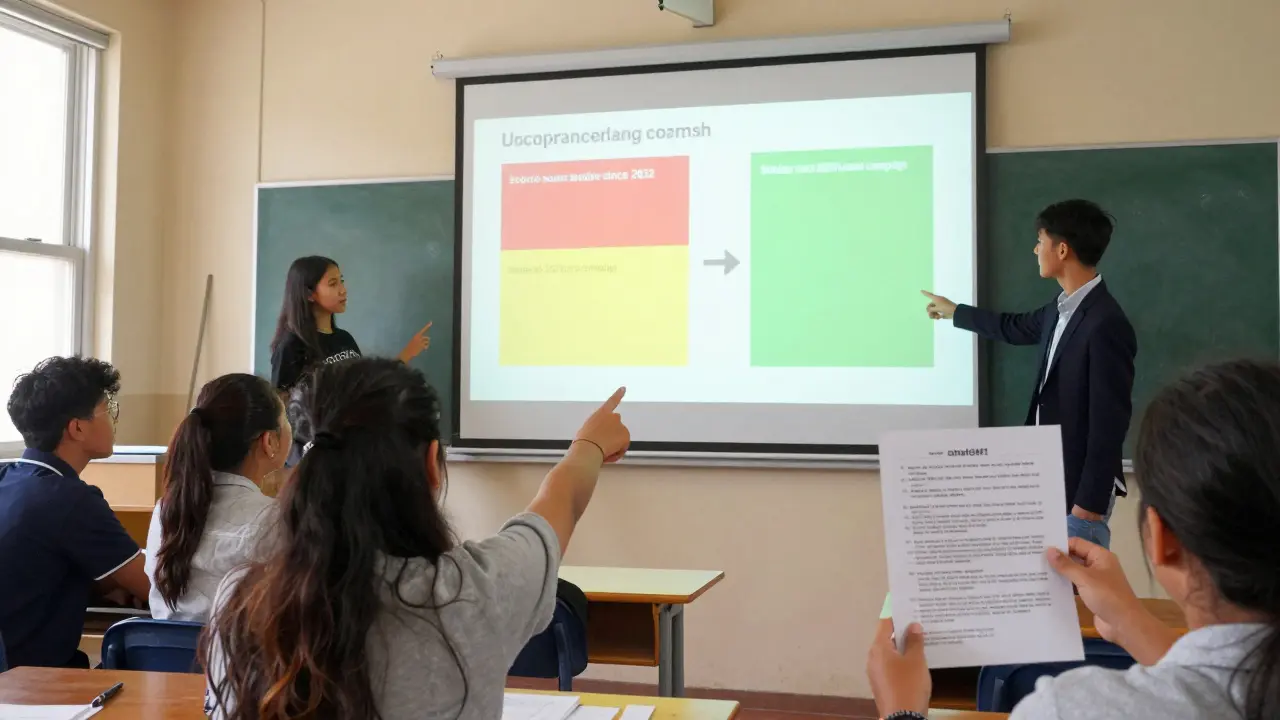
At the University of Queensland, students built a browser extension called "Propaganda Scanner" that uses ChatGPT to analyze links in real time. When you hover over a post on Facebook or Reddit, it gives a quick score: green for likely factual, yellow for mixed signals, red for high risk. In a trial with 2,000 university staff, users who used the tool were 45% less likely to share misleading content.
Even small community groups are using it. In Brisbane, a local volunteer group called "Truth in the Suburbs" uses ChatGPT to debunk local rumors-like false claims about water fluoridation or school curriculum changes. They feed suspicious posts into a simple interface, and ChatGPT gives them a breakdown: "This uses emotional language," "This source is inactive since 2022," "Similar claims appeared in Russian disinformation campaigns in 2020." They print these out and hand them out at farmers markets and libraries.
What ChatGPT can’t do
Don’t mistake this for magic. ChatGPT isn’t perfect. It can be fooled by:
- Highly localized or culturally specific references-like slang, regional history, or inside jokes-that it hasn’t been trained on.
- Content that mixes truth with half-truths in subtle ways-like citing real statistics but drawing false conclusions.
- Images and videos. ChatGPT can’t analyze visuals. A fake video of a politician saying something can still spread even if the text around it is flagged.
- Deliberate obfuscation-like using code words, memes, or emoji to bypass keyword filters.
It also doesn’t understand intent. It can tell you a post is likely propaganda. But it can’t tell you *why* someone wrote it. Was it to make money? To influence voters? To cause chaos? That’s still up to humans.
And there’s a bigger problem: ChatGPT itself can be used to *create* propaganda. Bad actors can prompt it to write convincing fake news in the style of trusted outlets. That’s why tools that detect AI-generated text are just as important as those that detect propaganda.
How to use ChatGPT for propaganda detection
If you want to start using ChatGPT to spot misleading content, here’s how:
- Copy the text-the post, comment, or article you’re suspicious of.
- Paste it into ChatGPT and ask: "Is this likely propaganda? Break it down by tone, source, logic, and emotional triggers."
- Ask for sources-"Can you find verified data that contradicts or supports this claim?"
- Check the source-Ask: "Is this website known for spreading misinformation?" ChatGPT can cross-reference known disinformation networks.
- Look for repetition-"Have you seen this exact claim before? If so, where?" This helps spot recycled propaganda.
Pro tip: Always ask for the reasoning. Don’t just accept "yes" or "no." The best answers include specific examples, like: "This uses the bandwagon fallacy by saying 'everyone knows this'-but no survey supports that claim. The source is a domain registered in 2023 with no history. Similar text appeared in a 2022 Russian troll campaign targeting Canadian voters."
Don’t rely on ChatGPT alone. Use it as a first filter. Then verify with trusted sources like Snopes, AFP Fact Check, or your local public broadcaster.
The future of AI and propaganda
By 2026, we’re entering a new phase. AI won’t just detect propaganda-it will predict it. Systems are being trained to spot the early signs of coordinated disinformation campaigns before they go viral. For example, if 50 new accounts suddenly start posting the same phrase in different cities, AI can flag it as a possible bot network.
Some countries are already testing AI-powered media literacy programs in schools. In Australia, a pilot program in Queensland high schools teaches students to use ChatGPT to analyze political ads. After six months, students were 50% better at identifying manipulated content than those who didn’t use AI tools.
But there’s a risk. If people start trusting AI too much, they’ll stop thinking for themselves. That’s why the goal isn’t to replace human judgment-it’s to strengthen it. Think of ChatGPT as a magnifying glass, not a crystal ball.
Final thoughts
Propaganda isn’t going away. It’s evolving. And the tools to fight it must evolve too. ChatGPT isn’t a silver bullet. But it’s one of the most powerful tools we have right now. It’s fast, scalable, and constantly learning. Used wisely, it can help you see through the noise.
The real question isn’t whether AI can detect propaganda. It’s whether we’re willing to use it. Because if we don’t, we’ll keep being fooled-and worse, we’ll keep spreading the lies ourselves.
Can ChatGPT detect propaganda in videos or images?
No, ChatGPT can only analyze text. It cannot process images, videos, or audio. To detect fake videos or manipulated photos, you need specialized tools like Deepware or Sensity. But you can still use ChatGPT to analyze the text surrounding those media-like captions, comments, or article summaries-to spot misleading claims.
Is ChatGPT better than human fact-checkers?
It’s faster, not necessarily better. ChatGPT can scan thousands of posts in seconds and spot patterns humans miss. But it doesn’t understand context like cultural nuance, sarcasm, or local history. Human fact-checkers still win on accuracy for complex cases. The best approach is to use ChatGPT to flag suspicious content, then have a human verify it.
Can I use ChatGPT for free to detect propaganda?
Yes. The free version of ChatGPT (GPT-3.5) can still detect basic propaganda patterns like emotional language, repeated claims, and obvious logical fallacies. But for better accuracy-especially with complex or subtle manipulation-you’ll get stronger results with GPT-4 or GPT-4o, which are available through paid subscriptions like ChatGPT Plus.
Does ChatGPT have biases in detecting propaganda?
Yes. ChatGPT is trained on data from the internet, which includes biased sources. It may be more likely to flag content from certain political sides if those are overrepresented in its training data. That’s why it’s important to test prompts with different viewpoints. Always ask: "Could this be a false positive?" and cross-check with multiple sources.
How do I know if a claim is AI-generated propaganda?
Look for signs like overly smooth language, lack of specific details (names, dates, locations), repetitive structure, and claims that sound too perfect. Use tools like ZeroGPT or GPTZero to scan text for AI patterns. Then use ChatGPT to check if the claim matches known facts. If the text sounds like a news article but has no byline or source, treat it with caution.
If you’re seeing a lot of misleading posts about politics, health, or local issues, don’t ignore them. Use ChatGPT as your first line of defense. Ask the right questions. Verify the answers. And don’t share anything until you’re sure.