

SEO isn’t what it used to be. The days of stuffing keywords and chasing backlinks like they’re gold coins are long gone. Today, search engines don’t just read your content-they understand it. And that’s where ChatGPT changes everything.
ChatGPT Doesn’t Replace SEO Experts-It Makes Them 10x Faster
Think of ChatGPT as a tireless assistant who’s read every SEO guide ever written, scanned millions of search results, and learned how real people phrase questions. You don’t need to be a grammar wizard or a data analyst to use it. Just ask.
One marketing manager in Perth, Sarah Lin, cut her content planning time from 12 hours a week to under 2. She started by asking ChatGPT: "What are the top 5 questions people ask about solar panel installation in Western Australia?" Within seconds, it gave her a list with search volume estimates, question phrasing variations, and even the most common misconceptions people had. She used that to build a content calendar in under an hour.
That’s not magic. That’s efficiency.
Keyword Research Gets a Brain Upgrade
Traditional keyword tools tell you what people type. ChatGPT tells you what they mean.
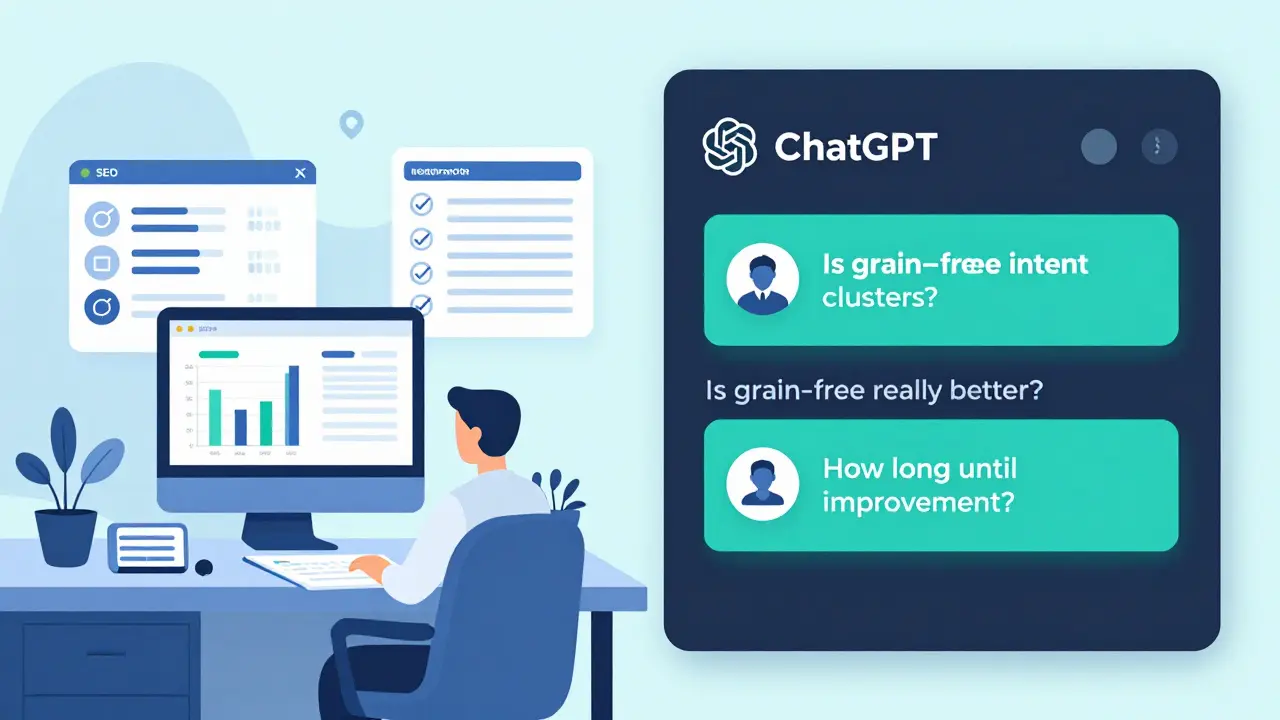
Let’s say you sell organic dog food. You type "best dog food for sensitive stomach" into Ahrefs and get 12,000 monthly searches. Great. But ChatGPT goes further. Ask it: "What are the hidden concerns pet owners have when choosing food for a dog with digestive issues?" It might reply with things like:
- "Is grain-free really better, or is it just marketing?"
- "How long does it take to see improvement after switching food?"
- "Can I mix this with wet food or should it be standalone?"
These aren’t keywords. They’re intent clusters. And Google now rewards pages that answer these layered questions-not just ones that hit the exact phrase.
ChatGPT can also generate long-tail variations you’d never think of. Try: "Give me 20 conversational phrases someone might use when searching for affordable SEO services for small businesses in Australia." It gives you real human language, not robotic keyword strings.
Content That Actually Ranks (Without Writing 5,000 Words)
Most SEO content fails because it’s either too shallow or painfully repetitive. ChatGPT helps you strike the right balance.
Here’s how one e-commerce brand improved their product page CTR by 37%:
- They fed ChatGPT their existing product description and asked: "What’s missing? What do customers really want to know before buying this?"
- It pointed out they didn’t mention shelf life, storage conditions, or how it compares to cheaper alternatives.
- They added three short, scannable sections with bullet points and real-life examples.
- Within two weeks, bounce rate dropped by 22%.
You don’t need to write a novel. You need to answer the next logical question a searcher has. ChatGPT helps you predict those questions before they’re even asked.
Competitor Analysis Without the Grind
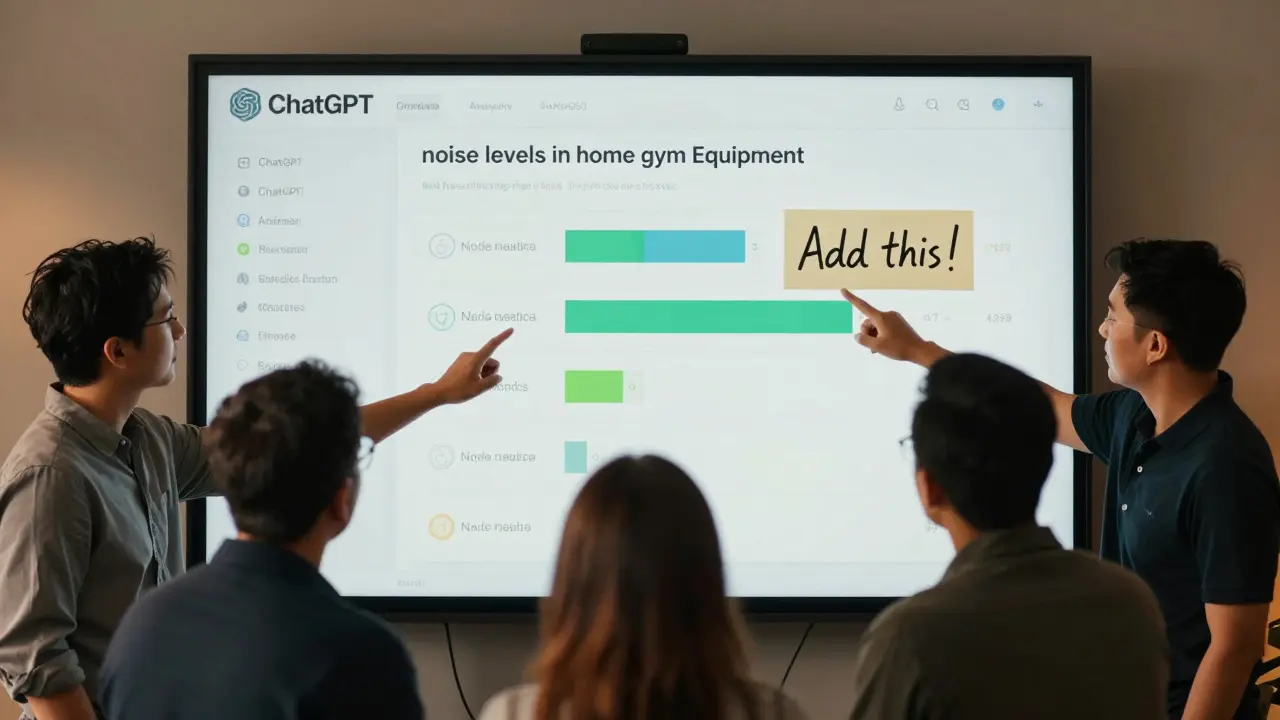
Instead of manually analyzing 10 top-ranking pages, paste their URLs into ChatGPT and ask: "Summarize the structure, tone, and key points of these five articles about home gym equipment."
It’ll break down:
- How many subheadings they use
- Which questions they answer (and which they ignore)
- How they use statistics or expert quotes
- The emotional triggers they rely on
One SEO consultant in Brisbane used this to spot a gap: every competitor talked about cost and space-but none mentioned noise levels. He wrote a section on "How Quiet Is Your Home Gym?" and ranked #1 for "quiet home gym equipment" within 3 weeks.
ChatGPT doesn’t copy competitors. It reveals what they left out.
Optimizing for People, Not Just Algorithms
Google’s Helpful Content Update didn’t just change rankings-it changed priorities. E-E-A-T (Experience, Expertise, Authoritativeness, Trustworthiness) matters more than ever. And ChatGPT can help you build it.
Ask it: "How can I show expertise on a page about backyard composting without being a certified biologist?"
It might suggest:
- Citing local council guidelines (adds authority)
- Sharing a personal story about your first failed compost pile (adds experience)
- Linking to a university extension program (adds trustworthiness)
You’re not trying to sound like an academic. You’re trying to sound like someone who’s been there. ChatGPT helps you bridge that gap.
Don’t Fall Into These 3 Traps
ChatGPT is powerful-but it’s not perfect. Here’s what goes wrong when people use it blindly:
- Using generic templates: "Write me a 1,500-word blog post about sustainable fashion." That’s how you get fluff. Instead, ask: "Write a 700-word guide for Australian shoppers looking for ethical clothing brands under $100, with real examples from Melbourne and Sydney."
- Ignoring local context: ChatGPT doesn’t know your audience unless you tell it. Always add location, dialect, or cultural nuance. "Explain this to a 55-year-old retiree in Perth who doesn’t use tech." That changes everything.
- Copying output word-for-word: Google penalizes thin, AI-generated content that lacks original insight. Use ChatGPT as a brainstorming partner, not your ghostwriter. Add your voice, your stories, your data.
Real Results From Real Users
A small law firm in Adelaide used ChatGPT to rewrite their service pages. They didn’t hire a copywriter. They didn’t spend $5,000 on SEO software. They spent 8 hours over two weeks.
Here’s what happened:
- Organic traffic increased by 68% in 4 months
- Time on page went from 1:12 to 3:47
- Form submissions rose by 41%
They didn’t do anything flashy. They just started asking better questions.
Where to Start Today
You don’t need a team. You don’t need a budget. You just need to start asking.
Here’s your 3-step plan:
- Find one page on your site that’s underperforming. Pick a blog post or product page with low traffic or high bounce rate.
- Ask ChatGPT: "What are the top 3 questions people have about [topic] that this page doesn’t answer?" Then add those answers.
- Update and track. Wait 3 weeks. Check Google Search Console. You’ll likely see clicks and impressions rise.
That’s it. No fancy tools. No complex algorithms. Just smarter questions.
Can ChatGPT write SEO content that ranks without human input?
No. ChatGPT can generate ideas, structure, and drafts-but it can’t replace human judgment. Google’s systems are designed to detect content that lacks original insight, personal experience, or real-world context. Content that reads like a textbook written by a robot gets filtered out. Use ChatGPT to speed up your process, not replace your voice. Add your expertise, your stories, and your local knowledge to make it count.
Is ChatGPT better than traditional SEO tools like Ahrefs or SEMrush?
Not better-different. Tools like Ahrefs give you data: search volume, keyword difficulty, backlink counts. ChatGPT gives you meaning: why people search, what they’re really worried about, how to phrase answers that feel human. The best SEO pros use both. Use Ahrefs to find what’s trending. Use ChatGPT to figure out how to write content that actually connects.
Does using ChatGPT for SEO risk Google penalties?
Only if you use it carelessly. Google doesn’t penalize AI-generated content outright. It penalizes low-quality, repetitive, or unhelpful content-no matter how it’s made. If you copy-paste ChatGPT output without editing, it’ll look thin and generic. But if you use it to spark ideas, expand on gaps, and add real-world examples, you’re doing SEO right. The key is human oversight. Always review, refine, and personalize.
How can I use ChatGPT for local SEO?
Local SEO thrives on specificity. Ask ChatGPT: "What are common questions people in Perth ask when searching for a plumber?" Then use those exact phrases in your title, headers, and content. Mention local landmarks, suburbs, or weather patterns (like "How to prevent pipe bursts during Perth’s hot summers"). ChatGPT can even help you draft localized Google Business Profile posts or FAQ sections for your website. The more local detail you add, the better you rank.
Do I need to pay for ChatGPT Plus to use it for SEO?
Not at all. The free version of ChatGPT (GPT-3.5) is powerful enough for most SEO tasks-research, idea generation, content structuring. You only need ChatGPT Plus (GPT-4) if you’re working with very long documents, need highly accurate data, or want to upload files like spreadsheets or PDFs. For 90% of SEO work, the free version works fine. Save your money and focus on how you use it, not which version you have.
Final Thought: SEO Is About Understanding People
ChatGPT didn’t change SEO. It revealed what SEO has always been about: understanding real people. The best content doesn’t trick algorithms. It answers questions before they’re asked. It speaks the language of the person on the other side of the screen. And now, with ChatGPT, you have a tool that helps you do that faster, smarter, and with more empathy than ever before.
Latest Posts


ChatGPT: TikTok's Answer to User Engagement
10/Feb/2026