
Stop staring at a blank cursor when writing your next ad
We've all been there: the deadline for a new campaign is looming, and you're struggling to come up with a hook that doesn't sound like every other ad on the internet. The reality is that the 'creative block' is the most expensive part of an advertising budget. But here is the secret: you aren't supposed to use AI to do the thinking for you; you're supposed to use it to accelerate the execution. If you treat ChatGPT is a large language model developed by OpenAI that generates human-like text based on a given prompt as a junior copywriter rather than a magic button, you'll find your output quality skyrockets while your production time plummets.
Whether you are running a small local shop or managing a global brand, the goal of an advertising strategy isn't just to 'get views.' It is to convert a specific person's attention into a specific action. By integrating AI into your workflow, you can move from a single generic ad to fifty hyper-personalized variations in the time it used to take to write one.
| Phase | Old Way (Manual) | AI-Enhanced Way |
|---|---|---|
| Ideation | Brainstorming sessions with a team for hours. | Generating 50 angle variations in 30 seconds. |
| Copywriting | Writing 3-5 versions of a headline. | Dynamic testing of 20+ headlines based on personas. |
| Research | Reading dozens of reviews and forums manually. | Analyzing sentiment data to find a 'pain point' hook. |
Turning raw data into high-converting ad copy
Most people fail with AI because they give it a boring prompt like "Write a Facebook ad for my shoes." The result is usually generic, cheesy, and ignored. To get a result that actually sells, you need to feed the machine a framework. One of the most effective methods is the PAS formula: Problem, Agitation, Solution. Instead of asking for an ad, tell the AI to identify the biggest pain point of your customer, rub salt in that wound, and then present your product as the only way out.
For example, if you're selling a project management tool for freelancers, don't just list features. Use ChatGPT to simulate a conversation with a stressed-out freelancer. Ask it: "What keeps a freelance graphic designer awake at 2 AM regarding their client deadlines?" Once you have those specific fears, turn them into the first line of your ad. This moves your copy from "We help you manage projects" to "Stop wondering if you forgot to email that one client before the weekend." That is the difference between a click and a scroll-past.
You can also use AI to handle the technical side of Copywriting, which is the act of writing text for the purpose of advertising or other marketing. Use it to rewrite a single winning headline into ten different tones: one aggressive, one empathetic, one curious, and one strictly professional. This allows you to test which psychological trigger works best for your specific audience without spending hours rewriting the same sentence.
Building a persona-driven targeting strategy
Modern advertising is no longer about broad demographics. Knowing someone is "a 35-year-old woman from Chicago" tells you nothing about why she would buy your product. You need psychographics. This is where Market Research becomes a superpower. You can use AI to build detailed buyer personas by asking it to analyze common objections to your product category.
Try this: upload a CSV of anonymized customer reviews or paste in a series of comments from a competitor's social media page. Ask the AI to categorize these into "emotional drivers" and "logical barriers." If you find that most people are worried about the setup time of your software, your next ad campaign shouldn't be about the price-it should be about how "you can be up and running in under 5 minutes." You are using AI to listen to the market at scale.
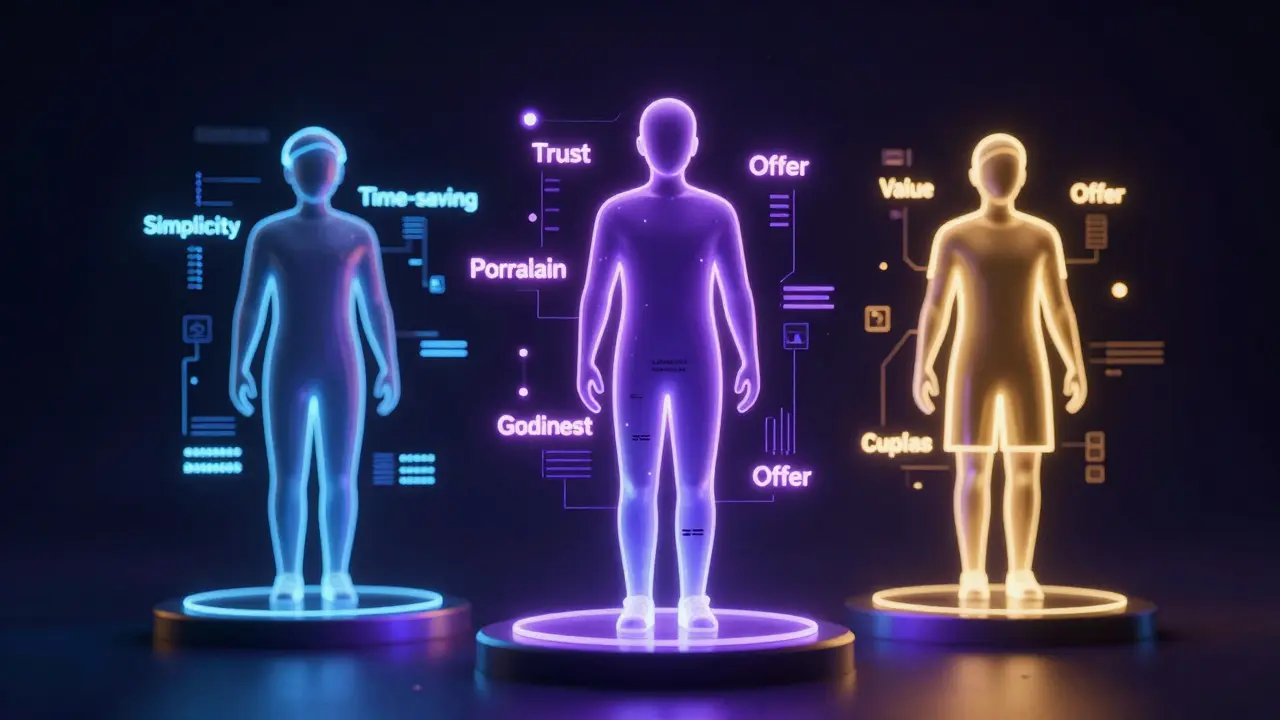
Once you have these personas, you can create a mapping for your campaigns. Instead of one ad for everyone, you create a specific track for each segment:
- The Skeptic: Ads focusing on testimonials, certifications, and risk-free guarantees.
- The Overwhelmed: Ads focusing on simplicity, time-saving, and ease of use.
- The Bargain Hunter: Ads focusing on value-per-dollar and limited-time offers.
Scaling your creative across different platforms
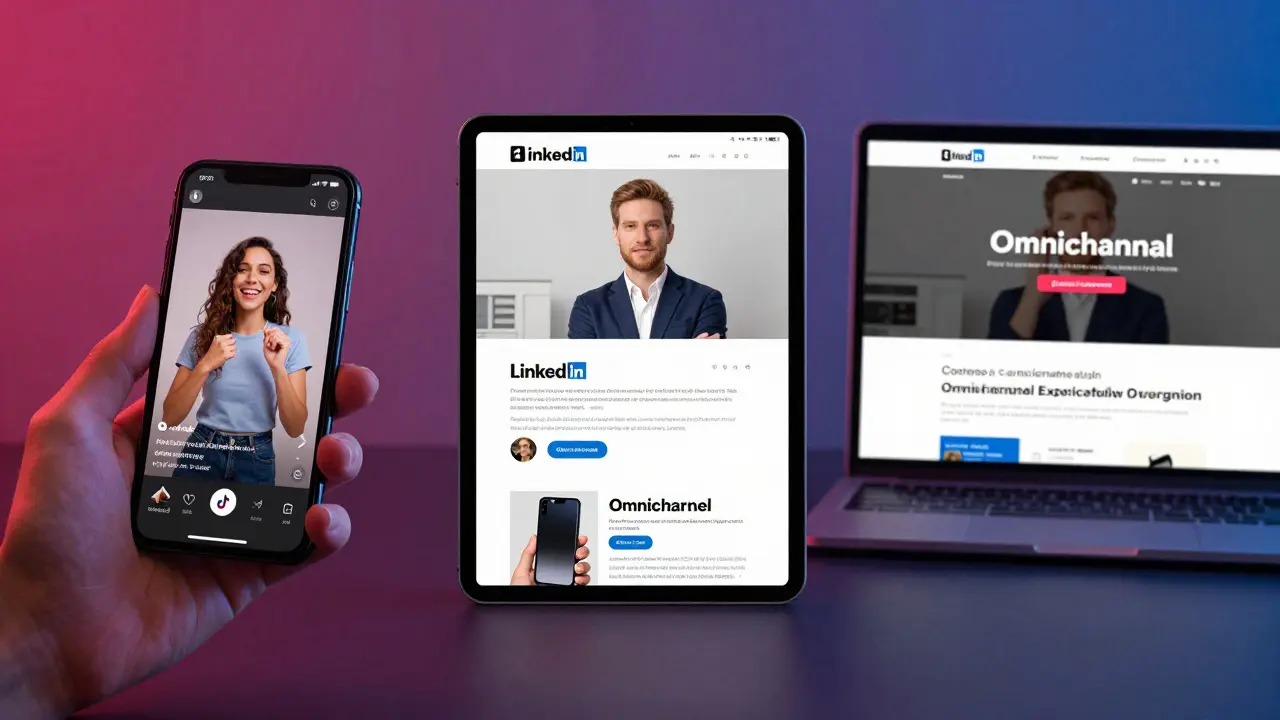
A common mistake is taking a high-performing Facebook Ad and pasting it directly into TikTok or Instagram. Every platform has its own "language." TikTok users hate things that look like ads; they want content that looks like a recommendation from a friend. Instagram is visual-first, and LinkedIn is professional yet conversational.
You can use AI as a translation layer. Take your core value proposition and ask the AI to "reformat this for a TikTok script using a 'POV' style hook." It will take your professional benefit and turn it into something like "POV: You finally found the tool that stops your clients from emailing you on Sundays." By doing this, you maintain a consistent brand message while adapting the delivery to fit the environment where the user is currently scrolling.
This process is essential for Omnichannel Marketing, a strategy that provides a seamless user experience regardless of the channel they use. If a user sees a funny TikTok, then a professional LinkedIn post, and finally a direct email-all speaking to the same pain point but in different tones-the brand feels omnipresent and trustworthy rather than repetitive.
Optimizing the middle of the funnel
Most advertisers obsess over the ad itself, but the ad is only half the battle. The transition from the ad to the Landing Page-the standalone web page created specifically for a marketing campaign-is where most conversions are lost. If your ad promises "The 5-minute fix for bad sleep" but your landing page starts with "Welcome to our corporate history since 1994," the user will bounce immediately.
Use AI to ensure "message match." Paste your winning ad copy into the AI and ask it to generate three different headline options for the landing page that mirror the exact wording and emotional tone of the ad. This creates a cognitive bridge for the user, making the transition feel natural. You can even ask the AI to critique your landing page copy by acting as a "harsh customer who is on the fence about buying." It will point out the gaps in your logic or the places where your call-to-action is too vague.
To take this further, you can implement A/B testing at a level that was previously impossible. Instead of testing two pages, use AI to generate ten different variations of your lead-capture form or a series of micro-copy changes (like changing "Submit" to "Get My Free Guide"). When you have the data from these tests, feed it back into the AI to ask *why* it thinks one version outperformed the other. This turns your data into an actual learning loop.
Avoiding the AI traps that kill conversions
There is a danger in leaning too hard on AI: the "uncanny valley" of marketing. When an ad sounds *too* perfect or uses too many adjectives like "revolutionary," "game-changing," or "unleash," the human brain flags it as spam. Real people don't talk like that. The goal is to use AI for the structure and then apply a "human layer" to the final output.
Always check for these three red flags in your AI-generated ads:
- Over-promising: AI tends to be overly optimistic. If it says your product "guarantees a 100% increase in revenue," change it to something believable and grounded in reality.
- Generic adjectives: Delete words like "comprehensive," "cutting-edge," and "seamless." Replace them with concrete examples. Instead of "seamless integration," say "works with your existing Google Calendar in two clicks."
- Lack of rhythm: AI often writes sentences of the same length. Manually break up the flow. Use a short sentence. Then a longer one. It creates a cadence that keeps the reader engaged.
Lastly, be careful with Compliance. Every advertising platform, from Google to Meta, has strict rules about what you can claim, especially in health, finance, or housing. AI doesn't know the latest policy update from Meta's legal team. Always run your final copy through a human compliance check to ensure you don't get your ad account banned for a phrase the AI thought sounded "persuasive."
Will using AI for ads lead to a penalty from Google or Meta?
No, the platforms don't penalize you for using AI to write copy. They penalize you for the *content* of the ad. If your AI-generated ad violates their community standards, makes false claims, or is misleading, you will be flagged. The tool you use to write the words is irrelevant; the quality and legality of the words are what matter.
How do I prevent my AI ads from sounding robotic?
The best way is to provide a "voice guide." Tell the AI: "Write in the style of a helpful friend, avoid superlatives, use contractions, and keep sentences under 15 words." You can also feed it examples of your own best-performing manual copy and tell it to "analyze the tone, cadence, and vocabulary of this text and replicate it for a new product."
Can ChatGPT help with the actual visual side of advertising?
While it doesn't create the final image or video, it is an incredible tool for creative direction. You can ask it to generate "detailed image prompts for Midjourney" or a "shot list for a 15-second UGC video." It can describe the exact lighting, angle, and emotion a scene should evoke, which you then hand off to a designer or videographer.
Is it better to use ChatGPT or a specialized AI ad writer?
Specialized tools often have built-in templates and direct API integrations with ad platforms, which is great for speed. However, a general model like ChatGPT allows for more complex reasoning and deep persona development. If you know how to prompt, a general model usually gives you more creative and less "templated" results.
How many versions of an ad should I generate using AI?
Avoid the temptation to test 100 versions. You'll dilute your data. Instead, focus on 3-5 distinct "angles" (e.g., one based on fear, one on gain, one on logic). For each angle, generate 2-3 headline variations. This gives you enough data to find a winner without wasting your budget on negligible variations.
What to do next
If you've never used AI in your workflow, don't try to automate your entire department tomorrow. Start with the lowest-risk area: headlines. Take your current best-performing ad and ask an AI to give you 10 variations of the first sentence. Test those variations against the original for a week. Once you see the lift in click-through rates, move upstream to persona development and landing page optimization.
For those already using AI, the next step is building a custom GPT or a prompt library. Document the exact prompts that yielded the highest conversion rates. This turns a random tool into a scalable company asset. The winners in the next era of advertising won't be those who use AI to write more, but those who use AI to understand their customers better.
Latest Posts