
Key Takeaways for AI-Driven Marketing
- Stop using simple prompts; use "Role-Context-Task-Constraint" frameworks.
- Use AI for brainstorming and drafting, but always apply a human "final polish" for brand voice.
- Leverage AI to repurpose one long-form video or blog into 10+ platform-specific snippets.
- Use data-driven prompts to analyze competitor hooks and sentiment.
Building a Social Media Strategy with AI
You can't just throw posts at a wall and hope they stick. You need a roadmap. Instead of spending a week on a slide deck, use AI to build your foundation in an hour. Start by feeding the AI your brand's mission, target audience, and unique selling proposition (USP). For example, if you're selling eco-friendly skincare in Brisbane, tell the AI that your audience is "Gen Z professionals who value transparency and sustainable sourcing."
Once the AI knows who you are, ask it to generate a Content Pillar strategy. These are the 3-5 core themes your brand will always talk about. For the skincare brand, pillars might be "Ingredient Deep Dives," "Sustainable Living Tips," and "Customer Transformation Stories." This prevents your feed from looking like a random collection of posts and ensures you're actually solving problems for your followers.
Next, move into a Content Calendar. Don't just ask for a list of dates. Ask for a grid that balances promotional content, educational value, and engagement triggers. A good rule of thumb is the 80/20 rule: 80% of your content should provide value, and only 20% should be a direct sales pitch. Ask ChatGPT to map this out across Instagram, TikTok, and LinkedIn, adjusting the tone for each.
The Art of Prompt Engineering for SMM
The difference between a post that flops and one that goes viral often comes down to the prompt. Most people use "Basic Prompts" (e.g., "Write a caption for a new watch"). Professionals use "Advanced Frameworks." Try the Role-Context-Task-Constraint method:
- Role: "Act as a world-class direct-response copywriter who specializes in high-conversion Instagram captions."
- Context: "We are launching a limited-edition waterproof watch for outdoor adventurers. The price is $200, and it's made from recycled ocean plastic."
- Task: "Write three different caption options: one that uses storytelling, one that is short and punchy, and one that focuses on the environmental impact."
- Constraint: "Do not use emojis like 🚀 or ✨. Keep the tone rugged and honest. End each post with a clear call to action to visit the link in the bio."
By adding these constraints, you stop the AI from using those "AI-isms"-words like "delve," "unlock," or "game-changer"-that immediately tell a user they are reading bot-generated text. If the output still feels a bit stiff, tell the AI to "write it at a 5th-grade reading level" or "write it as if you are talking to a friend over coffee." This forces the model to simplify its vocabulary and sound more human.

Repurposing Content for Maximum Reach
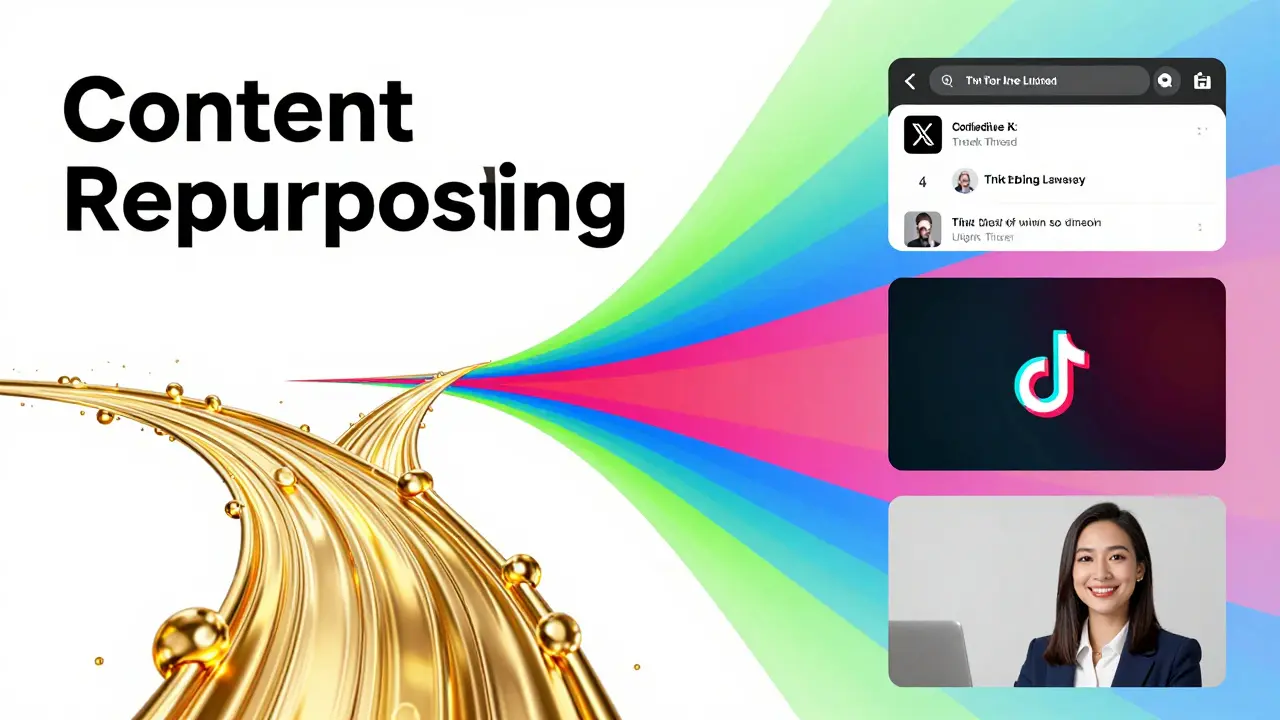
Creating a high-quality 1,500-word blog post or a 10-minute YouTube video is a massive investment of time. It would be a waste to only post it once. This is where Content Repurposing becomes your superpower. You can feed the transcript of your video into the AI and ask it to extract the "gold nuggets."
Here is a workflow that works: ask the AI to find the five most controversial or surprising points in your text. Then, turn each of those points into a Twitter (X) Thread. From there, ask it to rewrite the most impactful quote as a text overlay for an Instagram Reel. This ensures your messaging remains consistent across platforms while respecting the unique format of each one.
| Original Asset | AI Transformation | Target Platform | Key Attribute |
|---|---|---|---|
| Blog Post | Summary Thread | Twitter/X | Concise/Opinionated |
| YouTube Video | Script for Short | TikTok/Reels | Fast-paced/Hook-heavy |
| Case Study | Professional Insight | Authoritative/Analytical | |
| Podcast | Q&A Carousel | Visual/Educational |
Handling Community Management and Engagement
Engagement isn't just about posting; it's about responding. However, answering 50 versions of "How much is this?" can kill your productivity. You can use AI to create a Response Bank. Feed the AI your most frequently asked questions and your brand's voice guidelines. Ask it to generate five different ways to answer each question-some formal, some playful, and some strictly informative.
When a negative comment appears, don't react emotionally. Paste the comment into the AI and ask: "Analyze the sentiment of this comment and suggest a professional, empathetic response that moves the conversation to a private DM." This keeps your public image clean and ensures you're handling customer service with a level head. Just remember, never let the AI respond directly to a customer without a human reviewing it. A bot missing a sarcastic tone can turn a small complaint into a PR nightmare.
Avoiding the "AI Look" and Maintaining Authenticity
The biggest risk of using AI in Social Media Marketing is losing your brand's soul. When everything is perfectly optimized, it starts to feel fake. To avoid this, use the "80/20 Editing Rule." Let AI do 80% of the heavy lifting (research, outlining, first draft), but spend the final 20% of your time adding personal anecdotes, current slang, or specific local references that a bot wouldn't know.
For instance, if you're promoting a cafe in Brisbane, the AI might say "Enjoy our delicious coffee in the beautiful city." A human would say "Beat the heat with an iced latte while you walk through South Bank." That specific, local touch is what builds trust. AI provides the structure; you provide the heartbeat.
Can ChatGPT replace a social media manager?
No. While AI can handle content generation and data analysis, it lacks emotional intelligence, real-time cultural awareness, and the ability to build genuine human relationships. It is a tool that makes a manager 10x more efficient, not a replacement for strategic human oversight.
Does using AI content hurt my reach in the algorithm?
Platforms like Instagram and TikTok care about engagement (likes, shares, watch time), not whether a human or AI wrote the caption. However, if the content is generic and doesn't resonate with users, your engagement will drop, which then hurts your reach. The key is editing AI content to be high-value and unique.
How do I stop ChatGPT from sounding like a bot?
Avoid generic prompts. Give the AI a specific persona, tell it to avoid certain words (like 'revolutionize' or 'tapestry'), and ask it to use a conversational, informal tone. Always provide real-world examples of your previous successful posts so it can mimic your actual style.
What is the best way to use AI for hashtag research?
Instead of asking for "best hashtags," ask for a categorized list. Request a mix of high-volume (broad), medium-volume (niche), and low-volume (hyper-local) hashtags. This helps you rank in different tiers of search results.
Is it ethical to use AI for social media responses?
It is ethical as long as you aren't deceiving your customers. Using AI to draft a helpful response is fine; using a bot to pretend to be a human in a deep emotional conversation is where it becomes problematic. Always maintain a level of transparency and human review.
Next Steps for Scaling Your Workflow
If you've mastered basic prompting, it's time to move toward automation. Look into tools that connect your AI to your posting schedule, but keep a "human-in-the-loop" system. Try setting up a weekly "AI Brainstorming Session" where you spend 30 minutes feeding the AI current news trends in your industry and asking it to predict how they will affect your customers. This transforms the tool from a writing assistant into a predictive intelligence asset.
Latest Posts