

Remember when you could just stuff keywords into a blog post and watch the traffic roll in? Those days are long gone. In 2026, ChatGPT isn't just a writing assistant; it's the elephant in the room for every search engine optimizer on the planet. The landscape has shifted from keyword density to intent satisfaction, driven by massive changes in how both users and algorithms process information.
If you're still treating SEO like a game of tricking Google, you're already behind. The rise of generative AI has forced a complete overhaul of traditional strategies. We aren't just optimizing for bots anymore; we are optimizing for an ecosystem where AI answers questions directly on the results page. This article breaks down exactly what that means for your workflow, your content, and your bottom line.
The Death of Generic Content
The biggest shift since the introduction of large language models is the devaluation of generic content. Search engines, particularly Google with its Search Generative Experience (SGE), can now synthesize answers from millions of sources instantly. If your article offers nothing unique-no personal experience, no original data, no distinct viewpoint-it simply doesn't matter. It gets buried or ignored entirely.
This is where the concept of E-E-A-T (Experience, Expertise, Authoritativeness, and Trustworthiness) became non-negotiable. You cannot fake experience with an AI prompt. A user clicking through to your site wants to know if *you* have actually used the product, visited the location, or solved the problem yourself. ChatGPT can write a perfect guide on "How to Fix a Leaky Faucet," but it hasn't turned on a wrench. Your job as a creator is to inject that human reality into the mix.
| Aspect | Old School (Pre-2023) | AI-First (2026) |
|---|---|---|
| Primary Goal | Rank for keywords | Satisfy user intent & build authority |
| Content Volume | High volume, low effort | Low volume, high expertise |
| Keyword Usage | Dense, repetitive | Natural, conversational, semantic |
| Structure | H1-H6 hierarchy only | Schema markup + AI-readable entities |
| Trust Signal | Backlinks quantity | Brand mentions + First-hand experience |
Optimizing for Semantic Entities
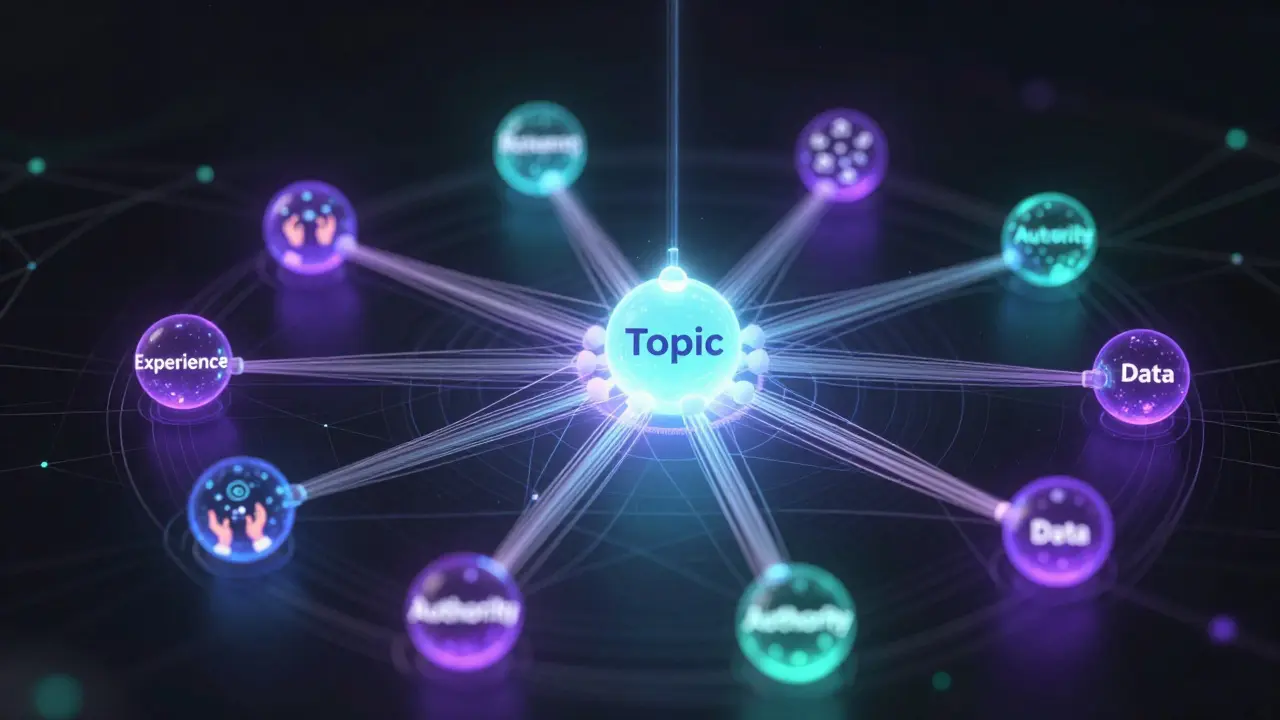
To survive in this new era, you need to think like a knowledge graph. Search engines don't just read words; they understand relationships between concepts. When you write about "Coffee," the algorithm expects to see related entities like "Roasting," "Arabica," "Brewing Methods," and specific temperatures. ChatGPT helps here not by writing the final draft, but by mapping these connections.
You can use AI to audit your content gaps. Ask it: "What are the key attributes and subtopics associated with [Your Topic] that competitors are missing?" This builds topical authority. Instead of writing ten shallow posts, you write one comprehensive pillar page that covers every angle. This depth signals to the search engine that you are a definitive source, making your content more likely to be cited in AI-generated summaries.
Using ChatGPT as a Strategic Partner
Don't let ChatGPT write your articles. Let it do the heavy lifting that humans hate. Use it for:
- Outline Generation: Feed it a topic and ask for a structure based on user intent rather than just headings.
- Data Synthesis: Paste raw research notes and ask it to summarize key trends or statistics.
- Tone Adjustment: Write your draft in your own voice, then ask the AI to make it more concise or engaging without losing the core message.
- Meta Descriptions: Generate multiple variations of meta tags to test click-through rates.
The key is oversight. AI models hallucinate facts. They might invent a study or misquote a statistic. Always verify claims against primary sources. Your credibility is on the line, not the AI's.
The Rise of Zero-Click Searches
A harsh reality for publishers in 2026 is the increase in zero-click searches. Users get their answer right on the SERP (Search Engine Results Page) via AI overviews. This sounds terrifying, but it also creates opportunities. Brands that appear in those AI snippets gain immense trust and visibility, even if they don't get the immediate click.
To win here, you need structured data. Schema markup tells the AI exactly what your content is. Is it a recipe? A product review? A FAQ? By marking up your content with JSON-LD, you make it easier for AI systems to extract and display your information accurately. This is technical SEO at its most critical. Without clear signals, your content is just noise in a crowded digital space.
Building Brand Authority Beyond Keywords
Since anyone can generate text, brand becomes the ultimate differentiator. People trust voices they recognize. This means focusing on owned media channels like newsletters, social communities, and video platforms. SEO drives discovery, but brand drives retention.
Invest in building a recognizable style. Whether it's a specific tone of humor, deep-dive analysis, or visual storytelling, make your content unmistakably yours. When users associate a topic with your brand name, they will seek you out directly, bypassing search engines altogether. This direct traffic is gold because it is immune to algorithm changes.

Practical Steps for Immediate Implementation
If you want to adapt your strategy today, start with these actionable steps:
- Audit Existing Content: Identify pages that are purely informational and lack unique insight. Update them with personal case studies or original data.
- Implement Schema Markup: Ensure all key pages have appropriate structured data (Article, Product, FAQ, HowTo).
- Focus on Long-Tail Intent: Target questions that require nuanced answers, which AI struggles to summarize perfectly.
- Build Entity Profiles: Create author bios that highlight real-world credentials and link to external profiles (LinkedIn, Wikipedia, industry publications).
FAQ
Will ChatGPT replace SEO professionals?
No, but it will replace SEO professionals who don't use AI. The role is shifting from tactical execution (writing basic posts) to strategic oversight, technical implementation, and brand building. Human judgment is required to interpret data and create authentic connections with audiences.
Is AI-generated content penalized by Google?
Google does not penalize AI content per se. It penalizes low-quality content, regardless of how it was created. If AI content is helpful, accurate, and provides value, it ranks well. However, mass-produced, spammy AI content is easily detected and devalued.
How important is schema markup in 2026?
It is critical. As AI overviews become standard, schema markup acts as the bridge between your content and the AI's understanding. It ensures your data is extracted correctly and displayed prominently in rich results and AI summaries.
What is the best way to add "experience" to AI-assisted content?
Include personal anecdotes, original photos, unique data sets, or interviews with experts. These elements cannot be fabricated by AI and provide the authenticity that search engines and users crave. Explicitly state your hands-on involvement in the topic.
Should I stop targeting short-tail keywords?
Not necessarily, but adjust expectations. Short-tail keywords are increasingly dominated by AI overviews and established brands. Focus on long-tail, question-based queries where you can provide deeper, more personalized insights that stand out from generic AI summaries.
Latest Posts