

Key Takeaways for Marketers
- Move from generic prompting to "Chain-of-Thought" reasoning for better strategy.
- Use AI for hyper-personalization at scale, not just bulk content creation.
- Combine LLMs with first-party data to avoid the "AI blandness" trap.
- Focus on AI-assisted research and customer persona mapping to drive conversions.
Turning Raw AI into a Marketing Strategist
The biggest mistake people make is the 'one-shot prompt.' You ask for a social media calendar, it gives you a generic list of posts, and you spend two hours editing them to actually sound like your brand. To get a result that actually converts, you have to build a context window. Think of it as onboarding a new employee. You wouldn't tell a junior marketer 'make me a plan' without giving them your brand guidelines, past performance data, and a clear definition of your target audience.
Instead, use a multi-step process. First, feed the AI your customer interviews or survey results. Then, ask it to identify the top three emotional pain points. Only after it acknowledges those should you ask for a content strategy. This ensures the output is rooted in real human psychology, not just a statistical guess of what a 'marketing post' looks like. When you align Content Marketing-the process of creating and distributing valuable, relevant content to attract a clearly defined audience-with AI-driven insights, your click-through rates usually jump because the messaging actually resonates with the user's current struggle.
Scaling Personalization Without Losing the Human Touch
We've reached a point where 'personalized' emails (like adding a first name) are basically invisible to customers. They expect more. The intersection of AI and Digital Marketing is now about behavioral personalization. Imagine a scenario where you use a tool like Zapier to send a user's specific website behavior (pages visited, time spent) into a custom GPT instance that then generates a unique offer based on that exact journey.
For example, if a user spends ten minutes reading about "organic skincare for sensitive skin" but leaves the checkout page, an AI-generated email shouldn't just say "you forgot something." It should say, "We noticed you're looking for sensitive-skin solutions; here is why our formula avoids the common irritants you're worried about." That's the difference between automation and intelligence. By utilizing Marketing Automation-the use of software to automate repetitive marketing tasks-you can handle this for 10,000 customers as easily as you do for one.
| Feature | Traditional AI Use (2023-2024) | Modern Strategic Use (2026) |
|---|---|---|
| Content Creation | Generating full articles from a prompt | AI-drafted outlines based on real SEO gaps |
| Customer Interaction | Basic FAQ chatbots | Conversational AI that closes sales in-chat |
| Market Research | Summarizing existing articles | Synthesizing raw customer interview transcripts |
| Ad Copy | A/B testing 2-3 versions | Generating 50+ hyper-niche variants for micro-segments |
The New SEO Landscape: From Keywords to Intent
The old game of stuffing keywords into a 2,000-word post is dead. With the rise of SGE (Search Generative Experience) and AI-driven search, Google is moving toward answering the user's intent directly on the search page. If your content only provides surface-level answers, AI will simply scrape your info and the user will never click your link.
To survive this, your SEO-the practice of increasing the quantity and quality of traffic to your website through organic search engine optimization-needs to focus on 'Information Gain.' This means providing unique data, personal case studies, or a controversial take that an AI cannot simulate. Use ChatGPT to find the common consensus on a topic, and then intentionally write against it or add a layer of real-world experience. When you provide a perspective that doesn't exist in the training data, you become the primary source that the AI is forced to cite.

Optimizing Paid Media with Predictive Iteration
Paid advertising is where AI delivers the fastest ROI. Instead of guessing which headline works, you can now use Meta Ads or Google Ads in tandem with AI to run "predictive iterations." You feed the AI your best-performing ad from last quarter and ask it to analyze the linguistic patterns-the urgency, the tone, the specific benefit mentioned-and then generate ten variations that keep the core psychological trigger but change the hook.
This isn't just about more copy; it's about speed. In a typical campaign, a human might take a week to analyze data and rewrite a campaign. An AI-integrated workflow does this in seconds. By connecting your CRM (Customer Relationship Management) data to your AI prompts, you can create ads that speak specifically to the lifecycle stage of the customer. A first-time visitor sees a "problem-aware" ad, while a returning customer sees a "solution-comparison" ad, all generated by the same AI engine.
Avoiding the 'AI Blandness' Trap
There is a phenomenon happening right now where the internet is becoming a sea of "In today's fast-paced world..." and "It's important to remember..." This is the hallmark of unedited AI content. When every brand uses the same model, they all start sounding like the same corporate brochure. This leads to brand erosion and a loss of trust.
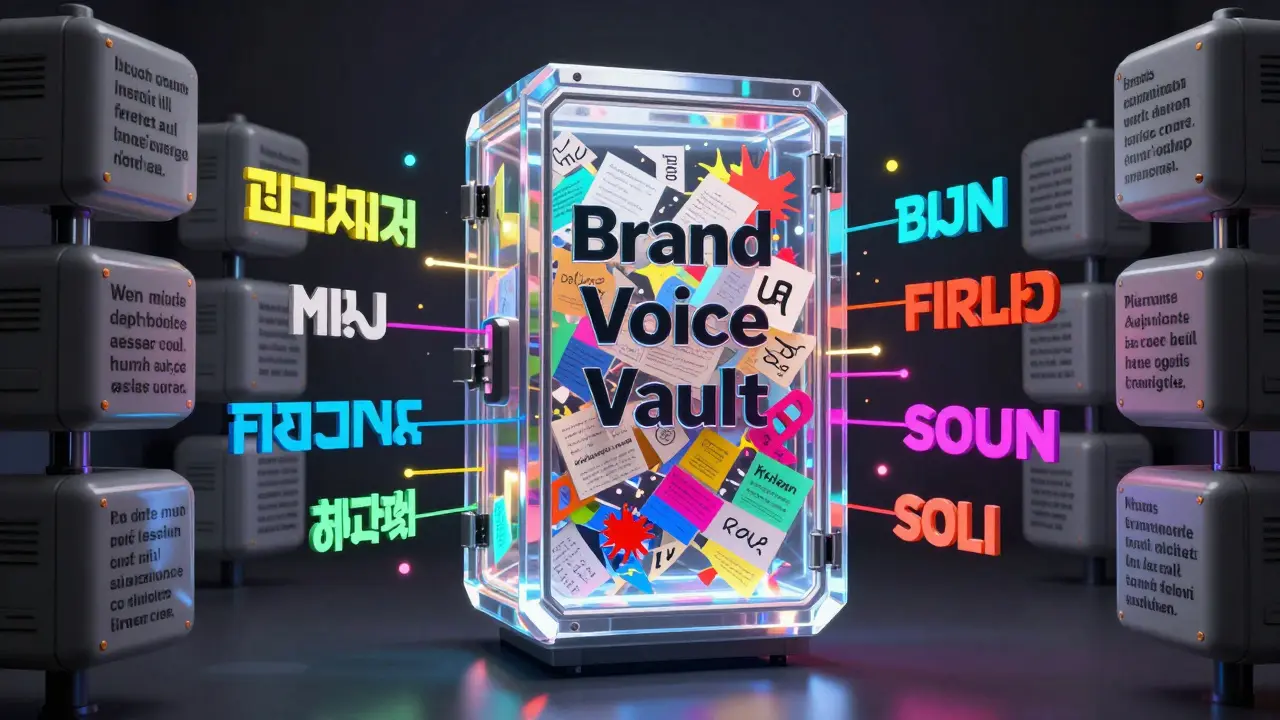
To avoid this, create a "Brand Voice Vault." This is a document containing your banned words, your preferred sentence structures, and examples of your best human-written copy. Every time you prompt the AI, reference this vault. Tell it: "Write this in the style of the attached examples, avoid words like 'comprehensive' or 'game-changer,' and use a punchy, direct tone." The goal is to use AI for the heavy lifting of structure and research, while keeping the final 20% of the editing strictly human. That's where the soul of the brand lives.
The Future of Conversational Commerce
We are moving away from static landing pages and toward conversational interfaces. The future of the sales funnel is a chat. Instead of a user clicking through five pages to find a pricing plan, they'll interact with a custom-trained AI agent that knows your entire product catalog, your pricing tiers, and your current promotions.
This changes how we think about Conversion Rate Optimization (CRO). Success is no longer about where the button is placed on the page, but about how the AI handles an objection. If a customer says, "This is too expensive," a well-integrated AI doesn't just give a discount code; it asks a clarifying question to understand the value gap and then explains the specific ROI for that customer's business size. This turns a marketing tool into a digital sales closer that works 24/7.
Will ChatGPT replace digital marketing agencies?
No, but agencies that only provide execution (like writing captions or setting up ads) will struggle. Agencies that pivot to strategy, AI orchestration, and high-level creative direction will thrive. The value is shifting from "doing the work" to "knowing what work to tell the AI to do."
Does using AI-generated content hurt my SEO rankings?
Google's guidelines focus on quality and helpfulness, not the tool used. However, pure AI content often lacks the "Experience" and "Expertise" (from E-E-A-T) that search engines reward. If you use AI to draft and humans to add real-world evidence and unique insights, your rankings will likely improve because the content is more comprehensive.
How do I prevent AI from hallucinating facts in my marketing copy?
The best way to stop hallucinations is through "Grounding." Don't ask the AI to find facts from its own memory. Instead, provide the source text (like a product spec sheet or a case study) and tell it: "Use only the provided information to answer this. If the answer is not in the text, state that you don't know."
Which is better for marketers: ChatGPT or Claude?
It depends on the task. ChatGPT is generally superior for data analysis, complex automation via plugins, and rapid brainstorming. Claude often excels at longer-form writing with a more natural, less "AI-sounding" tone and handles massive documents (like 100-page PDFs) with better nuance.
How can I use AI for market research on a budget?
Start by scraping public reviews of your competitors from sites like Trustpilot or G2. Feed those reviews into ChatGPT and ask it to "create a sentiment map" identifying common complaints and praised features. This gives you a data-backed understanding of the market gap without paying for expensive research firms.
Next Steps for Your AI Integration
If you're feeling overwhelmed, don't try to automate your whole department at once. Start with a "Low-Hanging Fruit" approach. Pick one repetitive task-like turning a long-form webinar transcript into five LinkedIn posts-and build a perfect prompt for that. Once you've mastered that, move to customer persona mapping, then to behavioral email sequences.
For those in the early stages, your first goal should be building your Brand Voice Vault. Collect every piece of copy you've ever written that you actually loved. This becomes the anchor that keeps your AI output from sounding like a robot. As you move forward, keep a close eye on how your customers interact with AI; the moment they start preferring the chat interface over your landing page is the moment you need to shift your entire budget toward conversational commerce.
Latest Posts