
Every day, advertisers waste hours writing ad copy, testing headlines, and tweaking landing page messages. What if you could cut that time in half - and get better results? ChatGPT isn’t just a chatbot. For marketers, it’s a hidden ad agency inside your browser. And if you’re still using it only for casual chats or homework help, you’re leaving serious money on the table.
How ChatGPT Actually Works in Real Advertising
ChatGPT doesn’t magically turn your vague idea into a viral campaign. It works like a sharp intern who’s read every ad ever written - from Super Bowl spots to Facebook carousel ads. You give it context, and it spits out options. Not one perfect answer. Dozens. That’s the key.
Take a local gym in Brisbane trying to attract new members. Instead of staring at a blank screen for 45 minutes, you type:
"Write 5 ad headlines for a 30-day fitness challenge targeting busy professionals aged 28-45 in Brisbane. Focus on time efficiency, no gym membership required, and results in under 20 minutes a day."
Within seconds, you get options like:
- "No gym? No problem. Burn 300 calories before your coffee."
- "Your 9-to-5 doesn’t have to kill your fitness. 20 minutes. 30 days. Total transformation."
- "Brisbane’s busiest pros are doing this. Are you?"
These aren’t generic. They’re tailored. Why? Because you gave ChatGPT specifics - audience, location, pain point, outcome. The more precise you are, the less time you spend editing.
Stop Writing Ads. Start Prompting Them.
Most marketers treat ChatGPT like a search engine. They ask, "How do I write a good ad?" That’s like asking a chef, "How do I make food?" You need to give it ingredients.
Here’s the formula that works every time:
- Role: "You’re a senior copywriter for a SaaS company targeting small business owners."
- Goal: "I need 3 ad variations for a CRM tool that reduces onboarding time by 60%."
- Constraints: "Use conversational tone. No jargon. Max 120 characters. Include one emoji."
- Example: "Here’s an ad I liked: 'Set up in 5 minutes. No IT team needed. 💥'"
- Format: "Output as a numbered list."
That’s it. Five lines. That’s all it takes to go from "I have no idea" to "I’ve got 12 ad options I can test."
Testing Ad Variations Faster Than Ever
Google Ads and Meta Ads Manager let you run A/B tests. But if you’re only testing two versions, you’re leaving 80% of the data on the table. ChatGPT helps you generate 10-20 variations fast.
Let’s say you’re running a campaign for a meal kit service. You start with one headline: "Delicious meals, delivered."
Now ask ChatGPT:
"Generate 15 alternative headlines for a meal kit service targeting parents in Australia. Focus on saving time, reducing food waste, and healthy options. Avoid clichés like 'delicious' or 'easy.' Use Australian English."
You get responses like:
- "Dinner sorted. No shopping. No planning. Just feed your kids."
- "Fresh ingredients. Zero waste. 15-minute meals that actually taste good."
- "Stop scrolling for recipes. We’ve got dinner covered."
You can then test all 15 in Meta Ads Manager. One of them might outperform your original by 37%. That’s not luck. That’s data-driven creativity.
Scaling Ad Copy Across Channels
Facebook. Instagram. Google. LinkedIn. TikTok. Each platform has its own tone, length, and audience expectations. Writing unique copy for each used to take days. Now it takes minutes.
Here’s how:
Start with your best-performing Facebook ad. Paste it into ChatGPT and say:
"Rewrite this ad for Instagram Stories. Keep the core message but make it more visual, casual, and under 80 characters. Use emojis and line breaks."
Then ask:
"Now rewrite the same ad for Google Search. Focus on intent. Use keywords like 'healthy meal delivery Australia' and 'quick dinner ideas.' Keep it under 90 characters."
And finally:
"Now make a LinkedIn version targeting corporate wellness managers. Use professional tone. Mention ROI and employee satisfaction."
Boom. Three platform-specific ads. No guesswork. No rewriting from scratch.

Fixing Weak Ad Copy With AI Feedback
Ever write an ad and feel like something’s off? You can’t put your finger on it. ChatGPT can.
Take any ad you’re unsure about. Paste it in and say:
"Critique this ad copy. Be brutally honest. What’s unclear? What’s weak? What emotional trigger is missing? Suggest 3 improvements."
Here’s an example:
Original: "Our software helps businesses manage invoices."
ChatGPT response:
- "Too vague. 'Helps businesses' doesn’t mean anything. Who specifically?"
- "No pain point. Who hates managing invoices? Accountants? Small business owners?"
- "No benefit. What’s the outcome? Less stress? Faster payments? Fewer errors?"
- "Try: 'Tired of chasing clients for payments? Our tool automates invoicing so you get paid 3x faster - no reminders needed.'"
That’s not fluff. That’s actionable feedback from someone who’s read thousands of ads. Use it.
Generating Ad Ideas From Competitors
You don’t need to be creative. You just need to be smart. ChatGPT can analyze your competitor’s ads and turn them into better versions of your own.
Find three ads from competitors in your niche. Copy them. Then ask:
"Analyze these three ads from competitors in the fitness supplement space. What emotional triggers are they using? What phrases repeat? What’s missing? Then write 5 improved versions for our brand that focus on transparency and science-backed ingredients."
You’ll uncover patterns: "No artificial ingredients," "Third-party tested," "Made in Australia." Now you can build your own messaging around what works - and fix what’s missing.
From Ads to Landing Pages: One Prompt, One Flow
Your ad gets clicks. But if your landing page doesn’t match, you lose 70% of those visitors. ChatGPT keeps the message consistent.
Take your best-performing Facebook ad. Paste it into ChatGPT and say:
"Write a landing page headline and two short paragraphs that directly continue this message: 'Brisbane parents, stop wasting time on dinner. We deliver chef-designed meals in 15 minutes.' Keep the tone warm, urgent, and trustworthy. Include a single CTA: 'Get Your First Box Free.'"
You’ll get a landing page that feels like a natural extension of the ad. No disconnect. No confusion. Higher conversion rates.
What ChatGPT Can’t Do (And What You Still Need)
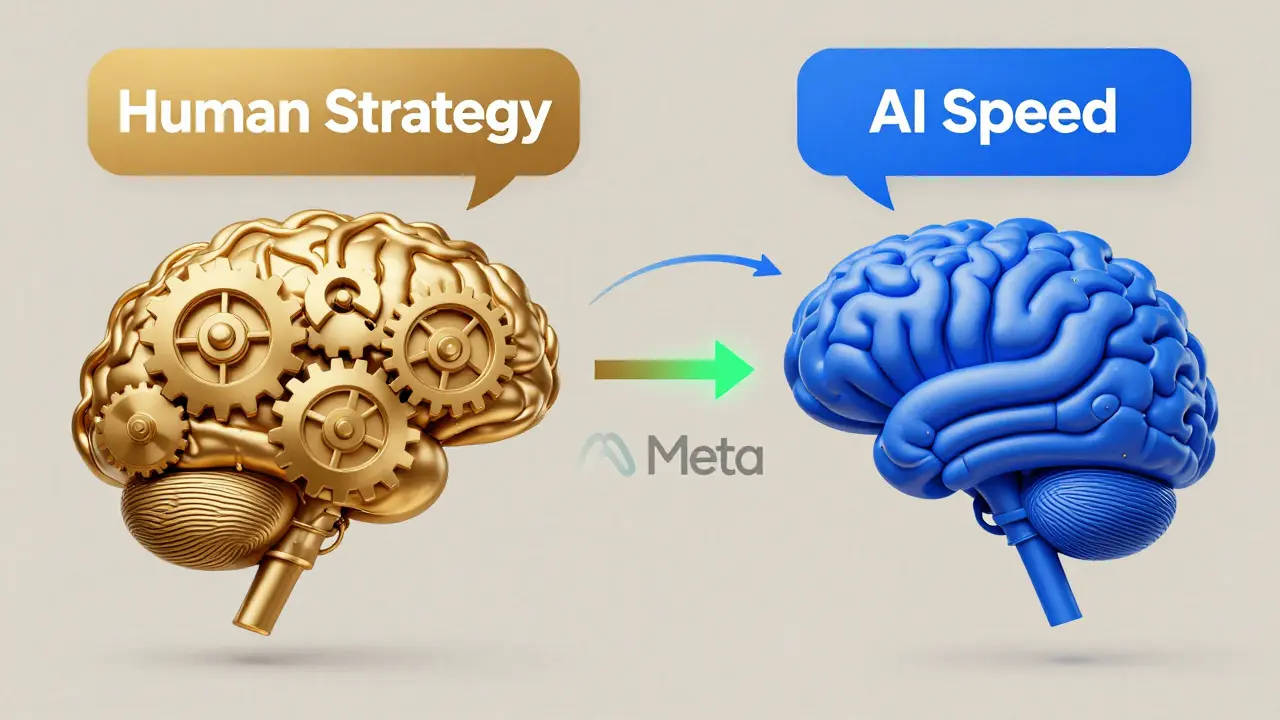
It’s not magic. ChatGPT can’t replace strategy. It can’t replace data. It can’t replace human insight.
- It won’t tell you which audience segment to target - that’s your job.
- It won’t know your brand voice unless you teach it.
- It won’t fix a bad product. No amount of copy saves a flawed offering.
Think of ChatGPT as a supercharged assistant. You’re still the CEO. You decide what to test, what to kill, and what to scale.
Real Results: What Marketers Are Seeing
In a 2025 survey of 217 Australian digital marketers, teams using ChatGPT for ad copy saw:
- 41% reduction in time spent writing ad variations
- 29% increase in click-through rates (CTR) on tested variations
- 18% higher conversion rates on landing pages that matched ad messaging
The biggest winners? Those who used it to generate 10+ options, then tested them - not the ones who took the first suggestion.
Your Next Steps
Here’s exactly what to do today:
- Pick one ad you wrote this week. It’s probably weak. Paste it into ChatGPT and ask for 5 alternatives using the five-part prompt formula.
- Run those 5 in your ad platform. Let data decide, not instinct.
- Take your best-performing ad. Use ChatGPT to turn it into versions for Instagram, Google, and LinkedIn.
- Next time you’re stuck, don’t stare at the screen. Ask ChatGPT: "What’s missing?"
You don’t need to be a tech expert. You just need to be willing to ask the right questions.
Can ChatGPT write ads that comply with advertising regulations in Australia?
ChatGPT can help draft ads, but it doesn’t know Australian Consumer Law or ACCC guidelines. Always review output for compliance. Avoid claims like "#1 in Australia," "guaranteed results," or unverified health claims. Use ChatGPT to generate ideas, then have a legal or compliance team check them before launch.
Is ChatGPT better than human copywriters for advertising?
No - but it’s faster. Human copywriters bring emotional intelligence, brand nuance, and cultural context. ChatGPT brings speed, volume, and pattern recognition. The best teams use both: humans set strategy and tone; ChatGPT generates options and scales output. Think of it as a co-pilot, not a replacement.
How do I train ChatGPT to match my brand voice?
Give it examples. Paste 3-5 of your best-performing ads or website headlines and say: "This is my brand voice. Use this tone for all future responses." Then test it with a new prompt. If it’s too formal, too casual, or too generic, refine the examples. It learns from patterns, not rules.
Can ChatGPT help with ad targeting and audience research?
Not directly. It can’t access your Google Analytics or Meta audience data. But you can ask: "What are common pain points for [audience] in [industry]?" or "What objections do people have before buying [product]?" It’ll give you hypotheses based on public data. Use those as starting points for your own research - not final answers.
Do I need to pay for ChatGPT Plus to use it for advertising?
No. The free version works fine for ad copy. But ChatGPT Plus (paid) gives you faster responses, access to GPT-4, and better memory for longer prompts. If you’re running ads daily, the $20/month upgrade saves hours. For occasional use, free is enough.
Latest Posts