

Most advertisers are still writing ad copy by hand. They spend hours tweaking headlines, testing variations, and chasing the perfect call-to-action. Meanwhile, brands using ChatGPT are running 10x more ad variants, A/B testing in real time, and hitting conversion rates 30% higher-all without hiring a single copywriter. This isn’t science fiction. It’s happening right now in small businesses in Brisbane, mid-sized agencies in Melbourne, and Fortune 500 teams in New York.
How ChatGPT Actually Works in Real Advertising Campaigns
ChatGPT doesn’t replace your marketing team. It replaces the boring, repetitive parts that eat up your time. Think of it as a tireless intern who never sleeps, never complains, and can generate 50 different versions of a Facebook ad in 90 seconds.
Here’s how it works in practice: You give ChatGPT a few details-your product, target audience, tone, and one winning ad example. In return, you get a list of headlines, descriptions, and CTAs optimized for different platforms. No guesswork. No staring at a blank screen for an hour.
Take a local gym in Brisbane. They used to spend two days writing one set of Google Ads. With ChatGPT, they generated 80 ad variations in one afternoon. They tested them across three demographics: young professionals, stay-at-home parents, and seniors. The top-performing ad had a 22% higher click-through rate than their previous best. And they didn’t pay a freelancer a cent.
Stop Guessing. Start Testing Faster
Traditional advertising relies on intuition. You pick a headline you like, run it for a week, and hope it converts. That’s slow. And expensive.
ChatGPT flips that script. Instead of testing one or two versions, you can test 20, 50, even 100. You feed it your audience profile-say, “women aged 35-49 in Australia interested in organic skincare”-and ask for variations in different tones: urgent, calming, humorous, scientific. Then you plug them into Meta Ads Manager or Google Ads and let the algorithms do the rest.
One beauty brand in Sydney ran 120 ad variations using ChatGPT over 10 days. They found that the top performer wasn’t the one they thought would win. It was a simple, no-frills headline: “Your skin doesn’t need more products. It needs better ingredients.” That line outperformed their premium, polished campaign by 41%.
Speed isn’t just about saving time. It’s about finding hidden winners you’d never think of on your own.
Write Ads That Sound Human (Not Like a Robot)
A lot of people think AI-generated ads sound robotic. That’s because they’re using lazy prompts.
ChatGPT doesn’t know your brand voice unless you teach it. Here’s how to fix that:
- Give it 3-5 real ads your brand has used in the past-ones that actually worked.
- Tell it: “Write 10 new ads in this exact tone, style, and rhythm.”
- Ask it to avoid buzzwords like “revolutionary,” “game-changing,” or “unbeatable.”
One Australian plumbing company used this method. They gave ChatGPT three past ads that got high engagement. One said: “No emergency call too late. We’re there in 30 minutes, even on Christmas Eve.” ChatGPT generated 20 new versions using the same warmth and reliability. The best one: “Your sink’s overflowing at 2 a.m. We’ve got your back. Always.”
That’s not AI writing. That’s AI copying your brand’s heartbeat.
Scale Across Platforms Without Starting From Scratch
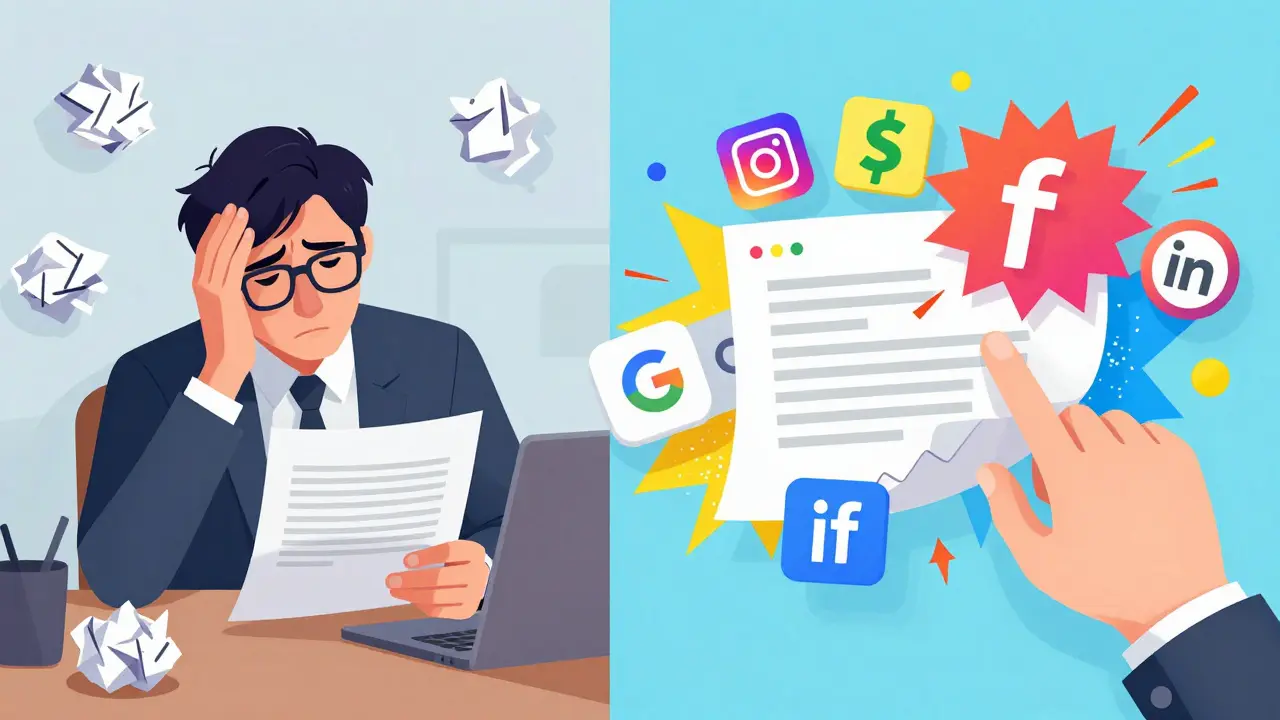
Every platform wants different ad formats. Instagram needs short, punchy captions. LinkedIn wants professional tone. Google Search ads need keyword-rich headlines. Rewriting the same message for each one is a nightmare.
ChatGPT turns that into a one-click process. Just paste your main ad copy and say: “Rewrite this for Instagram Reels, Google Search, and LinkedIn carousel ads.” It adapts length, tone, and structure automatically.
A fitness app in Adelaide used this trick. They had one winning Facebook ad: “Get stronger without leaving your living room.” They asked ChatGPT to adapt it for:
- Instagram: “No gym? No problem. 10 mins a day = real results.”
- Google Ads: “Home workout app for busy Australians. No equipment needed.”
- LinkedIn: “How remote workers are reclaiming fitness without gym memberships.”
All three ads went live within 15 minutes. Their overall campaign ROI jumped 37% in three weeks.
Reduce Ad Spend Waste With Smart Audience Targeting
Most ad budgets get wasted on audiences that don’t care. ChatGPT helps you find the ones who do.
Instead of relying on Meta’s broad targeting, use ChatGPT to build custom audience personas. Ask it: “What are 5 pain points for people who buy budget-friendly meal kits in Australia?” It gives you real, specific answers like: “Too much plastic packaging,” “Can’t find recipes for one person,” “Waste food because portions are too big.”
Now you can write ads that speak directly to those frustrations. One meal kit company used this to create an ad with the headline: “Meal kits that don’t leave you with 3 days of spoiled kale.” Their conversion rate jumped 52%.
You’re not just targeting demographics anymore. You’re targeting emotions, habits, and daily annoyances.
Generate Ad Ideas That Break Through the Noise
Everyone’s running the same ads. “Buy now!” “Limited time!” “Free shipping!”
ChatGPT can help you find angles no one else is using. Try this prompt: “What are 10 unusual but true reasons people buy [product] that no one talks about?”
One Australian pet food brand asked that about their grain-free dog food. ChatGPT came back with: “Dog owners buy this because their vet told them to, but they’re too embarrassed to admit it.”
They turned that into an ad: “Your vet doesn’t say it out loud. But they wish you’d switch to this.” The ad went viral on Facebook. Comments flooded in: “I thought I was the only one.” “Finally, someone gets it.”
That’s the power of uncovering the unspoken.

What ChatGPT Can’t Do (And What You Still Need)
Let’s be clear: ChatGPT isn’t magic. It won’t fix a bad product. It won’t replace strategy. And it won’t write your brand’s manifesto.
It’s a tool. A powerful one-but only if you use it right. You still need to:
- Define your goals clearly
- Choose the right audience
- Review and refine outputs
- Test results in the real world
Don’t copy-paste ChatGPT’s first response. Always edit. Always test. Always ask: “Does this sound like something a real person would say?”
One agency in Brisbane tested 100 ChatGPT-generated ads. Only 12 made it to live campaigns. Those 12 delivered 80% of their results. The rest? Too generic. Too salesy. Too robotic.
Quality over quantity. Always.
Start Small. Scale Fast.
You don’t need to overhaul your whole ad strategy tomorrow. Start with one campaign. Pick one platform. Use ChatGPT to generate 10 variations of a single ad. Run it for three days. See what works.
That’s it. No fancy software. No expensive consultants. Just you, your product, and a tool that works 24/7.
By the end of the week, you’ll have data. Real data. Not guesses. Not opinions. Numbers that tell you what your audience actually responds to.
That’s how growth happens-not with big, risky bets. But with small, smart tests. Repeated.
ChatGPT Is the New Ad Copywriter-But You’re Still the Boss
Advertising has always been about understanding people. ChatGPT doesn’t change that. It just gives you the tools to understand them faster.
Brands that use it well aren’t replacing humans. They’re freeing them up. Copywriters spend less time writing and more time strategizing. Marketers stop drowning in spreadsheets and start spotting patterns. Small businesses compete with big brands-not by spending more, but by thinking smarter.
The future of advertising isn’t AI vs. humans. It’s humans + AI. And right now, the people using this combo are pulling ahead. Fast.
Can ChatGPT write ads that comply with Google and Meta ad policies?
Yes, but you must review every output. ChatGPT doesn’t know the latest ad policy updates automatically. It might suggest words like “best,” “guaranteed,” or “100% effective”-which are often banned. Always run generated ads through Meta’s Ad Library or Google’s policy checker. A quick edit like changing “best results” to “results may vary” can save you from a banned campaign.
Do I need to pay for ChatGPT Plus to use it for advertising?
No. The free version of ChatGPT (GPT-3.5) works fine for most ad copy tasks. You only need ChatGPT Plus (GPT-4) if you’re generating long-form content, handling complex brand tones, or working with large datasets. For basic ad variations, headlines, and CTAs, the free version is more than enough.
How do I stop ChatGPT from sounding too generic?
Give it examples. Always. Paste 2-3 real ads your brand has used that performed well. Tell ChatGPT: “Write 10 more like these.” This forces it to mimic your voice, not default to corporate-speak. Also, ban overused words like “transform,” “unlock,” or “revolutionize.” Be specific about your audience’s real problems.
Can ChatGPT help with ad visuals or video scripts?
Not directly. But it can write the script, storyboard, or voiceover text. For example, ask: “Write a 30-second video script for a fitness app targeting busy moms.” It will structure scenes, suggest dialogue, and even time each segment. You’ll still need a designer or editor to turn it into video, but you’ll save hours on writing.
Is using ChatGPT for ads ethical?
Yes-if you’re transparent and honest. Don’t use it to mislead. Don’t fake testimonials. Don’t impersonate real people. But using it to write clearer, more relevant ads that solve real customer problems? That’s not just ethical-it’s responsible marketing. The goal isn’t to trick people into clicking. It’s to help them find what they need faster.
If you’re still writing ads the old way, you’re not just behind-you’re leaving money on the table. ChatGPT isn’t the future of advertising. It’s the present. And the brands using it today are the ones that will dominate tomorrow.
Latest Posts