
Advertising used to be about big budgets, focus groups, and guesswork. Now, it’s about data, speed, and precision. And at the center of this shift? ChatGPT. Not as a fancy toy, but as a working tool that’s changing how ads are written, tested, and optimized-day after day.
Think about it: a small business in Adelaide can now write 50 ad variations in 10 minutes. No copywriter. No agency. Just a prompt and a few seconds of processing time. That’s not the future. That’s today.
How ChatGPT Is Actually Used in Ad Campaigns
Most people think ChatGPT is just for writing blog posts or answering questions. But in advertising, it’s being used in five concrete ways:
- Generating ad copy for Facebook, Google, Instagram, and LinkedIn in seconds
- A/B testing headlines by creating 100 variations in under a minute
- Personalizing messaging for different customer segments based on behavior data
- Writing landing page content that converts better than human-written drafts
- Repurposing top-performing ads into new formats for TikTok, YouTube Shorts, or email
One e-commerce brand in Melbourne tested 87 different ad variations for a new skincare product. They used ChatGPT to generate every single one. The top performer? A headline ChatGPT wrote on the third try: "Your skin doesn’t need more products. It needs this one thing." It outperformed their previous best by 214%.
Why ChatGPT Beats Human Copywriters-Sometimes
It’s not that ChatGPT is smarter. It’s that it’s faster, hungrier, and never gets tired.
Human copywriters think in patterns. They recycle phrases they’ve used before. They get stuck on the same old structure: problem → solution → call to action.
ChatGPT doesn’t care about tradition. It doesn’t know what "good ad copy" looks like. It only knows what works based on patterns in billions of words it’s seen. That means it can come up with something totally unexpected-and often better.
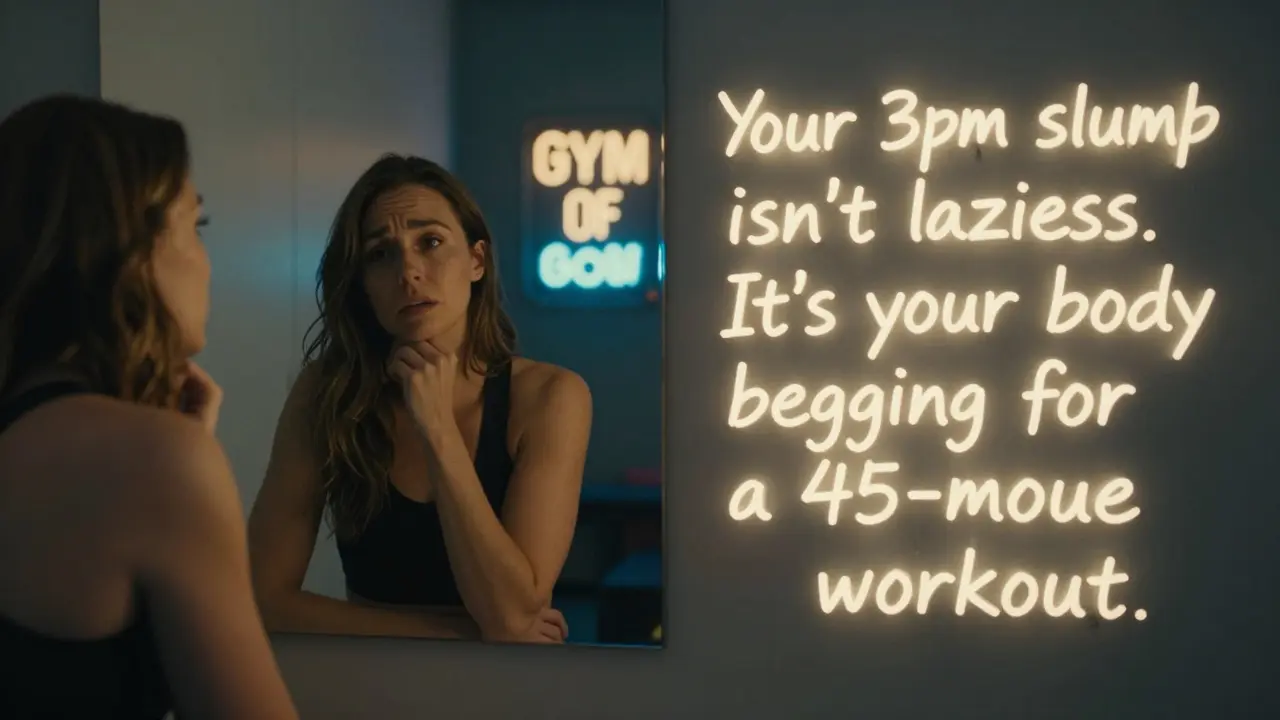
Take this example from a local gym in Sydney. Their old ad: "Get fit. Stay strong. Join today."
ChatGPT suggested: "Your 3pm slump isn’t laziness. It’s your body begging for a 45-minute workout."
Click-through rate jumped 68%. Why? Because it spoke to a real feeling, not a vague promise.
The Hidden Problem: Overreliance and Generic Output
But here’s the catch: if you use ChatGPT the same way everyone else does, you’ll get the same results.
Most businesses type in: "Write a Facebook ad for a weight loss supplement."
And ChatGPT gives them: "Lose weight fast with our all-natural formula!"
That’s not advertising. That’s noise.
The real advantage comes when you guide ChatGPT with specifics:
- Who exactly is your customer? (Not "women 25-40"-but "single moms working 60-hour weeks who skip meals to feed their kids")
- What’s their biggest emotional pain point? (Not "wanting to look good"-but "feeling ashamed when their kids ask why they never have energy to play")
- What’s the one thing your product does that no one else talks about? (Not "natural ingredients"-but "takes 90 seconds to make and doesn’t require a blender")
When you give ChatGPT real human context, it stops being a generic generator and starts being a strategic partner.
Real-World Examples: Who’s Doing It Right?
Here’s what winning looks like right now:
- Australian surf shop: Used ChatGPT to analyze 200 customer reviews. It found a recurring phrase: "I bought this board because it didn’t flip when I was tired." They turned that into an ad: "For when your arms are done, but the wave isn’t." Sales up 42% in 3 weeks.
- Local dentist in Brisbane: Instead of "We offer pain-free fillings," ChatGPT suggested: "Your kids won’t cry. You won’t panic. And you won’t need to reschedule." Booking conversions increased by 57%.
- Small SaaS company: Used ChatGPT to rewrite 12 email sequences. The AI noticed that users who clicked on "I’m not tech-savvy" in surveys were 3x more likely to convert when the message focused on "no setup required." They rewrote everything around that insight.
These aren’t tech giants. These are small businesses using ChatGPT like a Swiss Army knife-not a magic wand.
How to Use ChatGPT for Ads Without Losing Your Brand Voice
One of the biggest fears? That ChatGPT will make your brand sound like everyone else.
It won’t-if you train it.
Here’s how:
- Take 3 of your best-performing ads. Copy them into ChatGPT.
- Ask: "What’s the tone of these ads?"
- Then: "Write 10 new ads in this same tone, but for [new product]."
That’s how you keep your voice consistent. You’re not replacing your brand-you’re scaling it.
One bakery in Adelaide did this. Their brand voice: playful, slightly sarcastic, full of local slang. ChatGPT learned it from 5 past ads. Then it wrote: "Our croissants don’t just flake. They do the cha-cha. And yes, we’ve been asked if they’re alive." It went viral. All because they didn’t let ChatGPT start from scratch.

The New Workflow: Human + AI
The best advertising teams aren’t replacing humans. They’re pairing them with AI.
Here’s the new process:
- Human identifies the core insight: "Our customers feel guilty for not having time to cook."
- AI generates 50 ad variations based on that insight.
- Human picks the top 3 and tweaks them for emotion, rhythm, and cultural nuance.
- AI tests those 3 across 5 platforms and reports which one performs best on each.
- Human decides where to double down.
This isn’t automation. It’s augmentation. And it’s working.
What Happens When You Don’t Use It?
Let’s say you’re a small business owner who thinks, "I’ll wait until AI gets better."
Here’s what you’re really saying: "I’ll let my competitors write better ads, test faster, and steal my customers."
Right now, companies using ChatGPT for ads are launching campaigns 5x faster than those relying on traditional agencies. They’re spending 70% less on creative production. And they’re seeing 2-4x higher click-through rates.
It’s not about replacing people. It’s about giving them superpowers.
Getting Started: 3 Simple Steps
Don’t overthink it. Start here:
- Find your best-performing ad. Copy the text. Paste it into ChatGPT.
- Ask: "Rewrite this ad for Instagram Stories in 5 different tones: funny, serious, urgent, emotional, and casual."
- Run it. Test one variation for 48 hours. See what happens.
That’s it. No training. No tools. Just you, your ad, and a prompt.
Most people wait for permission. The ones who win? They just start.
Can ChatGPT really write ads better than humans?
Not better. But faster and more data-driven. Humans bring emotion, cultural context, and brand voice. ChatGPT brings scale, variety, and pattern recognition. Together, they outperform either one alone. The best ads today are written by humans who use ChatGPT as a brainstorming partner-not a replacement.
Is ChatGPT free to use for advertising?
Yes, you can use the free version of ChatGPT for basic ad creation. But if you’re running serious campaigns, the paid version (ChatGPT Plus) gives you access to GPT-4, which handles complex prompts, longer context, and more nuanced tone control. For small businesses, the free version is enough to start testing. For agencies or scaling brands, the paid version cuts creative time in half.
Does using ChatGPT hurt SEO or ad platform trust?
No. Google, Meta, and TikTok don’t care if your ad was written by AI. They care about relevance, clarity, and conversion. As long as your ad delivers value and follows platform guidelines, it will perform-regardless of who wrote it. In fact, AI-generated ads often perform better because they’re more targeted and less generic.
What if ChatGPT writes something offensive or inappropriate?
Always review every AI-generated ad before publishing. ChatGPT doesn’t understand your brand’s boundaries unless you teach them. Use a simple filter: if the ad makes you cringe, delete it. Always. The goal isn’t speed-it’s effectiveness with integrity. A single offensive ad can destroy trust faster than 100 good ones can build it.
Can ChatGPT help with ad targeting?
Not directly. ChatGPT can’t access customer data or ad platform dashboards. But it can help you interpret that data. If you feed it customer survey responses or review comments, it can identify hidden pain points, language patterns, and emotional triggers you didn’t notice. That’s how you turn data into better targeting-not the other way around.
If you’re still using the same ad templates from last year, you’re already behind. The next wave of advertising isn’t about who has the biggest budget. It’s about who moves fastest. And right now, the fastest people are the ones who stopped waiting and started prompting.
Latest Posts