

For years, Search Engine Optimization was a grind. It involved keyword stuffing, endless link building, and guessing what users might type into Google. Then came AI-driven SEO, specifically powered by tools like large language models that understand context and nuance. Now, the gap between creating content and ranking for it is shrinking-but only if you know how to bridge it correctly.
You don't need ChatGPT to write your entire website for you. That’s a recipe for thin, generic content that Google’s Helpful Content Update penalizes heavily. Instead, you use ChatGPT as a strategic partner to decode user search intent, structure data for Google's Knowledge Graph, and scale your research without sacrificing quality. This guide shows you exactly how to do that in 2026.
The Core Problem: Why Traditional SEO Fails with AI
If you just ask ChatGPT to "write an article about coffee makers," you get a generic listicle. It reads fine, but it lacks soul, specific data, and unique insights. Google’s algorithms in 2026 are smarter than ever at detecting this. They prioritize Experience, Expertise, Authoritativeness, and Trustworthiness (E-E-A-T).
The real gap in digital marketing isn’t technology; it’s strategy. Most marketers treat AI as a writer, not a researcher. To bridge this gap, you must shift from generation to augmentation. You provide the expertise; ChatGPT provides the structure and scale.
- Bad Approach: "Write a 1000-word blog post on best running shoes."
- Good Approach: "Act as a sports podiatrist. Outline the biomechanical differences between stability and neutral running shoes for flat-footed runners over 40."
This distinction matters because it forces the AI to access deeper semantic layers rather than surface-level keywords.
Job 1: Decoding Search Intent with Semantic Clusters
Keywords are dead; long live intent. In 2026, Google doesn’t rank pages for single words; it ranks them for topic clusters. ChatGPT excels at mapping these clusters because it understands relationships between concepts better than traditional keyword tools.
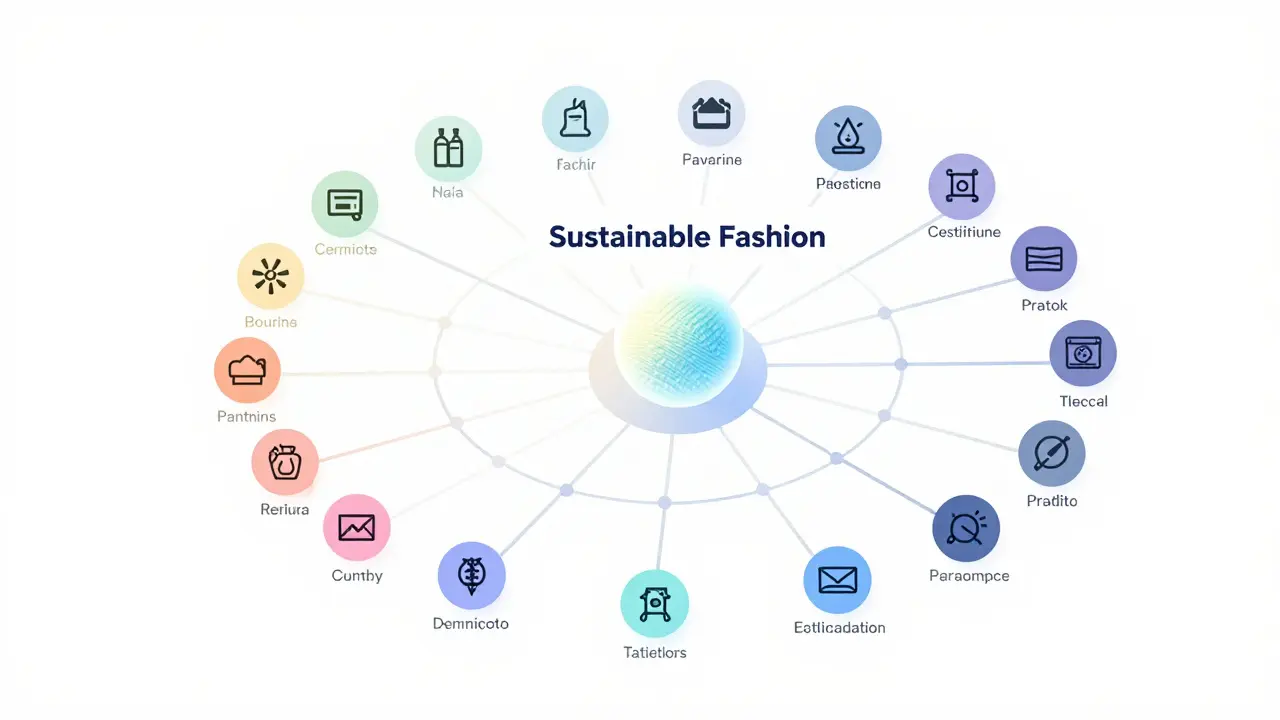
Start by identifying your central entity. If you’re writing about "sustainable fashion," that’s your core. Use ChatGPT to map related entities:
Prompt: "Create a semantic entity map for 'sustainable fashion'. Include parent categories, child subtopics, and associated concepts like materials, certifications, and ethical labor practices. Output as a hierarchical list."
This gives you a roadmap. Instead of guessing which keywords to target, you build content around the entire ecosystem of the topic. This satisfies topical authority requirements and helps Google understand your page’s relevance.
Job 2: Structuring Content for Knowledge Graphs
Google’s Knowledge Graph connects entities-people, places, things-and their attributes. To rank well, your content needs to speak this language. ChatGPT can help you structure content so that search engines easily extract facts.
Use clear definitions and structured lists. For example, when discussing a product or concept, define it early:
"Organic Cotton is a textile made from cotton grown without synthetic pesticides or fertilizers."
Then, use ChatGPT to generate comparison tables. These are gold for featured snippets. Ask it to compare two entities based on specific attributes:
| Fabric Type | Water Usage | Durability | Cost Factor |
|---|---|---|---|
| Organic Cotton | High | Medium | $$ |
| Hemp | Low | High | $ |
| Tencel | Medium | High | $$$ |
This structure helps AI parsers identify key attributes, boosting your chances for rich results.
Job 3: Scaling Research Without Losing E-E-A-T
E-E-A-T is non-negotiable. You cannot fake experience. However, you can use ChatGPT to accelerate the research phase. Instead of reading ten articles, paste their summaries into ChatGPT and ask for synthesis:
Prompt: "Analyze these three summaries about remote work productivity. Identify common pain points mentioned in all three, and highlight any conflicting data points regarding screen time vs. output."
This saves hours. But here’s the catch: you must verify the facts. AI hallucinates. Always cross-check statistics with primary sources. Your job is to add the human layer-the personal anecdote, the expert quote, the nuanced opinion-that AI cannot replicate.
Job 4: Optimizing for Voice and Conversational Search
By 2026, voice search accounts for nearly 40% of mobile queries. People don’t speak in keywords; they ask questions. ChatGPT is perfect for generating natural-language Q&A sections.
Instead of targeting "best CRM software," target "what is the best CRM for small businesses under $50?" Use ChatGPT to draft answers that sound like a helpful colleague:
"When choosing a CRM under $50, you want something simple. HubSpot’s free tier works great for startups, but Zoho offers more features for the price. The trade-off is ease of use versus functionality." This conversational tone matches how people actually talk, improving your chances of winning position zero.

Job 5: Creating Meta Data and Titles That Click
Even the best content fails if no one clicks. ChatGPT can generate dozens of title variations instantly. But don’t just pick the first one. Use it to test psychological triggers:
- Curiosity: "Why Your SEO Strategy Is Failing (And How to Fix It)"
- Specificity: "A Step-by-Step Guide to Semantic SEO for Beginners"
- Benefit-Driven: "How to Double Organic Traffic in 90 Days"
Pair these with meta descriptions that clearly state the value proposition. Avoid vague phrases like "Learn more here." Be direct: "Discover five proven tactics to improve your domain authority without buying links."
Pitfalls to Avoid When Using AI for SEO
Not every shortcut is good. Here are the traps that kill rankings:
- Plagiarism of Ideas: Don’t copy structures from top-ranking pages verbatim. Use AI to find gaps, then fill them with your unique perspective.
- Lack of Depth: AI tends to be broad. Force it to go deep. Ask for case studies, specific data points, and technical explanations.
- Ignoring Updates: SEO changes fast. What worked in 2024 might fail in 2026. Regularly audit your AI-generated content for freshness.
The goal isn’t to replace human effort; it’s to amplify it. Use AI for the heavy lifting-research, structuring, ideation-and keep humans for the creativity, empathy, and final judgment.
Next Steps: Building Your AI-First Workflow
Start small. Pick one existing piece of content and use ChatGPT to enhance it. Add a FAQ section, create a comparison table, or rewrite the introduction to better match search intent. Measure the impact on click-through rate and dwell time.
As you get comfortable, integrate AI into your initial planning phase. Use it to brainstorm topic clusters before you even start writing. This proactive approach ensures you’re always ahead of the curve, bridging the gap between old-school SEO and the future of digital marketing.
Can I use ChatGPT to write entire blog posts for SEO?
You can, but it’s risky. Google prioritizes E-E-A-T (Experience, Expertise, Authoritativeness, Trustworthiness). Pure AI content often lacks unique insight and personal experience, leading to lower rankings. Use ChatGPT for outlining, researching, and editing, but ensure a human adds original value and verification.
How does ChatGPT help with semantic SEO?
ChatGPT understands context and relationships between words. It can help you identify related entities, create semantic clusters, and structure content so search engines recognize the full scope of your topic, not just isolated keywords.
Will Google penalize AI-generated content in 2026?
Google doesn’t penalize AI itself; it penalizes low-quality content. If your AI-generated content is helpful, accurate, and user-focused, it will rank well. If it’s spammy, generic, or misleading, it will be demoted regardless of who wrote it.
What is the best prompt for SEO research?
A strong prompt includes role, context, and specific output format. Example: "Act as an SEO expert. Analyze the search intent behind 'best project management tools for remote teams.' Provide a list of 10 long-tail keywords, potential user questions, and recommended content structure."
How do I ensure my AI content passes E-E-A-T checks?
Add personal anecdotes, cite authoritative sources, include author bios with credentials, and fact-check all data. AI can summarize, but only humans can demonstrate true experience and trustworthiness.