
Five years ago, a small bakery in Ohio could survive on word-of-mouth and a flyer in the local paper. Today, if they don’t have a website, active social media profiles, and targeted ads running, they’re invisible. That’s not an exception-it’s the rule. Digital marketing isn’t just another tool anymore. It’s the foundation of how businesses connect, sell, and survive.
Why Digital Marketing Is No Longer Optional
Think about your own habits. When you need a plumber, do you call the Yellow Pages? When you want to buy shoes, do you walk into a store first? Probably not. You search. You scroll. You read reviews. You compare prices. And you buy from whoever shows up first, looks trustworthy, and speaks your language.
That’s exactly what your customers are doing. If your business isn’t there-on Google, Instagram, Facebook, or even TikTok-you’re not just missing out on sales. You’re disappearing.
In 2025, 94% of consumers used digital channels to research products before buying. And 73% of them said they’d choose a brand they followed online over one they didn’t. That’s not a trend. That’s a shift in power. The customer now controls the conversation. And digital marketing is how you join it.
What Digital Marketing Actually Includes (No Fluff)
Digital marketing isn’t just posting on Instagram. It’s a whole system. Here’s what it breaks down into in real-world use:
- Search Engine Optimization (SEO) - Making sure your website shows up when people search for what you offer. Not just keywords. It’s site speed, mobile design, backlinks from trusted sites, and clear content.
- Content Marketing - Writing blogs, making videos, or creating guides that solve real problems. A bakery doesn’t just post pictures of cupcakes. They post how to frost them perfectly, or why their sourdough takes 48 hours.
- Social Media Marketing - Not just posting. It’s engaging. Responding to comments, running polls, going live, and building a community. People buy from faces they know, not logos.
- Pay-Per-Click (PPC) Advertising - Google Ads, Facebook Ads, even Pinterest Ads. You pay only when someone clicks. It’s measurable, fast, and works even if your SEO isn’t perfect yet.
- Email Marketing - Still the most profitable channel. A well-timed email with a discount or update has a 40% higher conversion rate than social media posts.
- Marketing Automation - Using tools to send the right message at the right time. Example: Someone abandons their cart? Automatically send them a reminder with 10% off. No manual work needed.
These aren’t separate tasks. They’re connected parts of one engine. You can’t do one well without the others.
The Real Cost of Ignoring It
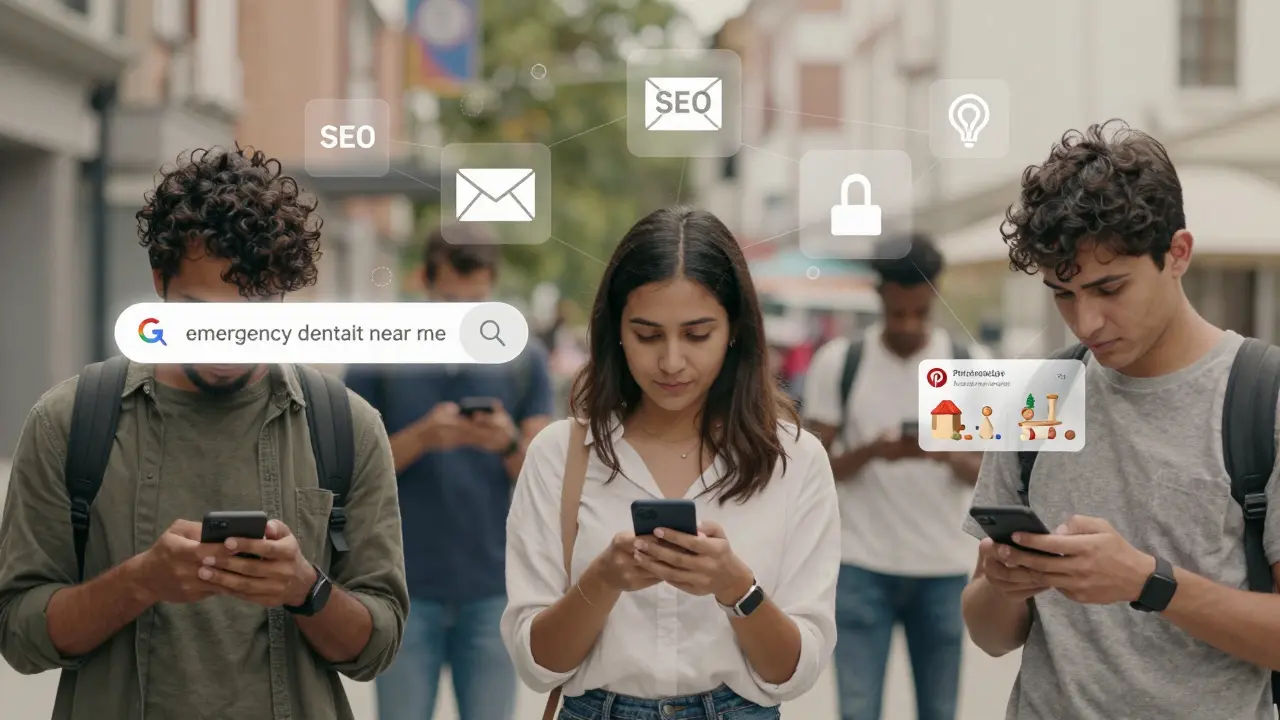
Let’s say you’re a local dentist who still relies on billboards and phone book ads. You spend $5,000 a year on them. But you’re not showing up when someone searches "emergency dentist near me" at 2 a.m. after a toothache. That’s not just lost revenue. That’s lost trust.
A 2025 study of 2,000 small businesses found that those who invested in digital marketing saw a 2.8x increase in leads within 6 months. Those who didn’t? Their customer base shrank by 17% on average.
It’s not about being fancy. It’s about being found. If you’re not online, you’re not real to most people.
How Small Businesses Are Winning (Real Examples)
You don’t need a big budget. You need consistency.
- A one-person yoga studio in Austin started posting 3-minute workout videos on TikTok every Tuesday. Within 8 months, they had 45,000 followers and a waitlist for classes. No ads. Just value.
- A family-owned hardware store in Wisconsin started answering every Google review-positive or negative. They fixed a complaint about slow service by adding a same-day pickup option. Their online ratings jumped from 3.8 to 4.9. Walk-in traffic increased by 32%.
- A freelance graphic designer in Nashville used LinkedIn to share before-and-after redesigns of local business logos. She didn’t pitch. She showed. Within 6 months, 70% of her clients came from those posts.
The pattern? They didn’t chase trends. They solved problems. They showed up. They listened.
Where Most Businesses Fail (And How to Avoid It)
Here’s what goes wrong:
- Posting once a week - Digital marketing needs rhythm. Daily engagement beats weekly perfection.
- Only selling - People don’t follow brands. They follow helpful, human accounts.
- Ignoring analytics - If you don’t know what’s working, you’re guessing. Use free tools like Google Analytics and Meta Insights.
- Waiting for viral - Viral is luck. Consistency is strategy.
The fix? Pick one channel. Master it. Then add another. Don’t spread yourself thin. A dentist who does one great Instagram Reel every week will outperform one who posts five mediocre ones.
What You Need to Start Today
You don’t need to hire an agency. You don’t need to learn coding. Here’s your 3-step starter plan:
- Claim your Google Business Profile - It’s free. Fill out every field. Add photos. Get reviews. This alone puts you on the map for local searches.
- Choose one social platform - Pick where your customers are. If you sell to moms? Facebook and Instagram. If you sell to builders? LinkedIn. If you’re visual? Pinterest or TikTok.
- Post one helpful thing every 3 days - A tip. A before-and-after. A quick answer to a common question. No sales pitch. Just value.
That’s it. Do this for 90 days. Then check your metrics. You’ll be surprised.
The Future Is Already Here
Digital marketing isn’t going to get bigger. It’s already the default. The question isn’t whether you should do it. It’s whether you’re doing it well enough to be seen.
Businesses that treat digital marketing like a side project are falling behind. Those that treat it like their main sales team? They’re growing. Fast.
You don’t need to be the loudest. You just need to be the most helpful. The most present. The most real.
The new norm isn’t a trend. It’s the new reality. And it’s not waiting for you to catch up.
Do I need to be on every social media platform?
No. Being everywhere is a trap. Focus on one or two platforms where your actual customers spend time. A bakery doesn’t need TikTok if its customers are middle-aged parents who use Facebook. A B2B software company doesn’t need Instagram if its buyers are on LinkedIn. Quality over quantity always wins.
How long does it take to see results from digital marketing?
It depends. Paid ads can bring traffic in days. SEO takes 3-6 months. Social media builds slowly-usually 4-8 months to see real growth. But here’s the key: you’ll see small wins early. A few more website visits. A handful of new email subscribers. A positive comment. Those are signs you’re on the right track. Don’t wait for a big number. Look for momentum.
Is email marketing still worth it in 2026?
Yes-and it’s the most profitable channel. The average ROI for email marketing is $36 for every $1 spent. Why? Because it’s personal. People who sign up for your email list already like you. They’re not just scrolling. They’re choosing to hear from you. A simple weekly update with a tip or special offer can keep your business top of mind without spending a cent on ads.
Can I do digital marketing without a big budget?
Absolutely. Most of digital marketing is time, not money. You can create content with your phone. You can use free tools like Canva for graphics, Google Analytics for tracking, and Buffer for scheduling posts. You don’t need expensive software. You need consistency. A small business that posts 3 times a week for 6 months will outperform one that spends $5,000 on ads once and gives up.
What’s the biggest mistake businesses make with digital marketing?
Thinking it’s a one-time project. Digital marketing isn’t a campaign. It’s a conversation. You have to show up every week. Answer questions. Admit mistakes. Celebrate wins. If you treat it like a billboard-post once and wait for results-you’ll be disappointed. If you treat it like a relationship, you’ll build loyalty.
If you’re reading this and thinking "I’m not tech-savvy," that’s okay. You don’t need to be. You just need to start. One post. One email. One review reply. That’s all it takes to begin building the digital presence your business needs to survive-and thrive-in 2026.