

Five years ago, social media managers spent hours writing captions, replying to comments, and brainstorming post ideas. Today, most of that work is done by ChatGPT - and it’s not just helping. It’s rewriting the rules.
ChatGPT Is Now the Default Copywriter for SMM Teams
Every major brand with a social media team now uses ChatGPT to draft posts. It’s not optional anymore. Companies like Nike, Sephora, and even local coffee shops in Manchester are using it to generate 80% of their daily content. Why? Because it’s fast, consistent, and cheap.
Before ChatGPT, a small business might post three times a week. Now, they post daily - sometimes multiple times a day - because the tool cuts content creation time from hours to minutes. A post that used to take 45 minutes to write, tweak, and proofread now takes 8. And the quality? It’s not perfect, but it’s good enough for platforms like Instagram and TikTok, where authenticity matters more than polish.
Brands aren’t just using ChatGPT for captions. They’re using it to write Instagram bio descriptions, Twitter threads, Facebook ad copy, and even LinkedIn thought leadership pieces. One SMM agency in Leeds told me they’ve reduced their copywriting team from five people to one, thanks to AI. The rest of the team now focuses on strategy, analytics, and community engagement.
The Rise of Hyper-Personalized Content
ChatGPT doesn’t just write generic posts. It learns. Feed it your audience’s comments, past posts, and engagement data, and it starts mimicking your brand’s voice - down to the emojis and slang.
Take a fitness brand targeting women over 40. Instead of saying “Get fit!” like every other gym, ChatGPT can generate posts like: “Still rocking those leggings from 2018? Same. But now I lift heavier and care less what people think. 💪” That tone? That’s not random. It’s pulled from real comments their audience left on past posts.
Tools like Hootsuite and Buffer now integrate directly with ChatGPT. You can set up automated workflows where the AI scans your comments for recurring questions or emotional tones, then writes replies tailored to each. A customer saying “I’m so tired of this product breaking” gets a different response than someone saying “This changed my routine!”
Result? Engagement rates jumped 37% on average for brands using this approach, according to a 2025 survey of 200 UK SMM teams. Personalization isn’t a buzzword anymore - it’s the baseline.
AI Is Killing the “Viral Post” Myth
Remember when people thought viral content was magic? A weird dance, a shocking statistic, a meme that exploded overnight? That’s fading.
ChatGPT doesn’t chase virality. It chases consistency. Instead of hoping one post blows up, brands now run 50 small experiments every week. One day it’s a poll. Another day it’s a carousel of before-and-after photos. The next day it’s a 30-second video where the AI writes a script based on trending audio.
Platforms like TikTok and Instagram now reward small, frequent wins over one big hit. Algorithms favor accounts that post regularly, engage meaningfully, and keep viewers watching - not accounts that go viral once a month.
ChatGPT makes this scalable. You can test 20 different hooks for a single product in one afternoon. Which one gets the most saves? That’s the one you double down on. No guesswork. No burning cash on A/B tests with human copywriters.
Community Management Is Now AI-Assisted, Not AI-Driven
Here’s the mistake most brands make: they let ChatGPT reply to every comment. That’s a disaster.
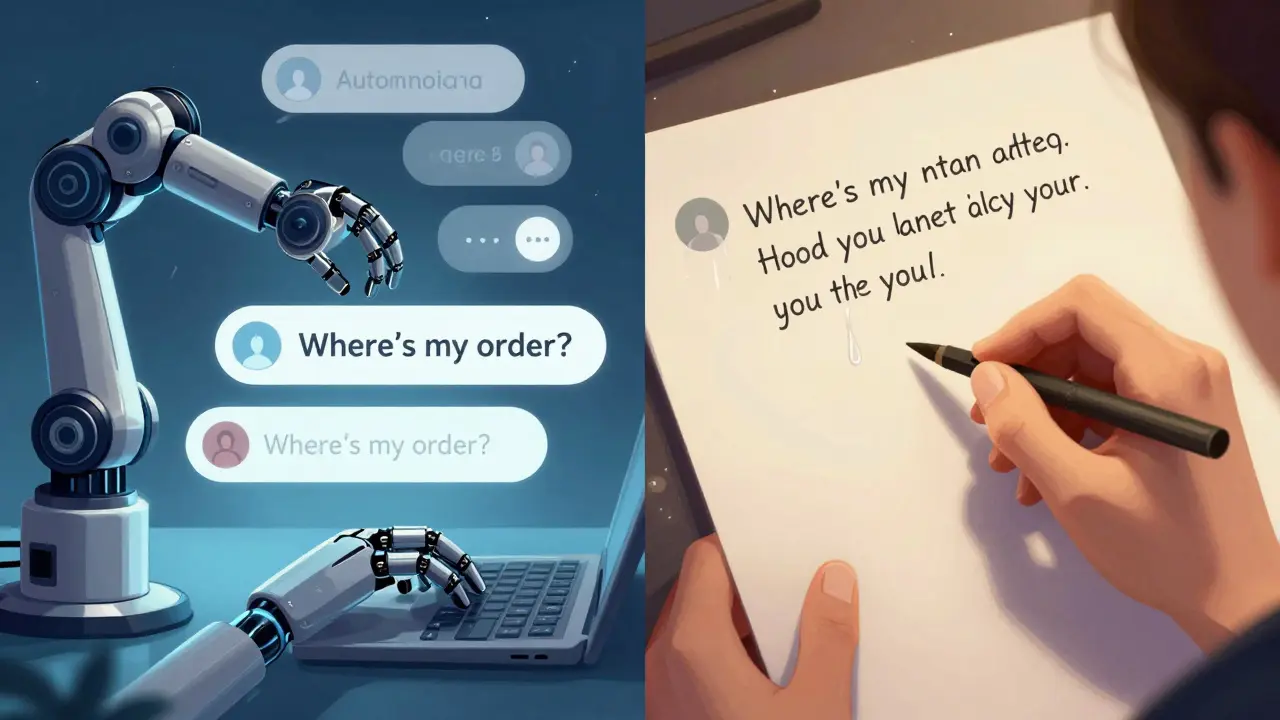
AI can handle FAQs: “Where’s my order?” “Do you ship to Scotland?” “What’s the return policy?” But when someone says, “I lost my mom last year and your post made me cry - thank you,” that’s not a question. That’s a human moment.
Top-performing SMM teams now use a hybrid model. ChatGPT drafts replies. A human reviews them. If the comment has emotion, grief, excitement, or vulnerability - it goes to a person. If it’s transactional, the AI sends it.
One study from the University of Manchester found that brands using this hybrid approach had 52% higher customer loyalty scores than those using full automation. People can tell when they’re talking to a bot. And they don’t care about perfect grammar - they care about feeling heard.
The New Skills SMM Pros Need in 2026
Knowing how to use Canva or schedule posts in Later isn’t enough anymore. The new SMM specialist is part strategist, part editor, part data whisperer.
You need to know:
- How to prompt ChatGPT effectively - not just “write a post,” but “write a post in the voice of a tired mum in Manchester who hates fitness influencers but wants to feel strong.”
- How to audit AI output for tone, accuracy, and brand alignment.
- How to use analytics to tell which AI-generated posts are working - and which are just noise.
- How to spot when AI is being lazy - repeating the same structure, using clichés, or missing cultural context.
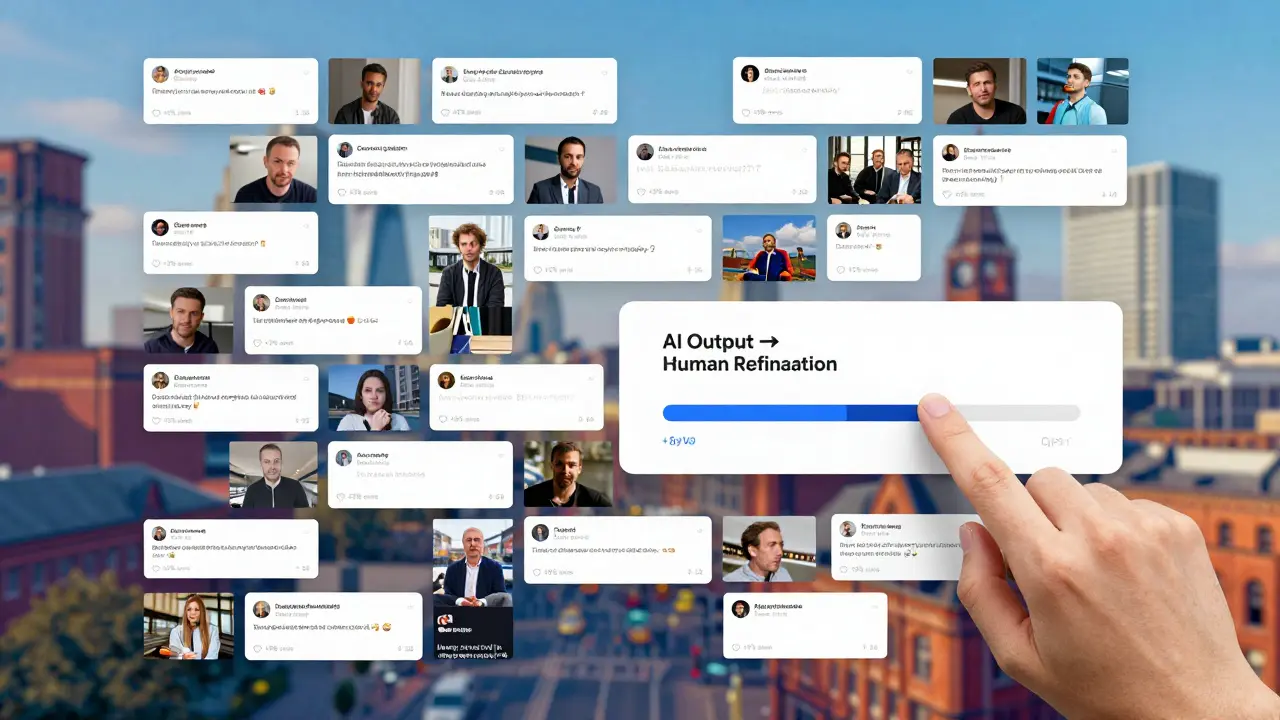
One SMM manager in Birmingham told me she spends 70% of her time now reviewing AI drafts, not creating them. Her job isn’t to write - it’s to refine. To edit. To make sure the AI doesn’t sound like every other brand.
What ChatGPT Can’t Do (And Why Humans Still Matter)
ChatGPT doesn’t feel. It doesn’t understand grief. It doesn’t know what it’s like to wake up at 5 a.m. because your kid is sick. It doesn’t remember that your audience loved your post about your dog last Christmas.
It can’t sense when a trend is fake. It doesn’t know if a meme is outdated or offensive in a specific region. It doesn’t understand local slang - unless you feed it enough examples.
And here’s the biggest gap: ChatGPT can’t build trust. Trust comes from consistency over time, from showing up when it’s hard, from admitting mistakes, from being human.
That’s why the best SMM teams aren’t replacing people. They’re using AI to free them up. To let humans do the things AI can’t: listen, empathize, adapt, and connect.
The Future: AI as Your Co-Pilot, Not Your Boss
By 2027, every brand with a social media presence will use AI. The question isn’t whether you should use ChatGPT. It’s how well you’ll use it.
Brands that treat it like a magic button will get buried under generic, soulless content. Brands that treat it like a powerful assistant - one that needs guidance, oversight, and heart - will win.
The future of SMM isn’t about who has the best AI. It’s about who has the best human-AI teamwork.
Can ChatGPT replace social media managers?
No. ChatGPT can handle repetitive tasks like drafting captions, replying to basic comments, and generating content ideas - but it can’t build relationships, understand emotion, or make strategic decisions based on brand values. The best social media managers now use ChatGPT as a tool to do more with less time, not as a replacement.
Is AI-generated content bad for SEO on social platforms?
Not if it’s edited well. Platforms like Instagram and TikTok don’t penalize AI content - they reward engagement. What matters is whether your audience likes, saves, shares, or comments. AI can help you create content that drives those actions, but only if it sounds authentic. Generic, robotic posts get ignored - no matter who wrote them.
How do I train ChatGPT to sound like my brand?
Feed it examples. Give it 10 of your best-performing posts, your top 5 customer comments, and your brand tone guide. Then ask: “Rewrite this in our voice.” Refine the output. Do this for a week, and ChatGPT will start matching your style automatically. Keep feeding it new data - your voice evolves, and so should your AI.
What’s the biggest mistake brands make with ChatGPT in SMM?
Using it without editing. Many brands let ChatGPT post everything as-is. That leads to tone-deaf replies, awkward phrasing, and missed cultural cues. Always review AI output. Especially when it’s responding to emotional comments. A bot saying “We’re sorry you feel that way” can feel cold. A human saying “I’m really sorry this happened to you - we’re fixing it” builds loyalty.
Do I need to pay for ChatGPT Plus to use it for SMM?
Not necessarily. The free version works fine for basic tasks like drafting captions or brainstorming ideas. But if you’re managing multiple accounts, need custom prompts, or want to upload files (like past campaign data), ChatGPT Plus gives you faster responses, better memory, and access to advanced features like custom GPTs - which are worth it for serious SMM teams.
Start small. Pick one task - maybe your daily Instagram caption - and let ChatGPT handle it for a week. Then compare the results. See what feels off. Fix it. Learn. Then move to the next thing. The change isn’t about technology. It’s about how you think about your job.
Latest Posts


Affiliate Marketing Tips for Thriving Blogs
16/Jun/2024