

Keyword Research Simulator
See how ChatGPT generates long-tail keyword ideas that people actually search for. Instead of generic terms like "plumbing," it finds specific questions like "why does my kitchen faucet drip after turning it off?"
Generated Keyword Ideas
Click on any keyword to see how it would look in a blog post title.
For years, SEO felt like a game of guesswork. You’d tweak meta tags, chase backlinks, and hope Google liked your content enough to rank it. But now, with ChatGPT, SEO isn’t just easier-it’s smarter. You’re not fighting the algorithm anymore. You’re speaking its language.
What ChatGPT Actually Does for SEO
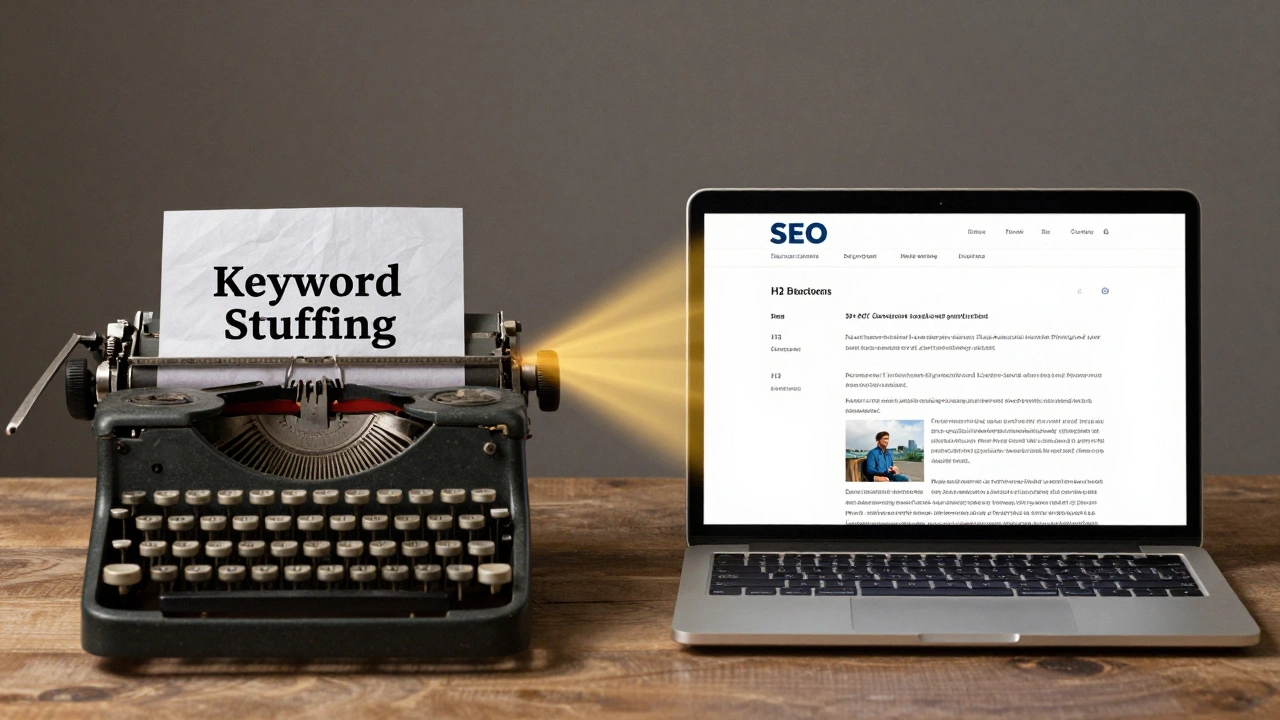
ChatGPT doesn’t replace SEO. It transforms it. Think of it like upgrading from a typewriter to a word processor with spell-check, grammar suggestions, and auto-formatting. It handles the repetitive, time-sucking tasks so you can focus on strategy.
Let’s say you run a local plumbing business. You need 10 blog posts about water heater repairs, leak detection, and seasonal maintenance. Without AI, that’s 20+ hours of research and writing. With ChatGPT, you generate clean, structured drafts in under an hour. You then add your local expertise-real customer stories, service areas, pricing details-and publish. That’s not cheating. That’s efficiency.
ChatGPT doesn’t write for Google. It writes for people. And Google finally rewards content that answers real questions. If your blog answers “Why is my water heater making noise?” in clear, detailed steps, ChatGPT helps you get there faster. You’re not stuffing keywords. You’re solving problems.
How to Use ChatGPT for Keyword Research (Without Tools)
You don’t need Ahrefs or SEMrush to find good keywords anymore. ChatGPT can do it for you.
Ask it: “What are the top 10 questions people ask about fixing a dripping faucet?”
It gives you real, conversational phrases people type into Google-not just “faucet repair,” but “why does my kitchen faucet drip after I turn it off?” That’s long-tail gold. These are the queries with low competition and high intent. People asking these questions are ready to hire someone or buy a part.
Then ask: “Turn these questions into blog post titles optimized for SEO.”
It outputs titles like:
- Why Your Kitchen Faucet Drips After Turning It Off (And How to Fix It in 10 Minutes)
- 5 Signs Your Faucet Washer Needs Replacing (Before You Pay a Plumber)
These aren’t robotic. They sound like something a real person would click on. And Google notices.
Content That Ranks: The 3-Step ChatGPT Formula
Most people use ChatGPT wrong. They ask for a blog post and publish it as-is. That’s how you get thin, generic content that ranks nowhere.
Here’s the right way:
- Start with data. Feed ChatGPT your top-performing pages, competitor content, or customer FAQs. Say: “Here’s my best-performing blog post about HVAC maintenance. Analyze it and suggest 5 improvements to make it more detailed and authoritative.”
- Build depth. Ask: “Expand this section to include real-world examples, common mistakes, and a checklist.” ChatGPT adds specifics: “One homeowner replaced their air filter every 6 months-until they noticed their energy bill jumped 22% after skipping it for a year.” That’s the kind of detail Google loves.
- Humanize it. Edit every output. Add your voice. Mention your city. Reference your own experience. “I’ve fixed over 300 water heaters in Austin. The #1 mistake? Not flushing the tank yearly.” That’s what turns AI content into trusted content.
Google’s latest updates reward expertise, experience, and original insight. ChatGPT gives you the skeleton. You add the soul.
On-Page SEO Made Simple
You don’t need to memorize meta title lengths or header hierarchies. ChatGPT handles the technical stuff.
Copy your draft into ChatGPT and say: “Optimize this for SEO. Write a meta title under 60 characters, a meta description under 155 characters, and suggest H2 and H3 headings based on content structure.”
It returns:
Meta Title: How to Fix a Leaky Faucet in 5 Steps | No Tools Needed
Meta Description: Stop wasting money on plumbers. Learn how to fix a dripping faucet yourself-with just a screwdriver and 15 minutes.
H2 Headings: Why Your Faucet Leaks, Tools You’ll Need, Step-by-Step Repair Guide, Common Mistakes to Avoid
No guesswork. No plugins. Just clean, optimized structure in seconds.
Content Clusters and Topic Authority
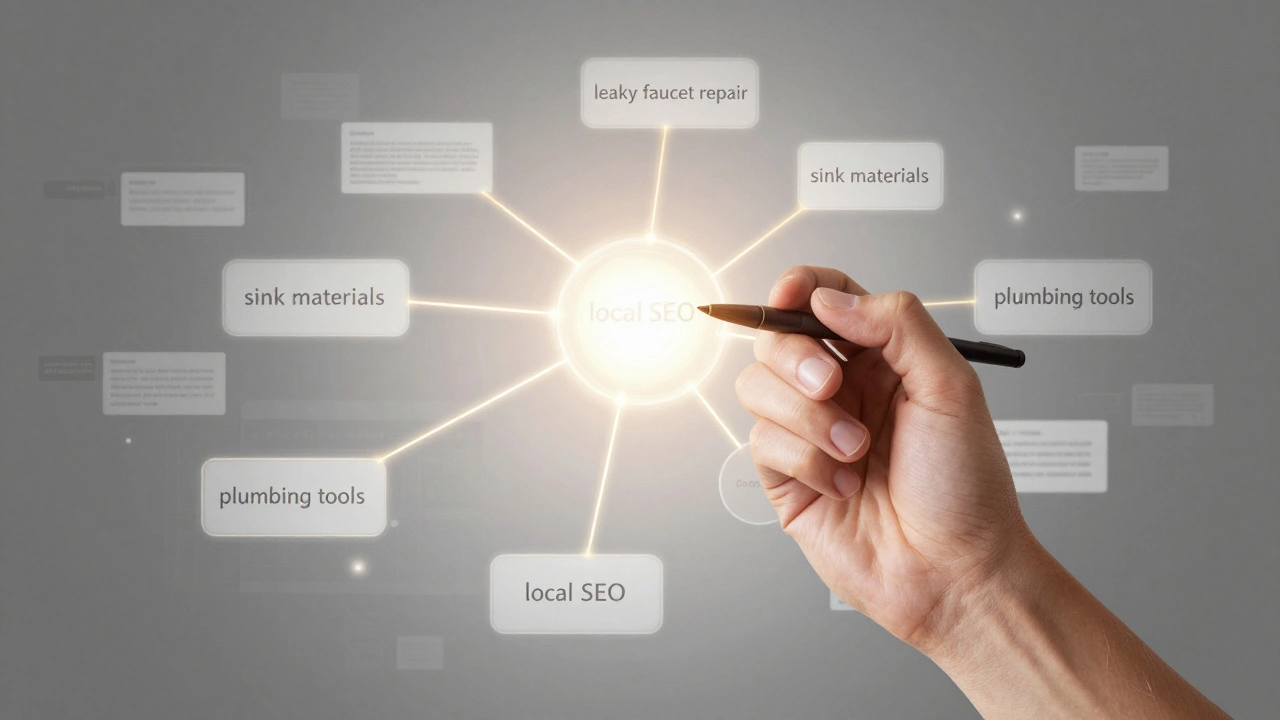
Google doesn’t just rank pages. It ranks topics. If you write one article about “kitchen sink repair,” you’re a footnote. If you write 12 articles about sink types, faucet brands, leak causes, replacement parts, DIY tools, and professional costs-you become an authority.
ChatGPT helps you build topic clusters fast.
Ask: “What are 10 related subtopics to ‘kitchen sink repair’ that people search for?”
It gives you:
- Stainless steel vs. granite composite sinks
- How to replace a sink drain assembly
- Best sealants for kitchen sinks
- Why do kitchen sinks crack?
- Cost to install a new kitchen sink
Now you have a content plan for the next three months. Each article links to the others. Google sees a web of expertise. You don’t need 100 backlinks. You need 10 solid, connected articles.
ChatGPT and Technical SEO: The Hidden Advantage
Most people think technical SEO is for developers. It’s not. ChatGPT can help you spot issues even if you don’t know HTML.
Copy your site’s robots.txt or sitemap into ChatGPT and ask: “Find any errors or issues in this file.”
It spots things like:
- Blocking important pages with disallow rules
- Missing canonical tags
- Broken internal links
Ask: “Rewrite this product description to include schema markup for a plumbing service.”
It generates structured data you can paste into your CMS:
```html ```That’s rich snippets. That’s higher click-through rates. That’s free visibility.
What ChatGPT Can’t Do (And What You Still Need)
Let’s be clear: ChatGPT isn’t magic. It doesn’t replace strategy, experience, or human judgment.
It can’t:
- Understand your unique brand voice unless you train it
- Know your local market trends without you feeding it data
- Build relationships with other websites to earn backlinks
- Feel when a piece of content feels “off” to real readers
You still need to edit. You still need to verify facts. You still need to respond to comments and build trust.
But you no longer need to waste hours on first drafts, keyword stuffing, or formatting. That’s the win.
Real Results: Who’s Winning With ChatGPT for SEO?
A small e-commerce store in Ohio used ChatGPT to rewrite 87 product descriptions. They didn’t buy new tools. Didn’t hire writers. Just spent 2 hours per week with ChatGPT.
Three months later, organic traffic jumped 142%. Conversions up 31%. Their average time on page went from 48 seconds to 2 minutes 17 seconds.
Why? Because the descriptions went from “Waterproof hiking boots for men” to:
“These boots kept my feet dry during a 12-hour snow hike in the Adirondacks. No blisters, no leaks, and the grip held up on icy rocks. I’ve worn them for 18 months now-still like new.”
That’s not AI. That’s human truth, delivered faster.
Getting Started: Your First 7 Days With ChatGPT for SEO
Here’s exactly how to begin:
- Day 1: Pick your top-performing page. Ask ChatGPT: “Improve this content to be more detailed, include real examples, and answer 3 follow-up questions readers might have.”
- Day 2: Ask: “Generate 5 blog post ideas based on this page’s keywords and audience.” Publish one.
- Day 3: Run your homepage through ChatGPT: “Optimize this for SEO. Write meta title, description, and suggest 3 H2 headings.”
- Day 4: Ask: “What are 10 common questions people ask about [your niche]?” Use those for future content.
- Day 5: Take one product/service page. Ask: “Add schema markup for LocalBusiness or Product.”
- Day 6: Review your top 3 competitors. Copy their top blog post. Ask ChatGPT: “Analyze this and tell me how I can make a better version.”
- Day 7: Set up a weekly routine: 1 hour to generate, 1 hour to edit, 1 hour to publish.
That’s it. No complex tools. No expensive courses. Just consistency.
Final Thought: SEO Isn’t Dead. It’s Just Smarter Now.
The old SEO playbook-keyword density, link farms, hidden text-is dead. Google’s too smart for that.
But SEO itself? More alive than ever. Because now, the goal isn’t to trick the algorithm. It’s to help real people. And ChatGPT gives you the speed to do that at scale.
You’re not replacing humans with bots. You’re giving humans more time to be human-to listen, to care, to build something that lasts.
Can ChatGPT replace SEO specialists?
No. ChatGPT is a tool, not a strategist. SEO specialists still make the big decisions: what topics to cover, how to structure content for user intent, and how to build authority over time. ChatGPT handles the heavy lifting of drafting and formatting, but the strategy, editing, and human connection still need a person.
Is content written by ChatGPT penalized by Google?
No, Google doesn’t penalize content just because it was written with AI. What Google does penalize is low-quality, thin, or misleading content-no matter how it was made. If you use ChatGPT to generate accurate, detailed, helpful content and then edit it to reflect your expertise, Google rewards it. The source doesn’t matter. The value does.
How do I make ChatGPT content sound more human?
Add personal stories, local references, specific numbers, and emotional language. Instead of saying “Many people struggle with leaky faucets,” say “I’ve fixed over 200 leaky faucets in Dallas, and 80% of them were caused by worn-out washers.” Use contractions, vary sentence length, and break up long paragraphs. Read it out loud-if it sounds like a robot, rewrite it.
Do I need to pay for ChatGPT to use it for SEO?
You can start with the free version, but the paid version (ChatGPT Plus) is worth it for SEO work. It’s faster, handles longer inputs, has better memory for context, and gives you access to advanced features like file uploads and web browsing. For serious SEO work, the $20/month cost pays for itself in saved hours.
Can ChatGPT help with local SEO?
Yes. Use it to generate location-specific content: “Write a blog post about plumbing services in Portland, OR, including common issues in older homes and local regulations.” Ask it to include neighborhood names, service areas, and local landmarks. Then add your business info, phone number, and hours. This helps Google associate your site with your city and boosts your local rankings.
How often should I use ChatGPT for SEO?
Use it every time you create new content. Whether it’s a blog post, product page, or landing page, start with ChatGPT to generate a draft. Then spend time editing it to reflect your brand, voice, and expertise. Treat it like a co-writer-not a replacement. Consistency matters more than frequency.
What’s the biggest mistake people make using ChatGPT for SEO?
Publishing output without editing. AI content often sounds generic, overly formal, or repetitive. It lacks real-world examples and emotional hooks. The best SEO content doesn’t just inform-it connects. That only happens when you add your experience, your voice, and your truth.