

You launch your store. You build a beautiful website. You stock the shelves with great products. Then... silence. No one buys. This is the harsh reality for thousands of businesses that treat their website like a digital brochure rather than a sales engine. The gap between having an online presence and actually making money is bridged by one thing: effective internet marketing.
In 2026, the landscape has shifted again. It’s no longer about shouting the loudest on social media or buying the cheapest clicks. Today’s successful sellers use a mix of data-driven precision, authentic storytelling, and seamless user experiences to turn browsers into buyers. If you want to boost your online sales, you need to understand exactly how these mechanisms work together.
The Psychology Behind the Click
Before we talk about tools, let’s talk about people. Why do we buy things online? Usually, it’s because trust was established before we even reached the checkout page. Internet marketing isn’t just about traffic; it’s about intent.
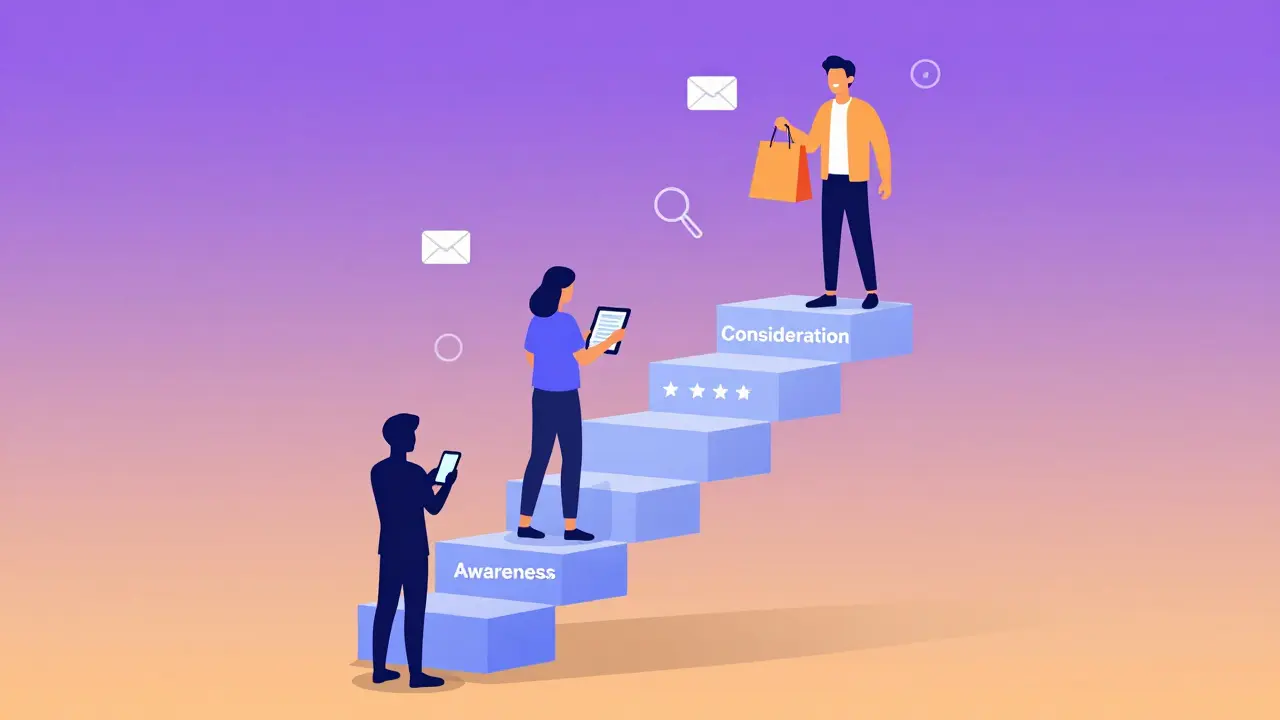
When a customer searches for "best running shoes for flat feet," they are in the bottom of the funnel. They are ready to buy. When someone watches a funny video of a shoe being dropped from a plane, they are at the top. They are entertained, but not necessarily ready to spend money. Your job is to move them down that ladder.
This requires understanding the customer journey:
- Awareness: They realize they have a problem (e.g., my back hurts when I run).
- Consideration: They look for solutions (e.g., reading reviews of orthopedic shoes).
- Decision: They choose a brand (e.g., comparing prices and shipping speeds).
If your marketing only targets the awareness stage, you’ll get views but no sales. If you only target the decision stage, you’ll miss out on building long-term brand loyalty. The sweet spot is balancing both.
Search Engine Optimization: The Silent Salesman
Let’s be honest: if you aren’t on the first page of Google, you don’t exist for most shoppers. Search Engine Optimization (SEO) remains the backbone of sustainable online sales. Unlike paid ads, which stop working the moment you stop paying, SEO builds equity over time.
In 2026, SEO is less about keyword stuffing and more about satisfying user intent through high-quality content. Google’s algorithms are smarter than ever. They can tell if your article is written by a human who understands the topic or generated by a bot trying to game the system.
To leverage SEO for sales:
- Target Long-Tail Keywords: Instead of competing for "shoes," target "waterproof hiking boots for women." These phrases have lower search volume but much higher conversion rates because the intent is specific.
- Optimize Product Pages: Ensure your product descriptions are unique. Copying manufacturer text kills your rankings. Write benefits, not just features. Explain how the product solves a problem.
- Speed Matters: A slow-loading site increases bounce rates. If your page takes more than three seconds to load, you’ve likely lost the sale. Use tools like Google PageSpeed Insights to check this.
Think of SEO as laying a foundation. It might take months to see major results, but once it’s built, it drives consistent, free traffic that converts well.
| Channel | Cost Structure | Time to Result | Best For |
|---|---|---|---|
| SEO | Low ongoing cost | 3-6 months | Long-term stability |
| Paid Ads (PPC) | High variable cost | Immediate | Quick spikes & testing |
| Email Marketing | Very low cost | 1-2 weeks | Retention & repeat sales |
| Social Media | Medium/High cost | Variable | Brand awareness |
Paid Advertising: Precision Over Volume
While SEO plays the long game, Paid Per Click (PPC) advertising is your sprinter. Platforms like Google Ads and Meta Ads allow you to put your product in front of people who are actively looking for it right now.
The mistake many beginners make is casting too wide a net. They advertise to everyone. This burns cash. In 2026, ad costs are rising due to privacy changes and increased competition. To survive, you need precision targeting.
Use retargeting campaigns. Did someone add an item to their cart and leave? That’s a warm lead. Show them an ad for that exact item with a small discount code. The return on investment for retargeting is often significantly higher than cold traffic because the user already knows your brand.
Also, focus on your Quality Score. Google rewards relevant ads. If your ad copy matches the landing page perfectly, your cost per click drops. Keep your messaging tight. Don’t send traffic from a "summer sale" ad to your homepage. Send them directly to the summer collection page.
Email Marketing: The Highest ROI Channel
If there is one channel that consistently delivers the best return on investment, it’s email marketing. You own your email list. Social media platforms can change their algorithms or ban your account overnight. But your subscribers? They are yours.
Don’t just use email to spam people with new arrivals. Use it to nurture relationships. Segment your list based on behavior:
- New Subscribers: Send a welcome series that introduces your brand story and offers a first-purchase discount.
- Cart Abandoners: Send a reminder email within an hour of abandonment. Ask if they had trouble checking out.
- Loyal Customers: Reward them with early access to sales or exclusive content.
Personalization goes beyond using their first name. Recommend products based on what they’ve bought before. If someone bought a coffee maker, suggest coffee beans and filters a month later. This contextual relevance drives repeat purchases.
Content Marketing: Building Trust Before the Sale
People don’t buy from brands they don’t trust. Content marketing helps you build that authority. This doesn’t mean writing boring corporate blogs. It means creating helpful, entertaining, or inspiring content that answers your customers’ questions.
For example, if you sell outdoor gear, create videos showing how to set up a tent in the rain. Write guides on choosing the right backpack for different terrains. By providing value upfront, you position yourself as an expert. When the customer is ready to buy, they’ll choose you over a competitor who only posts product photos.
User-generated content (UGC) is also powerful here. Encourage customers to share photos of your products in use. Real people using real products builds social proof faster than any polished studio shot.
Conversion Rate Optimization: Fixing the Leaky Bucket
You can drive all the traffic in the world, but if your website is confusing, you won’t make sales. Conversion Rate Optimization (CRO) is the process of tweaking your site to make it easier for people to buy.
Start with your mobile experience. More than half of all web traffic comes from mobile devices. If your buttons are too small to tap or your forms are too long, users will leave. Simplify your checkout process. Offer guest checkout. Display trust badges (like secure payment icons) near the buy button.
Use A/B testing. Change one element at a time-maybe the color of your "Add to Cart" button or the headline on your homepage-and see which version performs better. Small improvements compound over time. Increasing your conversion rate from 1% to 2% doubles your sales without spending a dime on extra traffic.
Data Analytics: Making Smarter Decisions
Finally, you cannot improve what you do not measure. Tools like Google Analytics 4 provide deep insights into user behavior. Don’t just look at total visits. Look at where people drop off. Are they leaving at the shipping page? Maybe your shipping costs are too high. Are they bouncing from the blog? Maybe the content isn’t relevant.
Track your Customer Acquisition Cost (CAC) and Lifetime Value (LTV). If it costs you $50 in marketing to acquire a customer who only spends $40, you’re losing money. But if that customer comes back and spends $200 over a year, the acquisition cost is justified. Focus on retaining customers, not just acquiring new ones.
Internet marketing is not a magic button. It’s a system. By combining SEO for visibility, paid ads for speed, email for retention, and CRO for efficiency, you create a robust engine that drives online sales sustainably. Start with one area, master it, and then expand. Your competitors are waiting for you to make a mistake. Don’t give them the chance.
How long does it take to see results from internet marketing?
It depends on the channel. Paid advertising (PPC) can generate sales immediately. Email marketing typically shows results within days. SEO and content marketing usually take 3 to 6 months to gain traction and show significant impact on sales.
Is social media marketing necessary for boosting online sales?
Not always. While social media is great for brand awareness, it doesn't directly drive sales as effectively as SEO or email for many businesses. However, if your audience is highly active on platforms like Instagram or TikTok, it can be a crucial part of your funnel.
What is the most important metric to track for online sales?
The conversion rate is critical. It tells you what percentage of visitors are buying. Alongside this, track your Return on Ad Spend (ROAS) to ensure your marketing efforts are profitable, and Customer Lifetime Value (LTV) to understand long-term profitability.
How can I improve my website's conversion rate?
Focus on simplifying the user experience. Speed up your site, optimize for mobile, simplify the checkout process, use clear calls-to-action, and include trust signals like reviews and security badges. A/B testing different elements can reveal specific improvements.
Do I need a large budget to start internet marketing?
No. You can start with organic strategies like SEO and content marketing, which require time rather than money. Email marketing is also very cost-effective. As you generate revenue, you can reinvest profits into paid advertising to scale faster.
Latest Posts