

You probably remember when putting up a billboard on the highway was the only way to get noticed. Today, that giant sign costs more than your entire monthly ad budget, and half the people driving past it are looking at their phones instead of your message. This shift isn't just about saving money; it's about reaching people exactly when they're ready to buy. If you're still treating online marketing as an optional add-on rather than the core engine of your sales, you're leaving serious revenue on the table.
Let's be real: the barrier to entry has never been lower, but the noise level is higher than ever. You don't need a million-dollar agency contract to start. You need a clear plan, the right tools, and an understanding of how digital channels actually work together. Whether you run a local bakery in Brisbane or sell software globally, the principles remain the same. You need to attract attention, build trust, and convert interest into action. Here is how you turn online marketing from a buzzword into a tangible profit driver.
The Shift From Interruption to Invitation
Traditional advertising interrupts what people are doing. You're watching TV, and suddenly a commercial breaks in. Online marketing, specifically inbound strategies, works differently. It invites people to find you. When someone searches for "best running shoes for flat feet," they aren't annoyed by your ad appearing; they're grateful for the solution. This intent-based traffic is gold because these users are already halfway through the buying process.
Consider the difference between a cold call and a search query. The person answering the phone might be busy or uninterested. The person typing into Google has actively raised their hand. By aligning your content with what your customers are searching for, you stop chasing prospects and start attracting them. This fundamental change in dynamic reduces friction and lowers your cost per acquisition significantly over time.
Core Pillars That Drive Real Results
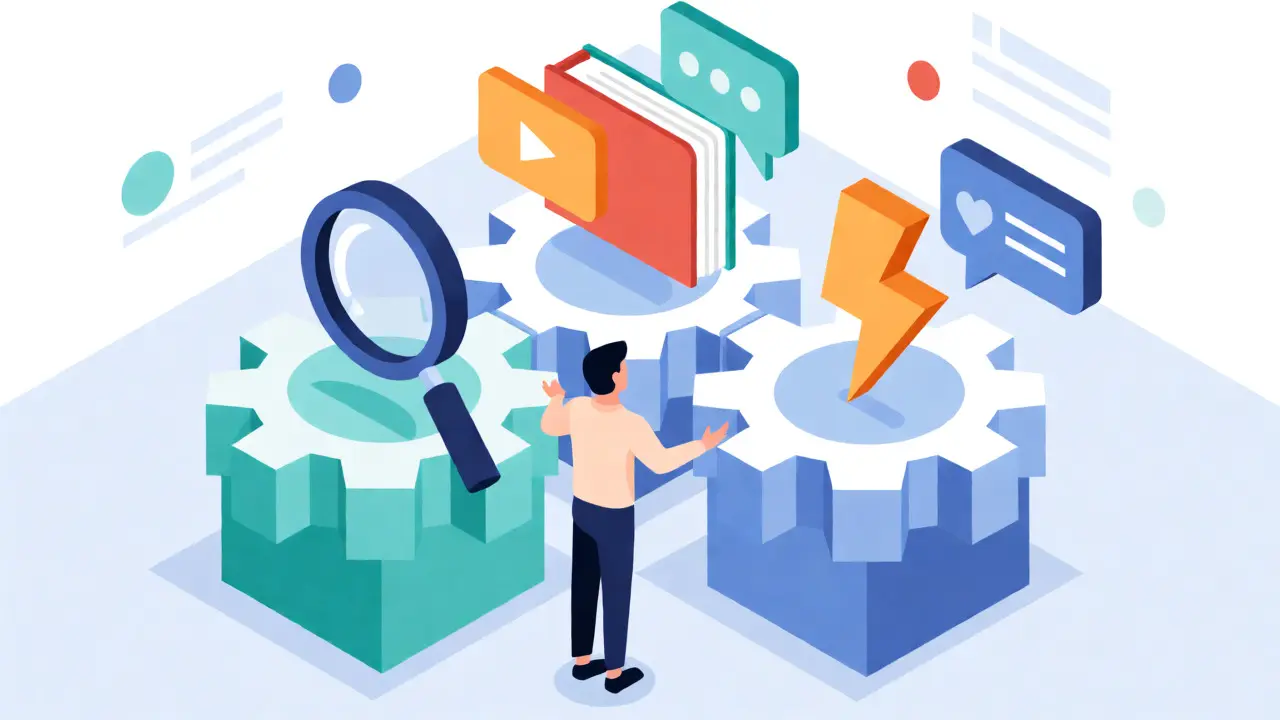
To make this work, you can't just throw spaghetti at the wall. You need a structured approach focused on four main pillars: Search Engine Optimization (SEO), Content Marketing, Social Media Engagement, and Paid Advertising. Each plays a distinct role in the customer journey.
SEO is the foundation. It’s not just about stuffing keywords into a blog post anymore. Modern SEO focuses on user experience, page speed, and answering questions comprehensively. If your site takes five seconds to load, mobile users will bounce before they even see your headline. Technical health matters as much as content quality.
Content Marketing builds authority. You need to provide value before asking for the sale. This could be a how-to guide, a case study, or a video tutorial. For example, if you sell coffee machines, don't just list specs. Write a guide on "How to Brew the Perfect Espresso at Home." You solve a problem, and in return, you earn trust.
Social Media humanizes your brand. People buy from people. Platforms like Instagram and LinkedIn allow you to show behind-the-scenes glimpses, respond to comments in real-time, and share user-generated content. It’s less about broadcasting ads and more about joining conversations where your audience already hangs out.
Paid Advertising accelerates growth. While SEO and content take time to gain traction, paid campaigns on platforms like Google Ads or Facebook can generate leads within hours. Use paid media to test new products or messages quickly, then double down on what works organically.
Why Data Beats Gut Feeling Every Time
One of the biggest advantages of going digital is measurability. With a billboard, you hope people saw it. With online marketing, you know exactly who clicked, how long they stayed, and whether they bought anything. This transparency allows you to optimize continuously.
Imagine spending $1,000 on a social campaign. In traditional media, you’d wait weeks for feedback. Online, you can check performance after twenty-four hours. Maybe the video creative had a high click-through rate but low conversions. You pause that ad, tweak the landing page, and restart. This iterative process ensures you’re not wasting budget on ineffective tactics. Tools like Google Analytics 4 help track these metrics without needing a data science degree. Start simple: track sessions, conversion rates, and average order value. Expand from there.
Building Trust Through Authenticity
Consumers today are skeptical. They smell fake reviews and overly polished corporate speak from a mile away. To cut through the skepticism, authenticity is non-negotiable. Share your failures alongside your successes. Admit when you don’t have all the answers. Engage genuinely with comments, even the negative ones.
Think about a recent purchase you made online. Did you read the reviews? Probably. Did you look for photos from real customers rather than staged professional shots? Likely. User-Generated Content (UGC) serves as social proof that money can’t buy. Encourage your happy customers to share their experiences. Repost their stories. This peer validation carries more weight than any slogan you could craft.
Local Impact in a Global Marketplace
Even if you think you’re too small for global reach, local SEO is a massive opportunity. For businesses serving specific areas, optimizing for "near me" searches is crucial. Ensure your Google Business Profile is complete, accurate, and active. Post updates regularly. Respond to reviews promptly. Local pack rankings often drive more foot traffic than broader organic search results for service-based businesses.
A plumber in Brisbane doesn’t need to rank for "plumbing tips worldwide." They need to rank for "emergency plumber Brisbane CBD." Targeting specific geographic modifiers narrows competition and increases relevance. This hyper-local focus delivers high-intent traffic that is ready to hire immediately.
Common Pitfalls to Avoid
Many businesses fail with online marketing because they try to do everything at once. They launch a TikTok channel, start a newsletter, and run PPC ads simultaneously without a unified strategy. This spreads resources thin and dilutes messaging. Pick one or two channels that align with your audience habits and master them first.
Another trap is ignoring the mobile experience. Over 60% of web traffic comes from smartphones. If your checkout button is hard to tap or your forms are too long, you lose sales regardless of how good your ads are. Test your site on actual devices, not just desktop emulators. Friction kills conversion faster than bad copy.
| Feature | Traditional Marketing | Online Marketing |
|---|---|---|
| Targeting | Broad demographic | Precise interest and behavior targeting |
| Cost Control | Fixed upfront costs | Flexible pay-per-click or impression models |
| Feedback Loop | Slow and indirect | Real-time analytics and immediate adjustments |
| Reach | Limited by geography | Global potential with local precision |
| Engagement | One-way communication | Two-way interaction and community building |
Next Steps for Implementation
Ready to move forward? Don't overhaul everything overnight. Start with an audit. Check your current website speed. Review your top three competitors' content strategies. Identify one gap in their offerings that you can fill better. Then, create one piece of high-quality content addressing that gap. Promote it through your existing email list and social channels. Measure the response. Adjust. Repeat.
Online marketing isn't magic. It's a discipline of testing, learning, and refining. The businesses winning today aren't necessarily the ones with the biggest budgets, but the ones willing to adapt fastest and listen closest to their customers.
Do I need a big budget to start online marketing?
No, you don't. Many effective strategies, like SEO and social media engagement, rely more on time and consistency than cash. You can start with free tools and organic content, reinvesting early profits into paid ads once you've proven which channels work best for your specific audience.
How long does it take to see results from online marketing?
It depends on the channel. Paid advertising can generate leads within days. Content marketing and SEO typically take three to six months to gain significant traction because search engines need time to index and rank your new content. Patience and consistency are key for organic growth.
What is the most important metric to track?
While clicks and impressions matter, Return on Investment (ROI) and Customer Acquisition Cost (CAC) are critical. Ultimately, you need to know if the money spent generating leads exceeds the profit those leads bring in. Tracking conversion rates helps identify where bottlenecks occur in your funnel.
Can small businesses compete with large corporations online?
Absolutely. Small businesses often win on agility and personalization. Large corporations move slowly and often lack a personal touch. By responding quickly to customers, creating niche-specific content, and leveraging local SEO, small players can dominate specific segments where giants are too broad to be effective.
Is AI replacing human marketers?
AI is a tool, not a replacement. It excels at analyzing data, automating repetitive tasks, and generating initial content drafts. However, strategic thinking, emotional intelligence, and creative storytelling still require human insight. Marketers who leverage AI to enhance their efficiency will outperform those who ignore it.
Latest Posts