

Digital Marketing ROI Calculator
Estimate Your Digital Marketing Impact
Calculate your potential revenue based on real-world metrics from the article. See how targeted digital marketing creates measurable business growth.
Your Results
Businesses that ignore digital marketing are leaving money on the table. Not because it’s trendy, but because customers are no longer waiting for billboards or TV ads to find them. They’re searching on Google, scrolling through Instagram, watching YouTube tutorials, and reading reviews on Amazon. If your business isn’t there, you don’t exist in their world.
Digital marketing isn’t optional-it’s the new sales floor
Think of your physical store. You wouldn’t close the doors and hope people show up. Yet, many businesses still treat their website like a brochure tucked away in a drawer. Digital marketing is the open door, the bright sign, the friendly staff who answers questions before they’re asked. It’s how you reach people when they’re actively looking for what you offer.
In 2025, 87% of consumers start their buying journey online. That’s not a guess-it’s from a survey of 12,000 U.S. shoppers by McKinsey. If you’re not showing up in those early searches, you’re missing the chance to even be considered. Digital marketing puts you in front of the right people at the right time, with messages that actually matter.
It’s not about posting more-it’s about targeting better
A lot of small business owners think digital marketing means posting daily on Instagram or running cheap Facebook ads. That’s not marketing. That’s noise. Real digital marketing is about precision.
Take a local bakery. Instead of blasting a discount on Facebook to everyone in the city, they use Google Ads to target people searching for "gluten-free birthday cake near me" within a 5-mile radius. They use Instagram Stories to show behind-the-scenes footage of cake decorating, tagged with location and relevant hashtags like #CustomCakeLocal. They collect emails from customers who buy online and send them personalized offers on their birthday. That’s not luck. That’s strategy.
Digital marketing tools let you track who clicked, who stayed, who bought, and who left. You learn what works and stop wasting money on what doesn’t. You don’t need a big budget-you need clarity on who your customer is and where they spend their time.
How digital marketing boosts revenue, not just visibility
Most people think digital marketing is about getting more likes or followers. But real growth happens when those clicks turn into sales, and those sales turn into repeat customers.
Here’s how it works in practice:
- Lead generation: A potential customer finds your blog post about "how to choose a home security system." They download your free checklist in exchange for their email. Now you have permission to talk to them.
- Nurturing: Over the next two weeks, they get a series of helpful emails-not sales pitches, but tips on camera placement, battery life, and local crime stats. You’re building trust.
- Conversion: They click on a link to your product page, compare models, and buy. You just turned a stranger into a customer with zero cold calls.
- Retention: After purchase, they get a thank-you video, a care guide, and a surprise discount for their next order. They come back. And they tell their friends.
This entire journey happens automatically, 24/7, with minimal ongoing cost. Compare that to hiring sales reps to cold-call households. The ROI isn’t even close.

Customers trust digital proof more than your claims
People don’t believe what you say. They believe what others say about you.
According to BrightLocal, 91% of consumers read online reviews before making a purchase. And 84% trust them as much as personal recommendations. That’s why managing your online reputation isn’t optional-it’s your new sales team.
Responding to a negative review with empathy and a solution turns a potential disaster into a trust-building moment. Showcasing real customer photos and videos on your website? That’s social proof that no ad can buy.
Google Business Profile, Yelp, Trustpilot, Amazon reviews-these aren’t just places to get ratings. They’re your credibility engine. A business with 4.8 stars and 200 reviews outperforms one with 5 stars and 5 reviews every time. Quantity and authenticity matter.
Automation isn’t replacing you-it’s freeing you to do what matters
Many business owners think automation means losing the human touch. The opposite is true. Digital marketing tools handle the repetitive stuff so you can focus on what only humans can do: build relationships, solve complex problems, and create real value.
Imagine this:
- Your email platform automatically sends a discount to customers who haven’t bought in 60 days.
- Your chatbot answers common questions about shipping times while you sleep.
- Your analytics dashboard alerts you when a product page has a high bounce rate-so you fix the images or rewrite the description.
You’re not being replaced. You’re being empowered. You spend less time chasing leads and more time improving your product, your service, your team.
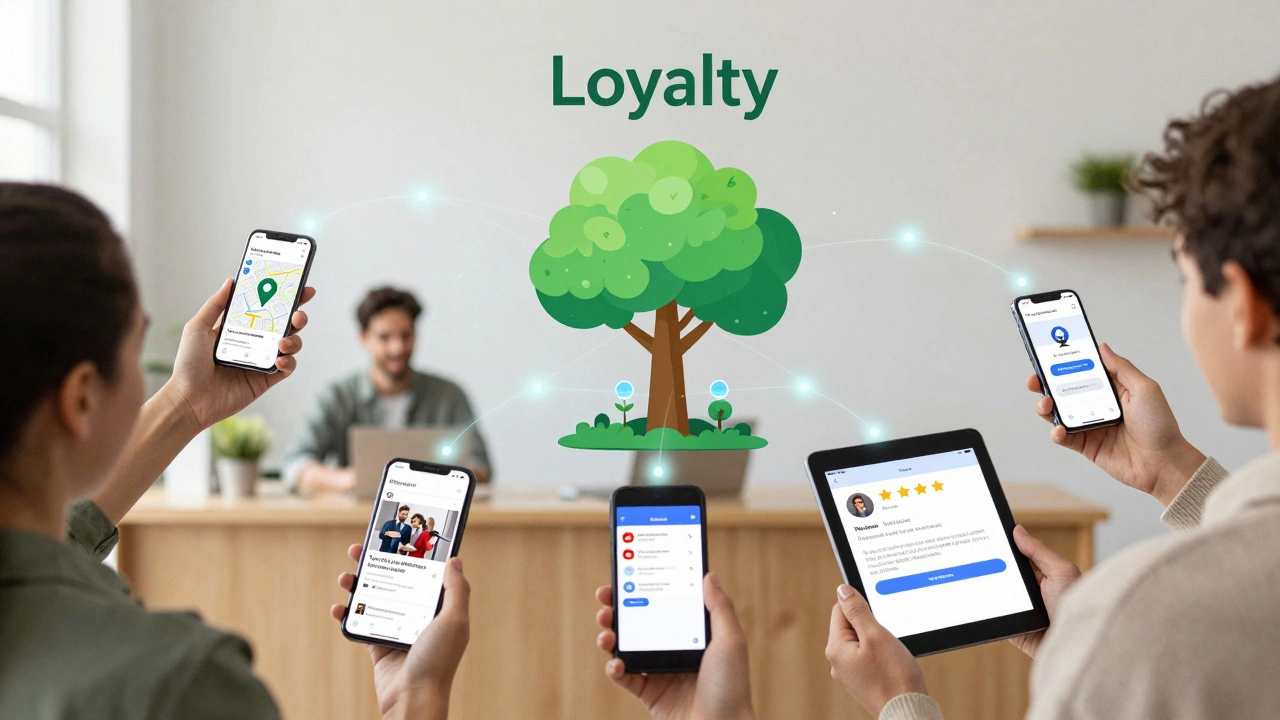
What digital marketing can’t do
It’s not magic. You can’t fix a bad product with a great ad. You can’t make up for poor customer service with a viral TikTok. Digital marketing amplifies what’s already working. If your product sucks, your ads will just bring more people to find out why.
And it’s not a one-time setup. Algorithms change. Trends shift. What worked last year might flop this year. That’s why testing, learning, and adapting isn’t optional-it’s part of the job.
But here’s the good news: you don’t need to be an expert. You just need to be consistent. Start small. Track one metric. Improve one thing. Then do it again.
Where to start if you’re new to digital marketing
If you’ve never done this before, don’t try to do everything at once. Pick one channel that matches your customers.
Ask yourself:
- Where do my customers spend time online?
- What problem am I solving for them?
- What’s one small thing I can do this week to reach them?
Here’s a simple starter plan:
- Claim and optimize your Google Business Profile. Add photos, hours, services, and respond to every review.
- Write one helpful blog post answering a common question your customers ask.
- Set up a simple email signup form on your website offering a free tip or checklist.
- Run a $5/day Facebook or Google ad targeting people searching for your exact product or service.
Do these four things, and you’ll already be ahead of 80% of local businesses.
Real growth comes from systems, not luck
Digital marketing isn’t about going viral. It’s about building systems that bring in customers day after day, month after month. It’s about turning one-time buyers into loyal fans who refer others.
Businesses that get this right don’t just survive-they scale. They don’t need to spend more on ads. They just need to do the basics better than everyone else.
The tools are cheaper than ever. The data is more accurate than ever. The opportunity is bigger than ever.
Stop wondering if you should do digital marketing. Ask yourself: how long can I afford not to?
Is digital marketing only for big companies?
No. In fact, small businesses often benefit more because they can move faster and personalize their messaging. A local plumber can use Google Ads to show up when someone searches "emergency pipe repair near me"-something a big national company can’t do as precisely. Digital marketing levels the playing field.
How long does it take to see results from digital marketing?
It depends on what you’re doing. Paid ads can bring traffic in hours. SEO takes 3-6 months to show strong results. Email lists grow slowly but pay off over time. The key is consistency. Don’t expect overnight success, but don’t give up after a week. Real growth happens over months, not days.
Do I need to be on every social media platform?
No. Being everywhere means being nowhere. Focus on one or two platforms where your customers actually are. A B2B software company might thrive on LinkedIn. A fashion brand might dominate on Instagram. A food truck might only need Facebook and Google Maps. Choose based on your audience, not trends.
What’s the biggest mistake businesses make with digital marketing?
They treat it like a one-time project instead of an ongoing process. They set up a website, run a few ads, and then disappear. Digital marketing isn’t a checkbox. It’s a muscle. You have to use it regularly, test what works, and keep improving. Stopping for weeks or months kills momentum.
How do I measure if digital marketing is working?
Track three things: website traffic (from Google Analytics), lead conversions (email signups, contact form submissions), and sales (using UTM parameters or a CRM). If you’re spending $100 on ads and getting $500 in sales, you’re winning. If you’re spending $100 and getting $50, you need to adjust your targeting or message.
Businesses that treat digital marketing as a core function-not a side project-grow faster, retain customers longer, and build brands that last. It’s not about having the fanciest tools. It’s about understanding your customers and showing up where they already are.
Latest Posts