

Imagine you are playing a racing game. You zoom past a billboard on the side of the virtual track. It’s not a generic placeholder; it’s a real brand selling energy drinks or sneakers. Now imagine that same billboard changes based on your location, time of day, or even the weather outside. That is the power of in-game advertising, and for years, marketers treated it like a niche experiment. Today, it is one of the fastest-growing channels in digital media.
The global gaming audience has surpassed 3 billion players. Yet, traditional advertisers often overlook this demographic, sticking to social media feeds and search engines. This hesitation is costing them billions. As screen time shifts from mobile apps to immersive worlds, brands that ignore in-game opportunities are missing out on highly engaged, younger audiences who actively avoid traditional banner ads.
The Shift from Static Billboards to Dynamic Placements
Early attempts at in-game ads were clumsy. Think back to the early 2010s when a sports video game featured a static billboard for a car manufacturer. The image was baked into the code. If the campaign ended, the billboard stayed there, looking outdated and irrelevant. Worse, it broke immersion. Players noticed it felt forced, like a commercial interrupting their fun.
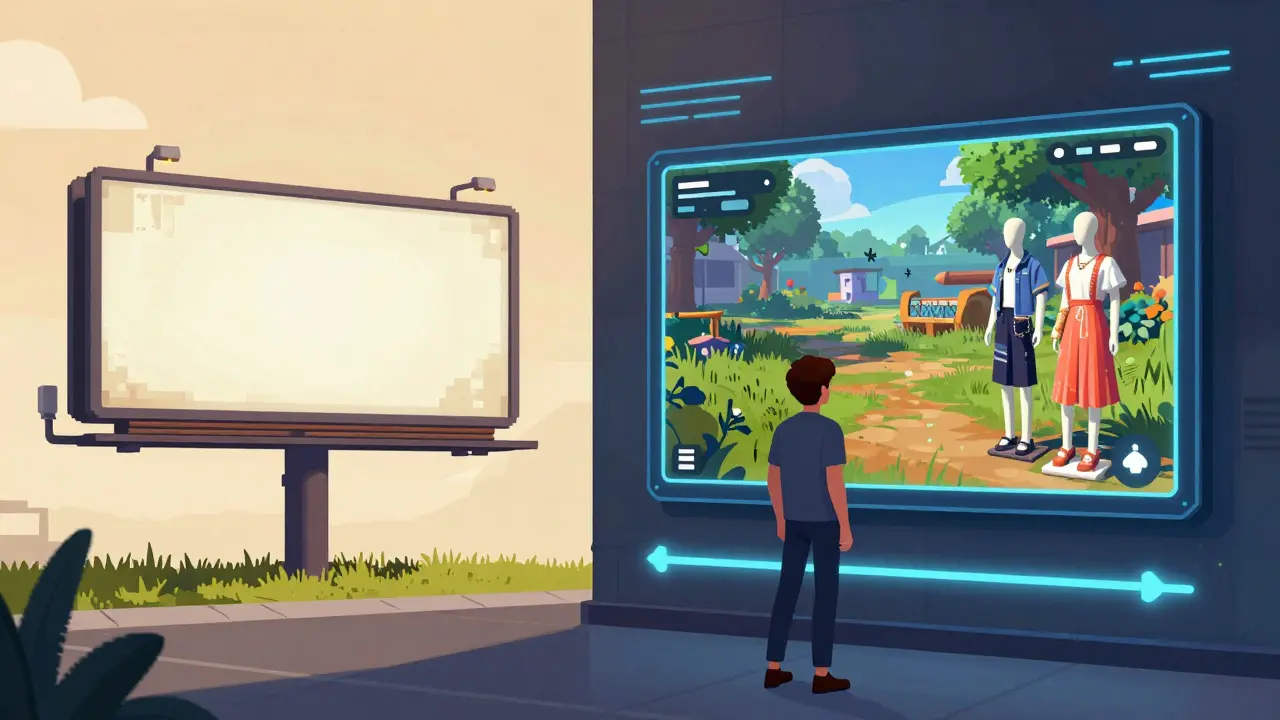
That model is dead. The industry has moved toward dynamic in-game advertising (DIGA). With DIGA, ad placements are connected to servers via APIs. Brands can change creatives in real-time without updating the game itself. A coffee shop chain can run a summer promotion in July and switch to holiday specials in December, all within the same virtual environment. This flexibility mimics programmatic display advertising but happens inside a closed ecosystem where users are already focused.
This shift matters because it solves the biggest complaint about gaming ads: relevance. When an ad feels part of the world rather than an intrusion, players tolerate it-and sometimes even engage with it. For example, a fashion brand placing its latest collection on mannequins in a life-simulation game allows players to view the products naturally as they explore the city. It is native advertising done right.
Why Gamers Actually Watch These Ads
You might wonder why gamers would care about ads at all. After all, people play games to escape reality, not to consume more marketing. The key lies in context and reward. Unlike pop-ups that demand immediate attention, in-game ads are passive. They exist in the background. A player driving a virtual taxi sees branded billboards, just like they would in real life. There is no click required, no sound forced upon them.
Moreover, many modern games integrate ads into progression systems. Free-to-play titles often offer players a choice: watch a short video ad to unlock a cosmetic item, get extra lives, or boost currency. This is opt-in advertising. The user chooses to engage because they receive tangible value. Studies show that rewarded video ads in gaming have completion rates exceeding 95%, compared to under 50% for standard mobile interstitials. Players are not annoyed; they are participating in a transaction they understand.
There is also the factor of community influence. In multiplayer games, if a popular streamer wears a branded skin or drives a branded car, millions of viewers see it simultaneously. This creates organic buzz. It turns the game asset into a status symbol. Brands leverage this by creating limited-edition items that drive urgency and exclusivity, turning gameplay into a marketing funnel.
Measuring Success Beyond Impressions
One reason advertisers were slow to adopt in-game ads was measurement. How do you prove that seeing a virtual billboard led to a sale? Traditional metrics like clicks don’t work well here because clicking isn’t always possible or desired. However, technology has caught up. Modern ad tech platforms now offer robust attribution models tailored for gaming.
Advertisers can track lift studies, comparing sales data in regions where the ad ran versus control groups. Eye-tracking software integrated into some testing environments reveals which virtual assets capture attention longest. Additionally, QR codes and NFC tags embedded in game environments allow direct conversion tracking. A player scans a code on a virtual poster to get a discount coupon, linking the virtual impression directly to a physical purchase.
Programmatic buying has also entered the space. Platforms like Viant Technology and MetaAds enable brands to bid on inventory in real-time across multiple titles. This means you can target specific demographics-such as males aged 18-24 interested in sports cars-across a portfolio of racing games. The granularity matches what marketers expect from Facebook or Google Ads, removing the guesswork from budget allocation.
| Format Type | User Experience Impact | Measurement Capability | Best For |
|---|---|---|---|
| Static Billboards | Low (if contextual) | Impressions only | Brand awareness campaigns |
| Digital Billboards (DGA) | Medium (dynamic content) | Viewability + Lift | Real-time promotions |
| Rewarded Video | High engagement (opt-in) | Completion rate + CTR | User acquisition & retention |
| In-Game Items/Skins | Very High (immersive) | Social shares + Usage | Deep brand integration |
Challenges Brands Must Navigate
Despite the growth, in-game advertising is not without risks. The primary concern is brand safety. Games vary wildly in content rating. An ad appearing in a family-friendly puzzle game is very different from one in a mature-rated shooter. Advertisers must ensure their messages align with the tone and audience of the title. Misalignment can lead to backlash. Remember the controversy when a luxury brand placed ads in a game known for chaotic violence? The disconnect alienated both gamers and the brand’s core customers.
Another challenge is fragmentation. Unlike the web, where cookies track users across sites, gaming ecosystems are siloed. Each publisher controls its own data and inventory. While standards like OpenRTB are being adapted for gaming, full interoperability is still emerging. Brands often need to work through specialized agencies or platforms that have direct relationships with major publishers like EA, Ubisoft, or Activision Blizzard.
Finally, creative adaptation is harder than it looks. A print ad does not translate directly to a 3D environment. Lighting, angle, and motion affect readability. A logo that looks sharp on a phone screen might blur when viewed from a distance in a fast-paced race. Creative teams need to collaborate closely with game developers to ensure assets render correctly across different devices and graphics settings.
The Future: Immersion and Interactivity
Where is this heading? The next frontier is deeper interactivity. We are moving beyond passive viewing to active participation. Imagine a shopping simulation where players can browse real catalogs, customize products, and order them for delivery while playing. Or augmented reality (AR) games where ads appear in the physical world through your phone camera, blending digital and physical retail experiences.
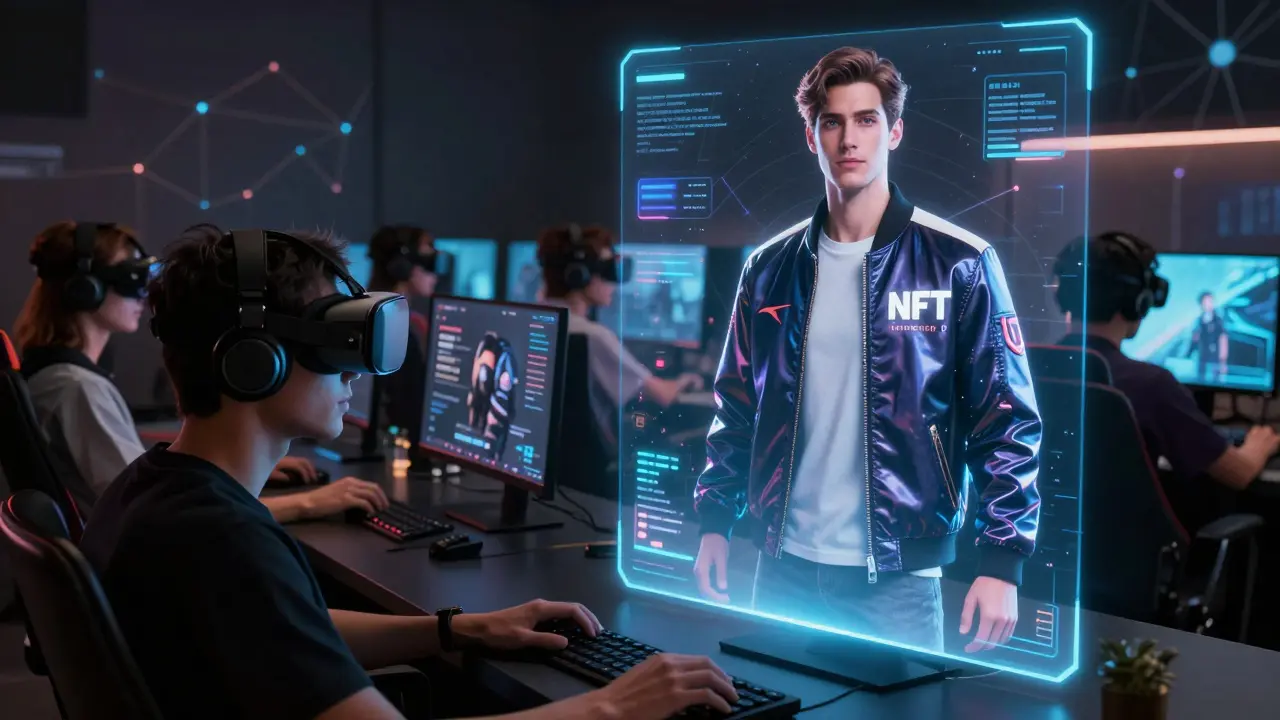
Virtual goods marketplaces are expanding too. Non-fungible tokens (NFTs) and blockchain-based ownership allow players to truly own branded items. These items can be traded, sold, or used across different metaverse platforms. For advertisers, this means long-term visibility. A branded jacket worn by a character doesn’t disappear after the session ends; it becomes part of the player’s digital identity.
As cloud gaming reduces hardware barriers, access to high-fidelity graphical environments will grow. This means higher-quality ad placements. Hyper-realistic textures and lighting will make virtual billboards indistinguishable from real ones, increasing subconscious impact. Brands that invest now in understanding these mechanics will set the standard for the next decade of interactive marketing.
Getting Started: A Practical Checklist
If you are ready to test in-game ads, start small. Do not allocate your entire Q4 budget to a single title. Begin with a pilot program using a platform that offers access to multiple games. Focus on objectives like brand lift or app installs rather than direct response initially. Use eye-catching but non-intrusive formats like digital billboards or ambient branding.
Collaborate with your creative team to produce assets specifically for 3D spaces. Test them in-engine if possible. Ensure your message is clear within seconds, as players move quickly through levels. Monitor performance closely, paying attention to viewability metrics and sentiment analysis from social media. Gaming communities talk loudly; positive reception is crucial for long-term success.
Finally, educate your internal stakeholders. Many executives still view gaming as a hobby for teenagers. Show them the data: the average gamer is now 35 years old, with significant disposable income. Frame in-game advertising not as a novelty, but as a strategic channel to reach consumers in their preferred digital habitats. The medium is evolving, and so should your strategy.
What is the difference between static and dynamic in-game ads?
Static in-game ads are permanently coded into the game files, meaning they cannot change once the game is released. Dynamic in-game ads connect to external servers, allowing brands to update creatives, rotate campaigns, and target specific audiences in real-time without modifying the game code.
How much does in-game advertising cost?
Costs vary widely depending on the format and game popularity. Programmatic digital billboard impressions can range from $5 to $20 CPM (cost per thousand impressions), similar to premium video ads. Branded integrations or custom skins involve larger upfront fees, often starting at $50,000+ for major titles, due to development and licensing costs.
Is in-game advertising suitable for B2B brands?
Yes, but indirectly. B2B brands can use in-game ads to build top-of-funnel awareness among decision-makers who are also gamers. Many professionals play casual or strategy games during downtime. Brand recall from these exposures can influence later purchasing decisions, especially when combined with other marketing efforts.
Which games are best for advertising?
Games with large, active player bases and open-world environments work best. Titles like FIFA, Call of Duty, and Fortnite have massive reach. Simulation games like The Sims or Cities: Skylines offer natural contexts for product placement. Choose games that align with your brand values and target demographic interests.
Can I track conversions from in-game ads?
Direct conversion tracking is challenging but improving. Methods include using unique promo codes, QR codes, or deep links that take players to landing pages. Lift studies compare sales data in exposed vs. unexposed markets. Some platforms also offer post-exposure surveys to measure intent and brand recall.
Latest Posts