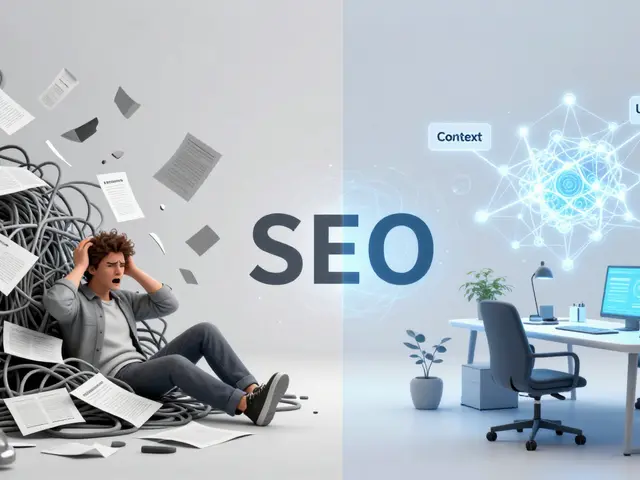

Stop staring at a blinking cursor. If you are an affiliate marketer trying to churn out reviews, blog posts, and emails every single day, you know the burnout is real. But here is the thing: you do not have to write everything from scratch anymore.
In 2026, ChatGPT is an advanced AI language model capable of generating human-like text for various tasks including content creation, coding, and analysis. It has moved far beyond simple chatbot answers. For those of us in the affiliate game, it acts like a tireless intern who never sleeps, never complains, and can draft a thousand-word review in seconds. The question is not whether you should use it; it is how to use it without sounding like a robot.
The Core Problem: Volume vs. Quality
Affiliate marketing relies on trust. You cannot just spam links everywhere. You need helpful, detailed content that guides a buyer to a decision. Traditionally, this meant spending hours researching products, writing drafts, editing, and optimizing for search engines. That process is slow. Slow means you miss trends. Missed trends mean missed commissions.
ChatGPT solves the volume problem instantly. It can generate outlines, first drafts, meta descriptions, and even social media captions in minutes. However, the quality problem remains if you rely on generic prompts. If your output sounds generic, Google will bury it, and readers will bounce. The secret lies in feeding the AI specific context, tone, and structure instructions.
Automating Product Reviews with Precision
Product reviews are the bread and butter of affiliate income. Writing them manually is tedious. With ChatGPT, you can streamline this significantly. Do not ask it to "write a review." That yields fluff. Instead, provide structured data.
Here is a workflow that works:
- Gather Specs: Copy the official product specifications, key features, and any user complaints from Amazon or Reddit.
- Paste into ChatGPT: Provide these details along with a persona instruction.
- Define the Angle: Tell the AI who the reader is (e.g., "a busy parent looking for a quiet vacuum").
For example, if you are reviewing a high-end noise-canceling headphone, prompt ChatGPT to focus on battery life and comfort for long flights, rather than just listing frequency response ranges. This creates content that resonates with actual buyers, not just tech geeks.
| Task | Traditional Method | ChatGPT-Assisted Method |
|---|---|---|
| Research | 2-3 hours reading specs and forums | 15 minutes summarizing pasted data |
| First Draft | 1-2 hours of writing | 5 minutes of generation |
| Tone Adjustment | Self-editing | Iterative prompting ("Make it more conversational") |
| SEO Optimization | Manual keyword insertion | AI suggests headings and meta tags |
Crafting High-Converting Email Sequences
Email lists are where the real money lives in affiliate marketing. But writing weekly newsletters or welcome sequences is exhausting. ChatGPT excels at copywriting variations. You can use it to A/B test subject lines or rewrite body copy to improve open rates.
Imagine you have a new supplement offer. Instead of writing one email, ask ChatGPT to create three versions:
- The Storyteller: Focuses on personal transformation and emotional hooks.
- The Data-Driven: Highlights clinical studies and ingredient benefits.
- The Skeptic-Buster: Addresses common objections and guarantees upfront.
This allows you to send different angles to segmented parts of your list. You are not just sending bulk mail; you are testing psychological triggers. Remember to always add your personal voice. Read the AI output aloud. If it sounds stiff, tweak it. Add a local reference or a recent anecdote. That human touch is what builds the relationship that leads to clicks.

SEO Optimization Without the Headache
Search engine optimization is crucial for organic traffic. In 2026, Google’s algorithms are smarter than ever. They prioritize helpful, expert content. ChatGPT can help you structure your articles to satisfy these requirements.
Use it to generate semantic keywords. Instead of just targeting "best running shoes," ask ChatGPT for related questions people ask about running shoes. It might suggest "how to break in carbon plate shoes" or "running shoes for flat feet." These become your H2 and H3 subheadings. This technique, known as topical authority building, signals to search engines that your page covers the topic comprehensively.
Additionally, ChatGPT can write meta titles and descriptions that include primary keywords while staying under character limits. This small step improves click-through rates from search results, which indirectly boosts rankings.
Social Media Content Batching
You cannot ignore platforms like Instagram, TikTok, and LinkedIn. Each requires a different format. ChatGPT can repurpose one blog post into multiple social assets.
Take a long-form guide on "Home Office Ergonomics." Ask ChatGPT to:
- Create five Twitter threads highlighting key tips.
- Write three LinkedIn posts focusing on productivity stats.
- Draft ten Instagram captions with relevant hashtags.
- Generate ideas for three short video scripts for TikTok.
This batching strategy saves hours per week. You spend less time creating content and more time engaging with your audience, which is where the community grows.

Avoiding Common Pitfalls
While powerful, ChatGPT is not perfect. Here is what to watch out for:
- Hallucinations: The AI might invent facts or specs. Always verify product details against the manufacturer’s website. Never trust AI for factual accuracy without checking.
- Generic Tone: Default outputs can sound bland. Use style modifiers like "write in a witty, sarcastic tone" or "use simple language suitable for teenagers."
- Plagiarism Concerns: While AI generates original text, it learns from existing data. Ensure your final output adds unique value, such as personal experiences or exclusive data, to stand out.
Future-Proofing Your Strategy
As AI tools evolve, so will the expectations of both users and search engines. The marketers who thrive in 2026 and beyond will be those who use AI as a lever, not a crutch. They will combine speed with genuine expertise. They will use ChatGPT to handle the heavy lifting of drafting and structuring, freeing up their mental energy for strategy, relationship building, and creative ideation.
Start small. Pick one task-maybe your next product review-and let ChatGPT handle the first draft. See how much faster you work. Then expand. The goal is not to replace yourself but to amplify your output. In the competitive world of affiliate marketing, efficiency is profit.
Can I use ChatGPT to write entire affiliate articles?
Yes, but you should never publish raw AI output. Use ChatGPT for outlining, drafting sections, and generating ideas. Then, edit heavily to add your personal voice, verify facts, and ensure the content provides unique value. Search engines penalize low-effort, duplicate content.
Does using AI hurt my SEO rankings?
Not inherently. Google states that AI-generated content is allowed if it follows their helpful content guidelines. The key is quality. If the AI helps you produce comprehensive, accurate, and user-friendly content, it can boost rankings. If it produces generic fluff, it will hurt them.
How do I make ChatGPT sound more human?
Provide specific tone instructions. Ask it to use contractions, vary sentence length, include rhetorical questions, and avoid overly formal words. You can also feed it samples of your previous writing and ask it to mimic that style.
Is it safe to share affiliate links generated by AI?
ChatGPT does not generate valid affiliate links. You must insert your own tracked links from networks like Amazon Associates, ShareASale, or CJ Affiliate. The AI helps write the surrounding persuasive text, but the link itself comes from your partner accounts.
What are the best prompts for affiliate marketing?
Effective prompts are specific. Instead of "Write a blog post," try "Write a 1000-word review of [Product] for [Target Audience], highlighting [Key Benefit] and addressing [Common Objection]. Include a comparison table and a call-to-action." Specificity yields better results.